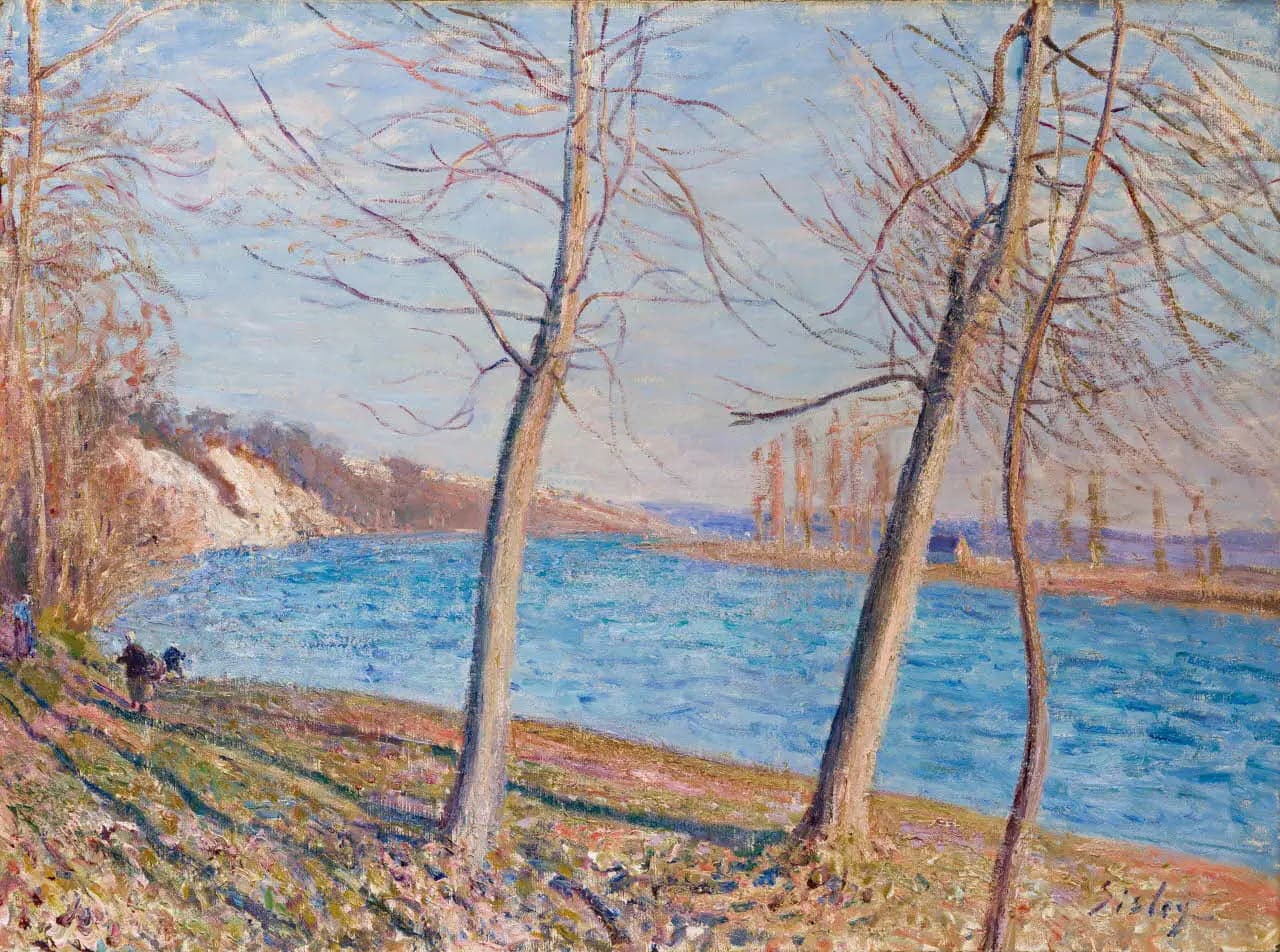
On the Banks of the Loing
- Original dimensions
- 81.3 x 60.3 cm
- Museum
- Johannesburg Art Gallery
- Year
- 1880
Scene depicted
The canvas of Alfred Sisley represents an enchanting panorama of the Loing, a peaceful tributary of the Seine. The painting accurately depicts boats moored along the water, while the weeping willows elegantly lean over the banks. A golden light bathes the scene, revealing reflections in the water and creating an atmosphere of fullness and tranquility.
Historical context
Created in the heart of France, in the village of Moret-sur-Loing, the painting titled At the Edge of the Loing is an emblematic piece of the impressionist movement. In 1880, Alfred Sisley , a master of light and landscapes, captures the essence of serene and vibrant nature. Today, this canvas resides at the Johannesburg Art Gallery, where it continues to fascinate art lovers with its generous dimensions and soothing atmosphere.
Place in the artist's career
At the Edge of the Loing is an important milestone in Sisley's career. It is a period when the artist, recognized for his ability to capture light, reaches a stylistic peak. Compared to Impression, Sunrise by Monet and The Water Lilies by Monet, this painting embodies his technical and emotional evolution towards a deep communion with nature.
Anecdote
“Every brushstroke is a breath of life,” said Sisley, evoking the ambiance of a spring morning at the edge of the Loing. This moment of inspiration, surrounded by the gentle murmur of water and the songs of birds, allowed him to create this masterpiece that celebrates the fleeting beauty of nature.
Major exhibitions
seventh impressionist exhibition