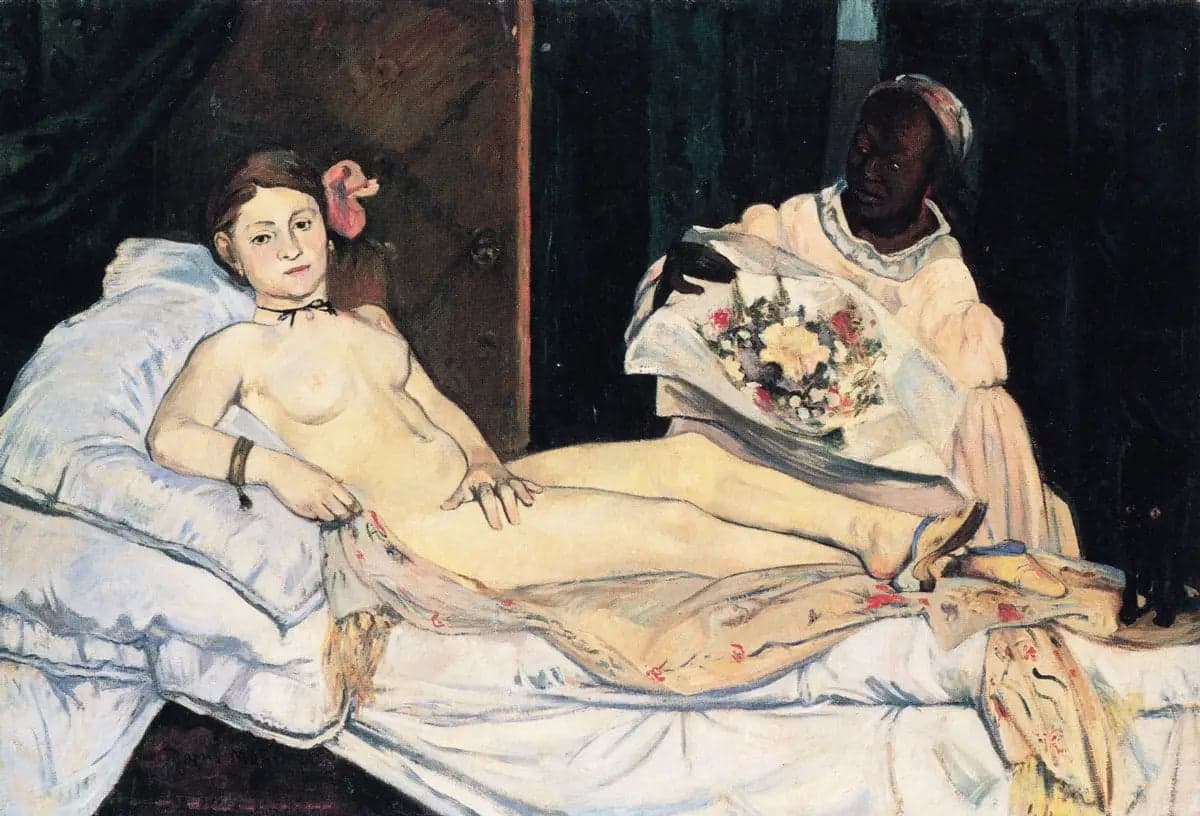
Olympia, copy after Manet
- Original dimensions
- 130 x 89 cm
- Museum
- Not specified
- Year
- 1891
Scene depicted
In this vibrant reproduction, "Olympia," Gauguin transposes the bold figure of the nude woman, highlighting her sensual and assertive features. The provocative pose of the model recalls the original work of Édouard Manet, while infusing it with a new breath through its rich colors and vibrant textures. This painting illustrates the challenge of female representation at the time, surrounded by controversies and debates, while celebrating the body with modern intensity.
Historical context
Created in 1891, this painting is at the heart of late 19th century Paris, a true artistic melting pot. In full swing, the city is then a hub for Impressionist and Post-Impressionist painters, seeking to redefine the vision of the world through bold compositions. This canvas captures the essence of this troubled era where art becomes a reflection of society. Although its current museum is not specified, the impressive dimensions of 130 x 89 cm make it a masterpiece in its own right, testifying to the boldness and artistic innovation of its time.
Place in the artist's career
This painting , "Olympia, copy after Manet," positions itself at a pivotal moment in Gauguin's career. In 1891, he explores themes of color and form, crossing the boundaries of pictorial art. In parallel, works like "Vision After the Sermon" and "Where Do We Come From? What Are We? Where Are We Going?" show the evolution of his style. This canvas embodies the fusion of these influences, revealing Gauguin's artistic maturity.
Anecdote
Paul Gauguin , during the creation of this work, is said to have murmured: "The painting is a cry, a liberation of the soul in the face of a changing society." Imagine him one spring morning, sitting in front of the canvas, inspired by the soft sunlight bathing Paris, his ambition to capture feminine beauty and modernity while celebrating the evocative power of the canvas taking over.
Major exhibitions
The black model from Géricault to Matisse