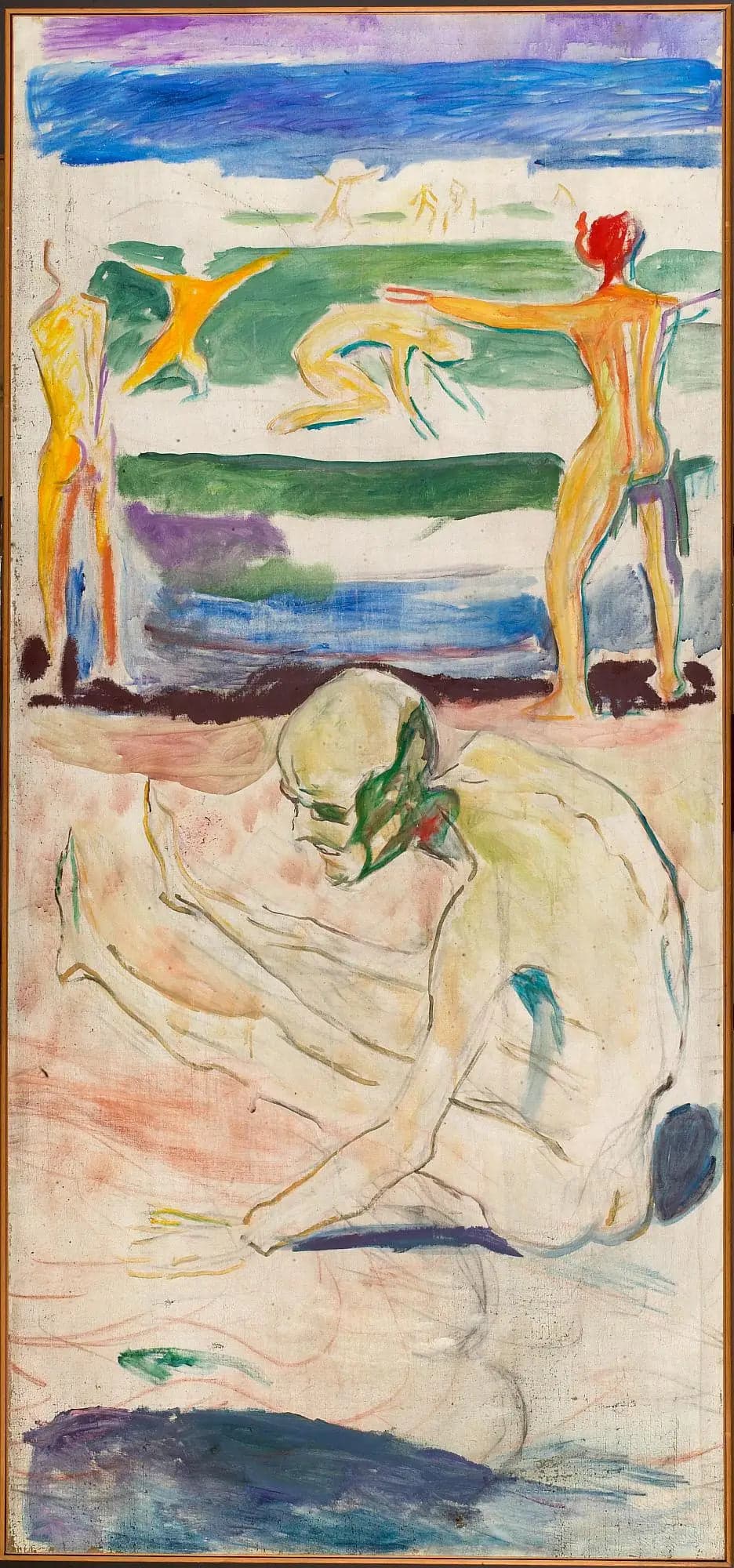
Old Man
- Original dimensions
- 102.5 x 97.5 cm
- Museum
- Munch Museum
- Year
- 1908
Scene depicted
The painting “Old Man” presents a character imbued with melancholy and solitude. His features marked by time tell a story, that of all the lives lived, forgotten dreams, and endured sufferings. The expression on his face embodies wisdom while revealing the fragility of human existence. This pictorial work is much more than a simple representation; it is an invitation to reflect on the human condition.
Historical context
Created in 1908, in Oslo, this painting is emblematic of the expressionist movement. Through the canvas , Munch translates deep human emotions, encapsulating the essence of an era where art becomes a reflection of a changing world. The painting is currently located at the Munch Museum, a sanctuary dedicated to the work of this visionary artist.
Place in the artist's career
Positioned at the heart of Munch's career, Old Man marks a turning point in his exploration of human emotions. This painting can be paralleled with “The Night” and “The Scream,” thus demonstrating an evolution towards a bolder and more introspective representation of suffering and anguish. The composition of these works testifies to an artist in search of emotional truth.
Anecdote
“I paint what I feel, more than what I see.” This quote resonates particularly when evoking the genesis of the masterpiece . One foggy morning, in the lonely streets of Oslo, Munch locks eyes with an old man, an image that will mark him forever. It was this fleeting encounter that would breathe life into Old Man .