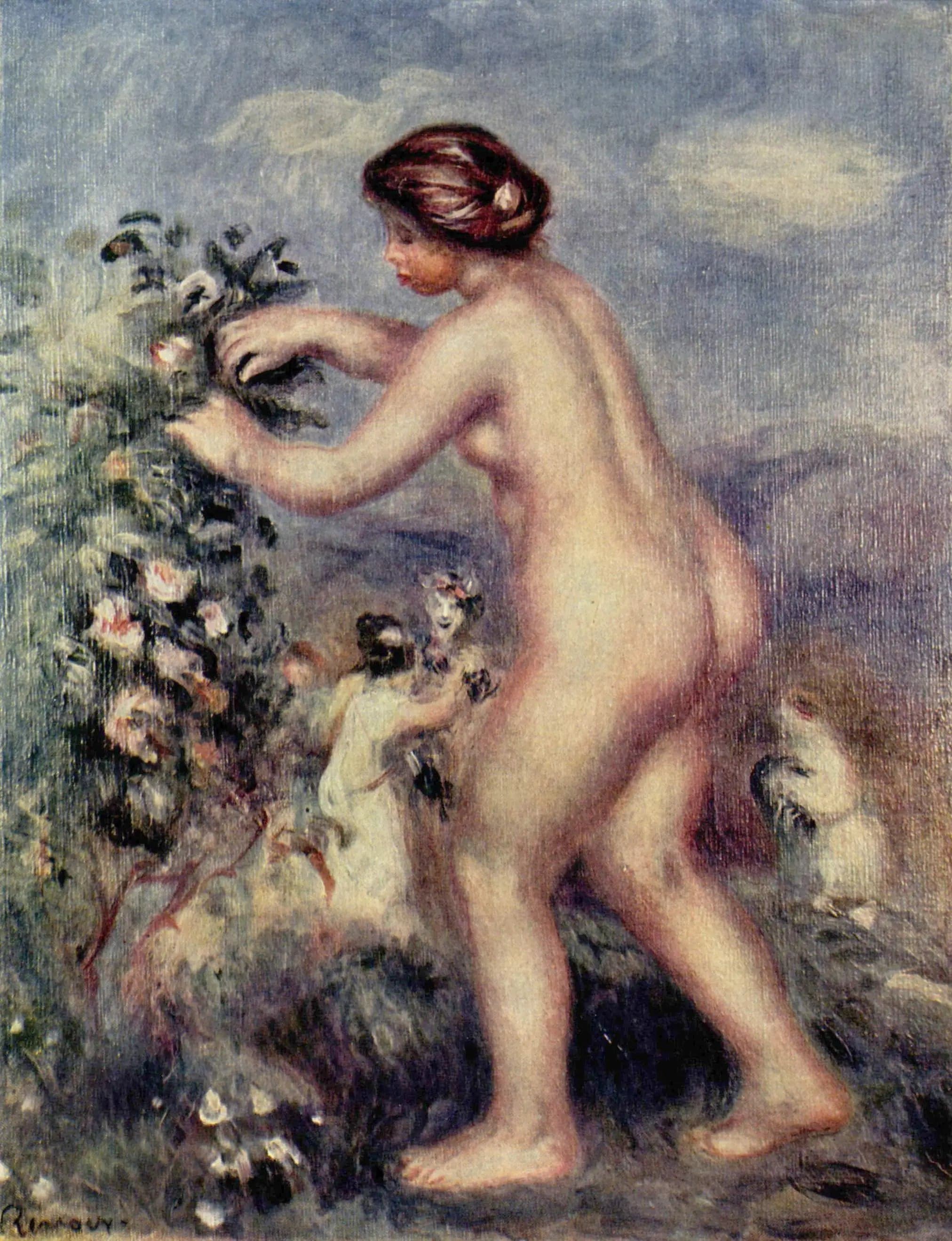
Ode to Flowers - Pierre
- Original dimensions
- 36 x 46 cm
- Museum
- musée des Beaux-Arts de Limoges
- Year
- 1903
Scene depicted
In "Ode aux fleurs," the artist highlights the infinite richness of blooms. The vibrant colors of the flowers blend with the soft ambient light, creating an atmosphere of peace and harmony. Each petal, each leaf seems to capture an evanescent moment, making this pictorial work a tribute to the fleeting beauty of nature. One can almost sense the delicate fragrances of these bursting flowers, imbued with a spring scent that revitalizes the soul.
Historical context
Created in 1903, the painting "Ode aux fleurs" is part of the Impressionist movement, an artistic current that emerged at the end of the 19th century in France. This painting, currently exhibited at the musée des Beaux-Arts de Limoges, reflects the artistic transformations of this era where light and color take precedence over detail. With its delicate dimensions of 36 x 46 cm, it captures the ephemeral beauty of nature, a symbol of a time when the moment was appreciated.
Place in the artist's career
"Ode aux fleurs" is situated at an important crossroads in Renoir's career, both as a stylistic peak and a period of maturity. Compared to other iconic paintings such as "Le Déjeuner des canotiers" and "Les Baigneuses," this canvas illustrates the evolution of his approach to light and color, thus highlighting his inimitable mastery in expressing emotion.
Anecdote
“The beauty of nature should inspire us every day.” These words from the master evoke the moment of creative ascent when Renoir, on a gentle spring morning, loses himself in a garden filled with vibrant flowers. It is there, at the heart of this living nature, that he drew the necessary emotion to bring his masterpiece to life. This painting is not just a canvas, but a hymn to joy and vitality.