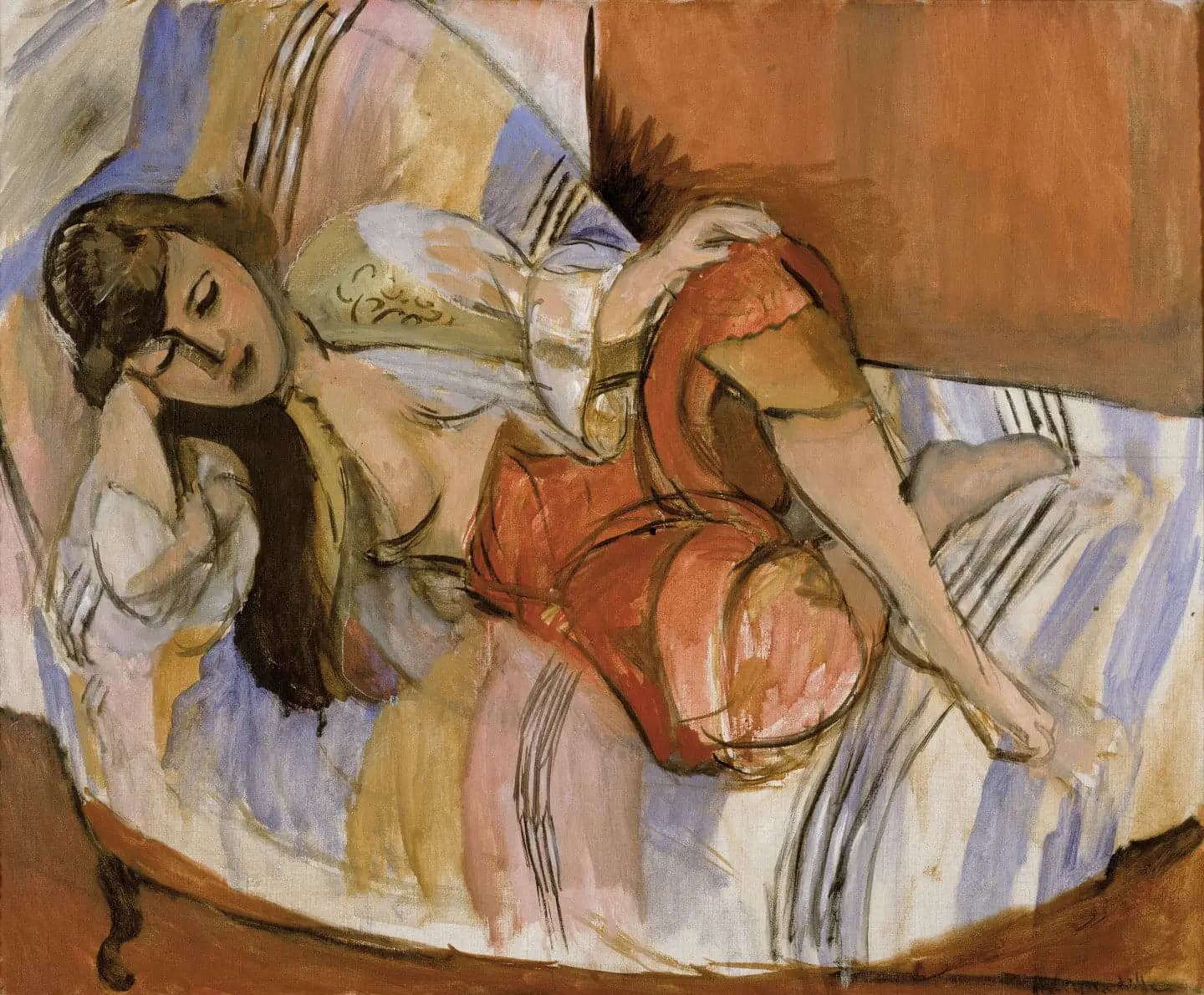
Odalisque
- Original dimensions
- 96 x 83.5 cm
- Museum
- Stedelijk Museum Amsterdam
- Year
- 1920
Scene depicted
In "Odalisque," Matisse unveils an intimate scene, charged with sensuality. A serene and placid female figure is highlighted, surrounded by plush cushions and exotic patterns. Far from being a mere study, this canvas transcends reality to invite aesthetic contemplation where beauty combines with tranquility, transporting the viewer into a universe imbued with calm and refinement.
Historical context
Created in 1920 in the cosmopolitan city of Amsterdam, the painting "Odalisque" belongs to the Fauvist movement, known for its bright colors and freedom of expression. At the dawn of the 20th century, Matisse stands out for his bold approach, capturing cultural essences while challenging established conventions. This canvas beautifully designed currently resides at the Stedelijk Museum Amsterdam , a monumental showcase where the best of modern art meets.
Place in the artist's career
"Odalisque" marks a turning point in Matisse's career, situated at the peak of his creativity. In parallel with works like "The Dance" and "The Joy of Life," this masterpiece illustrates a stylistic evolution marked by mastery of color and form. Far from the constraints of the past, Matisse reveals a maturity that transcends mere techniques to touch the very soul of art.
Anecdote
"Painting is a poetry that can be seen rather than read," Matisse once declared. Inspired by the soft light of a spring morning, he crossed paths with a woman whose grace inspired him to immortalize her beauty. This moment is the breath that animates the evocative power of the canvas "Odalisque," revealing a world of sensuality and vibrant desire.