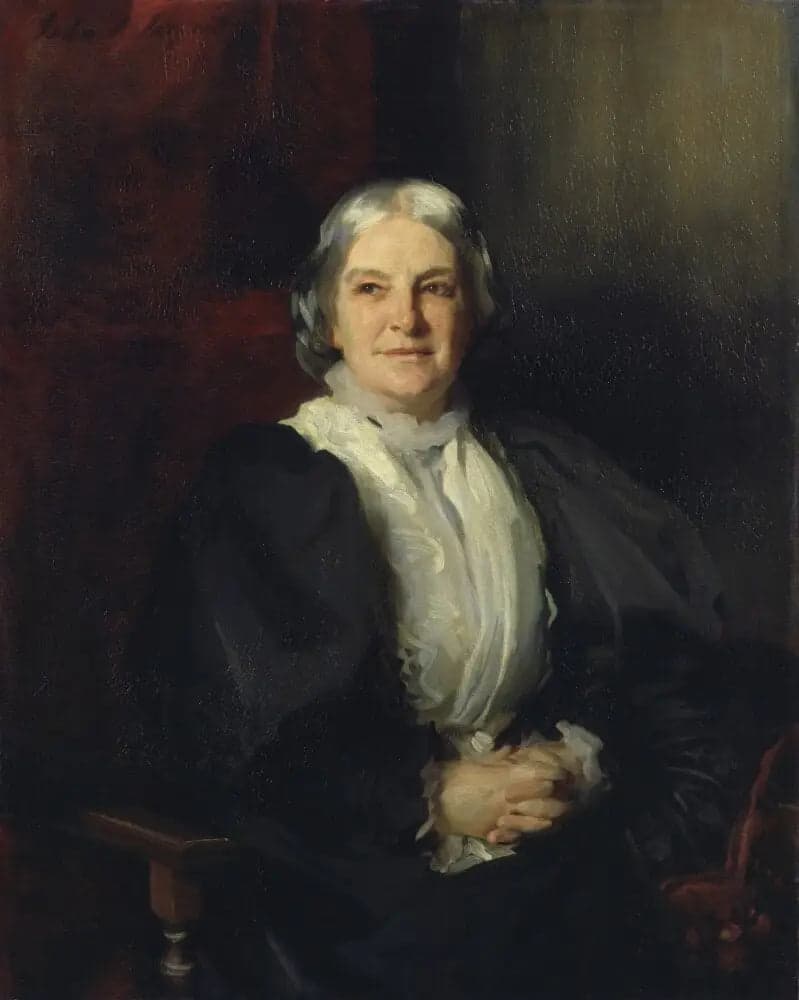
Octavia Hill
- Original dimensions
- 77.5 x 101 cm
- Museum
- National Portrait Gallery, London
- Year
- 1898
Scene depicted
The painting "Octavia Hill" delicately exposes the face of a woman marked by her social and environmental commitment. Every feature of her face, every drape of her dress, tells the story of a pioneer of human rights. The painting captures the moment of a precious balance between strength and serenity, revealing the very essence of her vibrant spirit.
Historical context
Created in 1898, this painting is emblematic of the artistic movement of the Belle Époque, a time when the timeless portrait redefined the norms of representation. Now located at the National Portrait Gallery in London, this canvas showcases Sargent's virtuosity, capturing Octavia Hill in all her splendor. The generous dimensions of this canvas make it a true masterpiece, emblematic of a bygone era steeped in refinement.
Place in the artist's career
This painting occurs at a turning point in Sargent's career, marking a stylistic evolution towards more introspective portraits. At the same time, one can admire works like "Madame X" and "El Jaleo," which reveal his obsession with light and movement. Thus, the painting of Octavia Hill is part of a quest for emotional depth, reflecting artistic maturity.
Anecdote
John Singer Sargent , known for his bold approach to portraiture, reportedly said while painting this masterpiece : "Every face has its story, and every brushstroke must reveal it." On that spring morning, as he captured the soft light filtering through the leaves, the power of the painting was born. Thus, the composition of this canvas unveils the depth of Octavia Hill's soul.