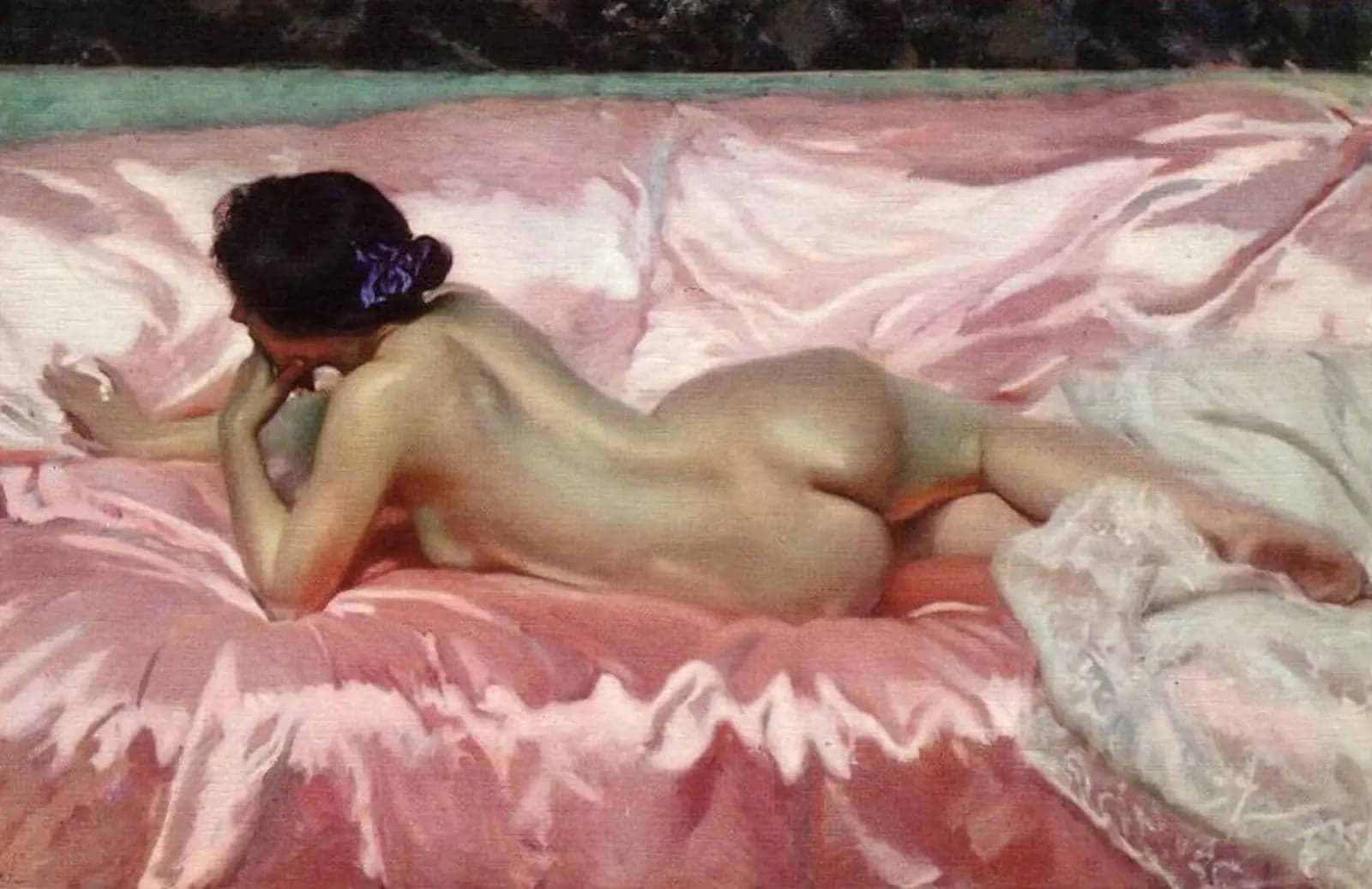
Nude Woman
- Original dimensions
- 186 x 106 cm
- Museum
- Sorolla Museum
- Year
- 1902
Scene depicted
“Nude Woman” presents a serene female silhouette that seems to blossom within a natural setting. The composition reveals a visual poetry, where the soft and undulating figure of the woman blends into a gentle frame of light. Shadows and lights intertwine, creating a harmonious dialogue that evokes sensuality, peace, and beauty. In this pictorial work, each element contributes to a visual symphony that celebrates the human form.
Historical context
Created in the early 20th century, in the radiant setting of Madrid, this painting is part of the Impressionist movement, where light plays a predominant role. This iconic work perfectly illustrates the artistic legacy of Joaquín Sorolla , known for his ability to capture the vibration of light on skin. It is currently displayed at the Sorolla Museum, a place that pays homage to his work. The dimensions of this canvas testify to the grandeur and depth of its artistic message.
Place in the artist's career
This canvas , from a flourishing period of Joaquín Sorolla 's career, represents the pinnacle of his Impressionist style. It stands out particularly from his earlier works such as “The Bathing” and his later pieces, where a more introspective gaze asserts itself. The mastery of light effects and the delicacy of forms in “Nude Woman” reflect his artistic maturity and his exploration of themes of beauty and nature.
Anecdote
“Light is the true painting,” said Sorolla. It was by the water, on a spring morning, that he glimpsed the languid beauty of a feminine form. This fleeting moment was the creative breath behind his masterpiece . The canvas he created evokes this sensory immersion, between the soft sounds of the waves and the fresh scent of salt. This ambiance transcended his inspiration, anchoring in “Nude Woman” an unparalleled evocative force.