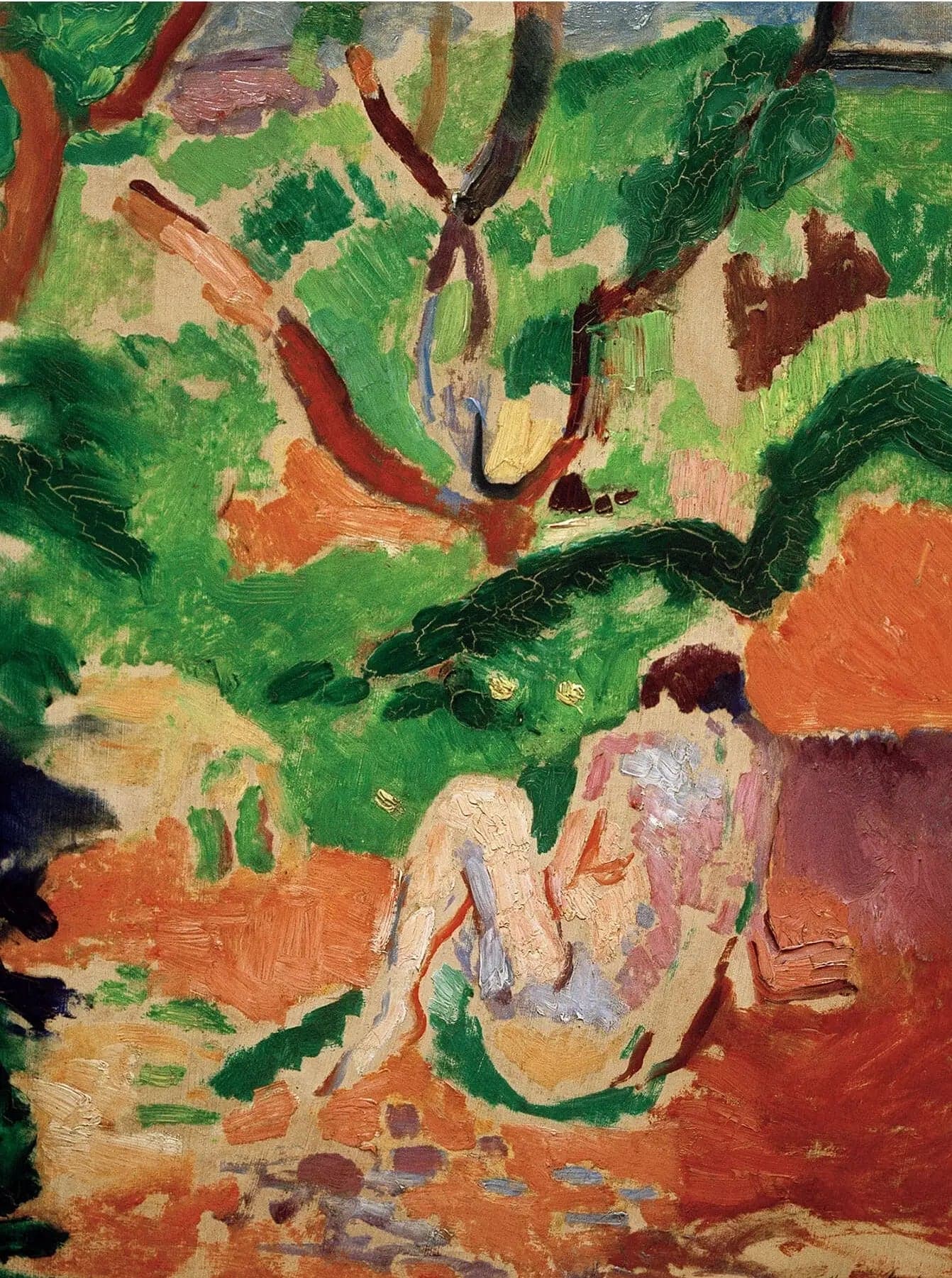
Nude in the Forest
- Original dimensions
- 32.4 x 40.6 cm
- Museum
- Brooklyn Museum
- Year
- 1906
Scene depicted
Through the painting "Nude in the Forest," Matisse transposes the human subject into a natural setting, where feminine forms blend harmoniously into the wooded environment. Light filters through the foliage, creating an ambiance that is both sensual and contemplative, reflecting the serenity that emanates from this composition. The painting is both a hymn to nature and a tribute to the human being in its vulnerability and innate beauty.
Historical context
Created in 1906, the painting "Nude in the Forest" is set in the rich artistic context of the first half of the 20th century, a period marked by the emergence of Fauvism , of which Matisse is one of the leaders. This canvas , resident at the Brooklyn Museum in New York, evokes a pivotal moment in modern art, as the city attracts creative and avant-garde minds. Imposing dimensions for the time, it is part of an aesthetic dialogue with its era.
Place in the artist's career
This masterpiece marks a significant milestone in Matisse's career, a meeting point between his irresistible attraction to Fauvism and the quest for a deeper expression. Alongside "The Dance" and "Woman with a Hat," "Nude in the Forest" reveals the stylistic and emotional evolution of the artist, from the vibrant to the introspective.
Anecdote
Henri Matisse once declared: "Color releases a meaning that only a free spirit can understand." It is in the atmosphere of a spring morning, under the mysterious shadow of a forest, that he found inspiration to capture the essence of human nature. The masterpiece "Nude in the Forest" resonates with this quest for understanding, seeking to reveal the human soul through the universal language of color.