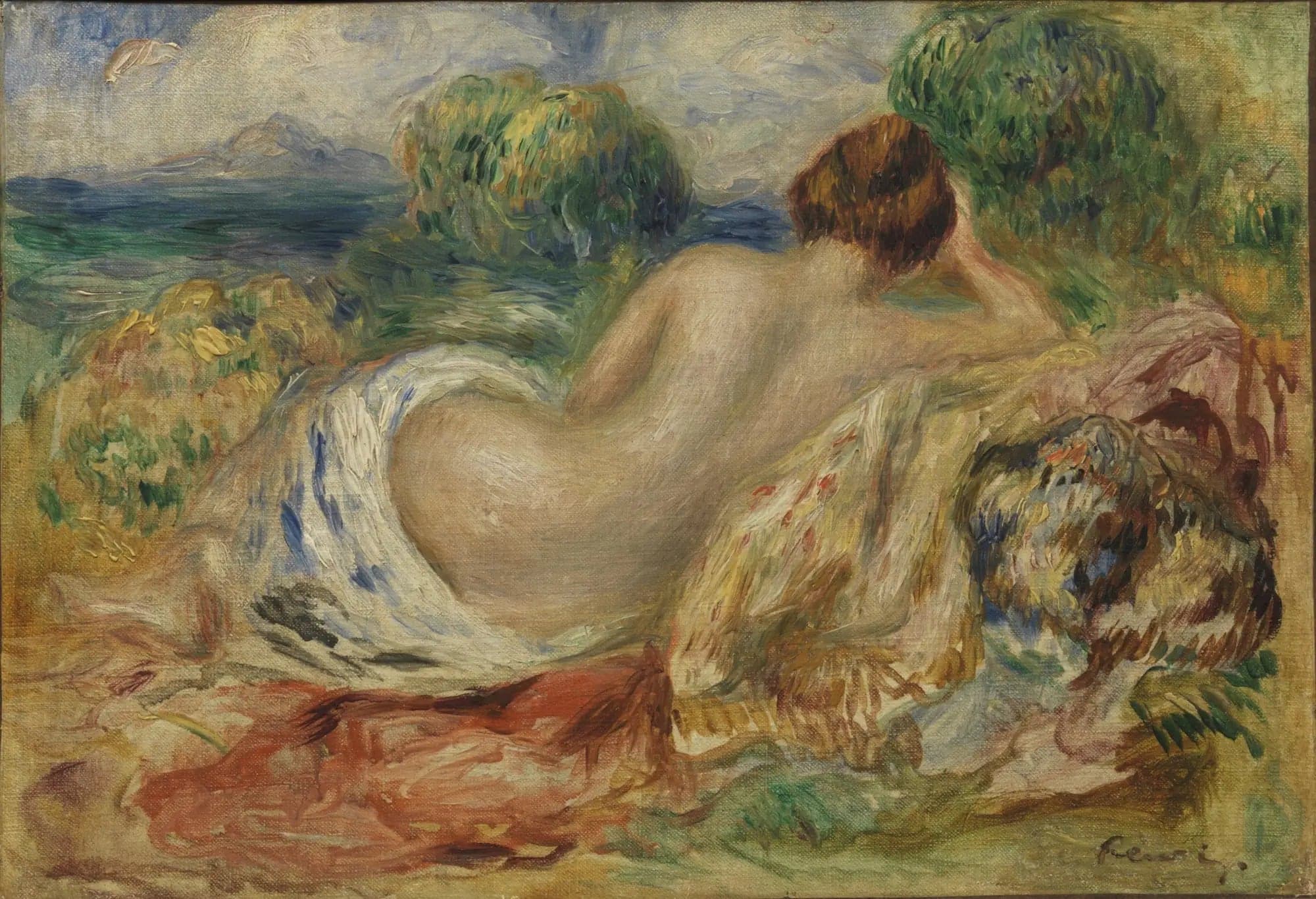
Nude in a Landscape - Pierre
- Original dimensions
- 32 x 21 cm
- Museum
- Princeton University Art Museum
- Year
- 1887
Scene depicted
In this painting , Renoir delicately evokes the beauty of a naked woman resting in a lush landscape. The fluidity of the curves, the light caressing her skin, and the harmony of her integration into nature compose a captivating tableau where each element nourishes the other. Through a style that celebrates sensuality and the freshness of life, this canvas transports us into a universe of peace and contemplation, an ode to the virginity of nature.
Historical context
Created in 1887, at the crossroads of plein air immersion and intimate portraits, this painting embodies the Impressionist period flourishing in late 19th century France. The painting, currently exhibited at the Princeton University Art Museum , reflects a time of artistic renewal, a breath of freedom where light and colors prevail. The dimensions of this pictorial work, modest yet powerful, evoke the intimacy of the depicted scene.
Place in the artist's career
The painting "Nude in a Landscape" is part of a flourishing period in Renoir's career, where the painter reaches the peak of his Impressionist style. It juxtaposes with other iconic works like "Luncheon of the Boating Party" and "Dance in the City," revealing an evolution in the approach to color and forms. This key artistic moment testifies to a mature Impressionism , where the joy of living is expressed with increased intensity.
Anecdote
Renoir once stated: "Nature creates only colors, but the artist must make it a living painting ." It was in a small secret garden, on a sunny morning, that the artist found inspiration for this canvas . Imagining the sweet scent of blooming flowers, hearing the song of birds, it is thirty-six shades of life that he captured in this work , encapsulating a fleeting moment of brilliance and rest.