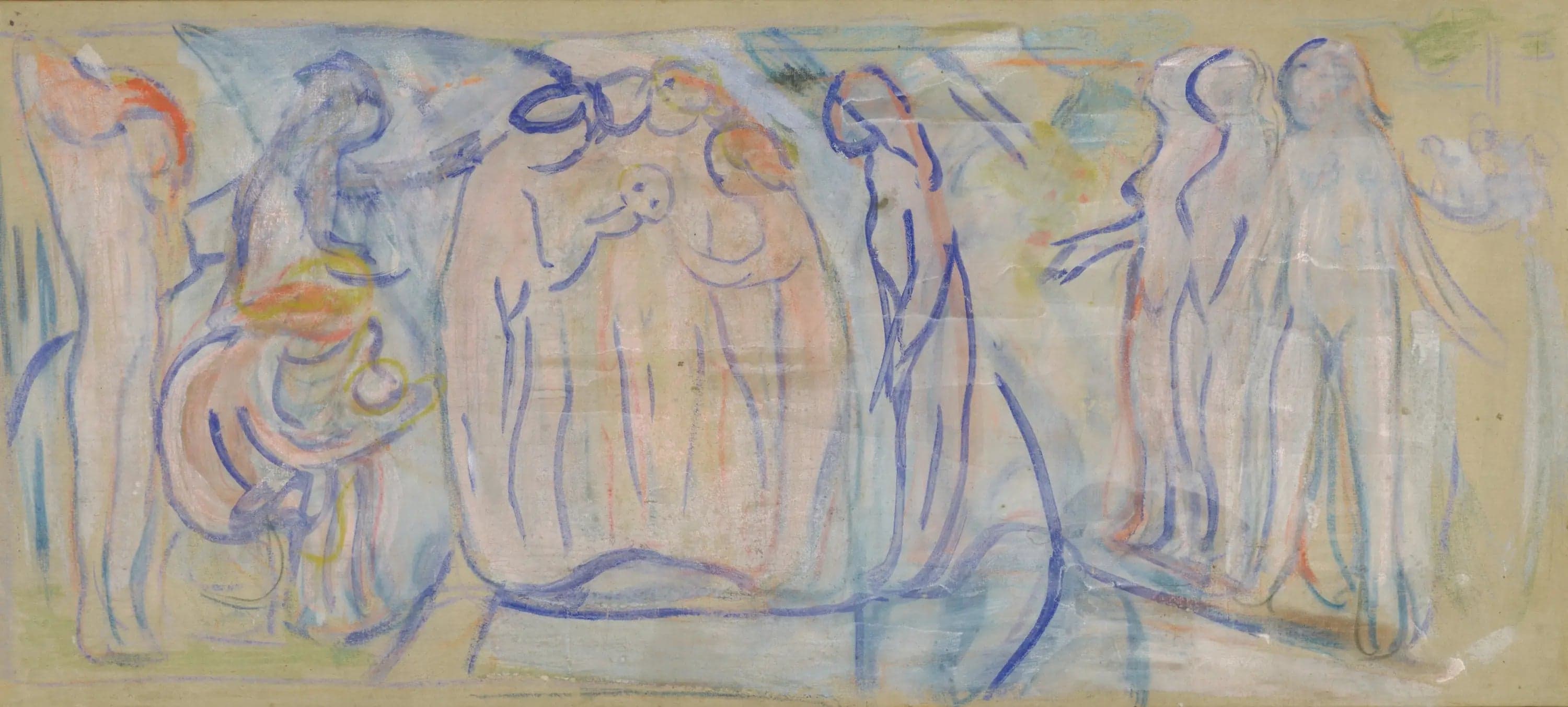
Nude Figures
- Original dimensions
- 138.5 x 62.5 cm
- Museum
- Munch Museum
- Year
- 1920
Scene depicted
The painting "Nudes" by Munch represents a delicate harmony between the human body and nature. It features vague silhouettes, now both sensual and melancholic, wandering through a misty landscape, as if lost between dream and reality. This canvas evokes a rare emotional depth, capable of capturing the vulnerability and intrinsic beauty of human existence.
Historical context
Created in Oslo in 1920, this painting is emblematic of the avant-garde expressionist movement that marked early 20th-century art. Rooted in the tumultuous historical context of the time, the canvas "Nudes" resonates with the psychological and social concerns of that period. The painting , now displayed at the Munch Museum, embodies the artist's quest to capture human essence through abstract forms and an innovative palette.
Place in the artist's career
"Nudes" is part of Munch's mature period, where his style fully asserts itself. This painting is often paralleled with works such as "The Scream" and "The Madonna," demonstrating his technical evolution towards bolder and more emotional compositions. Each of these explores existential themes and inner landscapes, revealing Munch's quest to unveil the most intimate aspects.
Anecdote
“Life is a dance that we all perform, but each has its own rhythm.” This quote from Edvard Munch perfectly reflects the inspiration behind his masterpiece . While wandering the streets of Oslo one spring morning, the soft light revealing the beauty of naked bodies deeply moved him, prompting him to immortalize this fleeting moment in this precious painting .