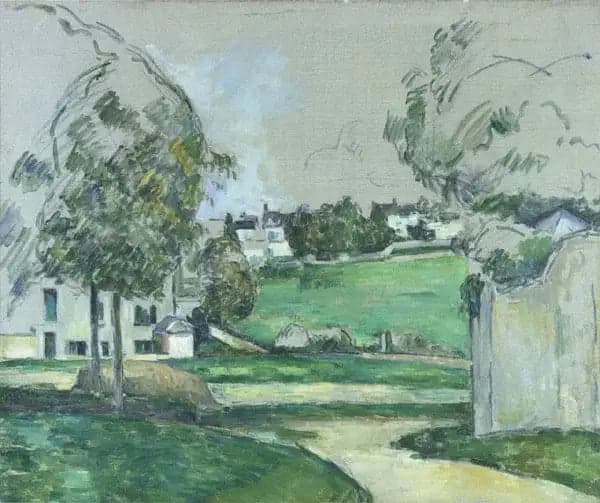
Northern Landscape
- Original dimensions
- 53.5 x 45 cm
- Museum
- Kagoshima City Museum of Art
- Year
- 1885
Scene depicted
The painting "Northern Landscape" captures the delicate harmony between the earth and the sky, where majestic mountains rise under a cloudy sky. Cézanne skillfully plays with light, bringing relief to the nature surrounding the country, while the presence of trees blends with an organic movement. This masterpiece evokes a feeling of serenity and a deep connection with the environment, like an invitation to contemplation.
Historical context
Created in 1885, this painting emblematic of Paul Cézanne is set in the vibrational context of the late 19th century, a time marked by the emergence of post-impressionism . The painting, currently exhibited at the Kagoshima City Museum of Art, testifies to Cézanne's quest to capture the raw beauty of the landscape. In the North of France, where he drew inspiration from the changing lights and textures, this canvas reveals the essence of his time through a unique and innovative perspective.
Place in the artist's career
Northern Landscape marks a crucial milestone in Cézanne's career, testifying to a period of maturation where his techniques sharpened. Weaving emotional and visual links with other famous paintings like "The Large Bathers" and "Mont Sainte-Victoire," each painting reveals a journey through his artistic evolution, moving from realism to a subtle and evocative abstraction.
Anecdote
Paul Cézanne often said: "I want to render nature as it is, alive and vibrant." It is in this perfect quest for truth that he found inspiration for his imposing masterpiece , in spring when nature sang under a clear sky, filling his canvases with colorful memories. This painting reveals the soul of his thoughts, where each brushstroke evokes subtle and powerful emotions.