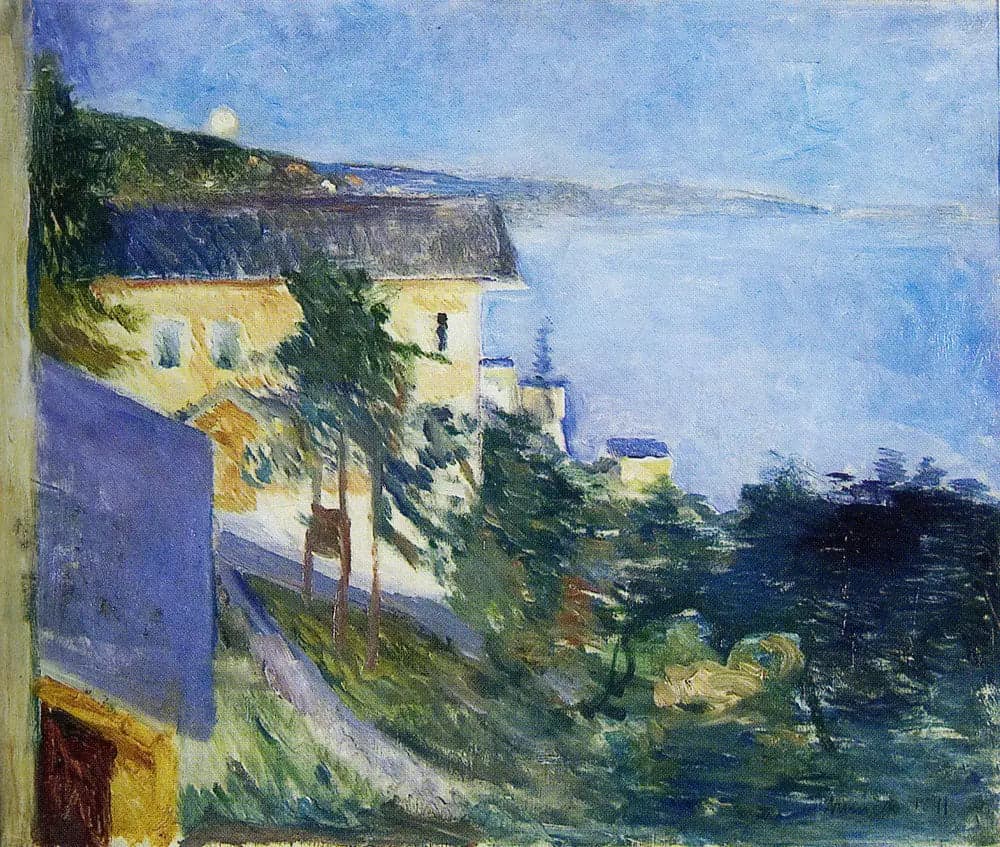
Nordstrand
- Original dimensions
- 73.3 x 59.4 cm
- Museum
- Bergen Art Museum
- Year
- 1891
Scene depicted
In the painting , Munch captures an intimate maritime scene where the viewer's gaze is drawn to a peaceful shore, bordered by shimmering waters. The subtle hues describe a silky atmosphere, evoking memories of a sunny day. The slow rhythm of the waves and the harmonious colors transport us to the heart of this preserved nature, inviting reflection and contemplation.
Historical context
Created in 1891, the painting titled Nordstrand is one of the vibrant testimonies of the Norwegian expressionist movement. This canvas was conceived in Bergen, a port city rich in maritime landscapes where light and shadow dance on the shores. In this period when Munch begins to explore the depths of the human soul, his painting represents a perfect fusion between nature and introspection. Today, it rests in the collections of the Bergen Art Museum, where visitors can admire its intriguing dimensions.
Place in the artist's career
Nordstrand is situated at a decisive turning point in Munch's career. While he explores nocturnal themes in works such as The Scream , this masterpiece reveals a softness and serenity, contrasting with the turbulence of his other productions. Throughout Munch's artistic maturation period, Nordstrand flourishes as a symbol of his personal experience and his eternal dialogue with nature.
Anecdote
“Nature is an inexhaustible source of inspiration. It whispers secrets that only those who listen can hear.” This quote resonates with the originality of the painting Nordstrand , which draws its essence from a morning stroll along the Norwegian coast. Munch, at the heart of natural beauty, captures a fleeting moment, imbued with melancholy and mystery.