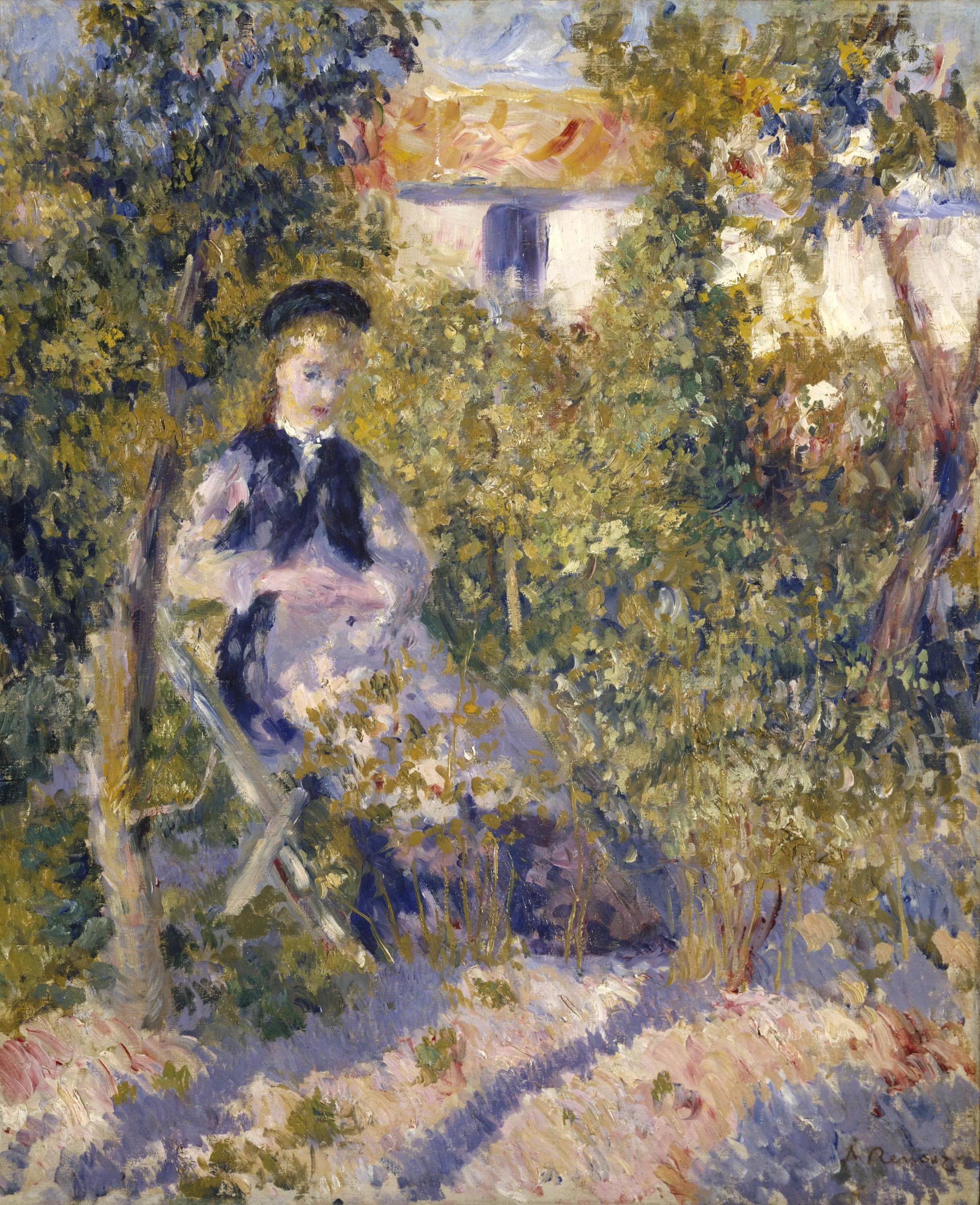
Nini in the Garden - Pierre
- Original dimensions
- 50.8 x 61.9 cm
- Museum
- Metropolitan Museum of Art
- Year
- 1876
Scene depicted
In Nini in the Garden , Renoir captures a light breeze of a summer afternoon. The young girl, surrounded by vibrant flowers, embodies freshness and innocence. The light plays on the vibrant hues of the petals, making the whole scene come alive before our eyes. The scene takes place in a garden, a symbol of cultivated nature and the joy of living, a visual celebration of feminine beauty and the natural world.
Historical context
Created in 1876 in Paris, during the Impressionist movement, Nini in the Garden is the result of an era where light and movement become subjects in their own right. This masterpiece is now found in the world at the Metropolitan Museum of Art , in New York. The dimensions of the painting testify to the delicacy of the composition, a canvas that captures the very essence of the pleasures of outdoor life.
Place in the artist's career
Nini in the Garden is situated at a turning point in Renoir's career, as he fully explores the Impressionist style. This painting justifies the artistic momentum of his mature works, such as Lunch of the Boaters and Dancing in the City , where light and movement intertwine, showing an evolution towards mastery of the interplay of shadow and light.
Anecdote
“Nature is a poem that I seek to paint.” These words from Renoir evoke the inspiration behind this painting emblematic. Imagine him, on a bright spring morning, observing Nini, a young girl of discreet beauty, blossoming in this flower-filled garden – a captivating scene that emanates an atmosphere of sweetness and joy through his painting .