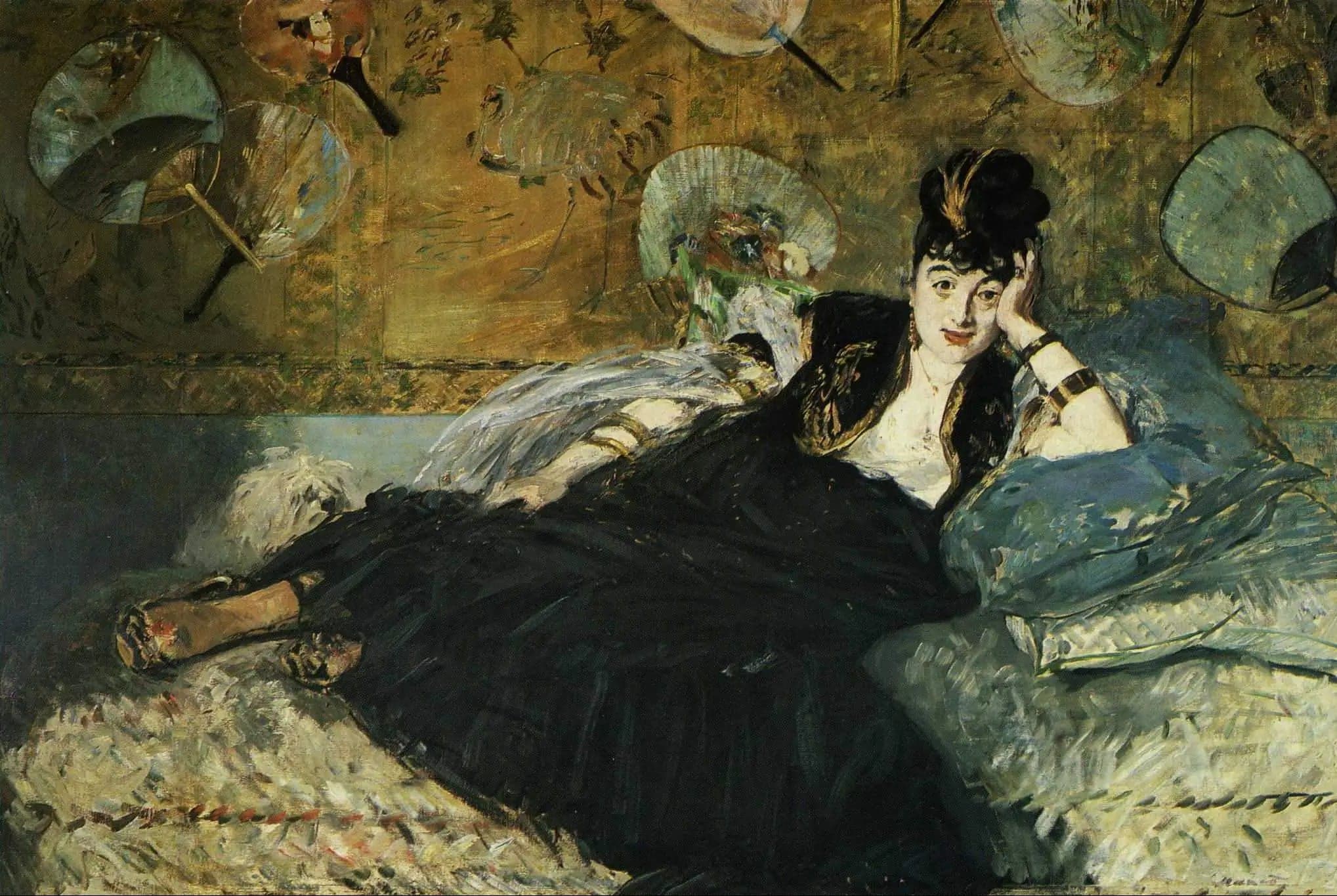
Nina of Callais
- Original dimensions
- 166.5 x 113.5 cm
- Museum
- musée d'Orsay
- Year
- 1873
Scene depicted
The scene depicts a young woman sitting with a delicate attitude, capturing the essence of pure beauty. Manet, through this composition , explores themes such as the female gaze and the fragility of the moment. Nina's gaze seems to tell a story, while the shadows and lights dance around her, creating an atmosphere filled with nostalgia. Every detail of the canvas exudes life, a deep connection between the subject and the observer.
Historical context
Created in 1873, in Paris, Nina de Callais is part of the Impressionist movement, symbolizing a time of artistic and social upheaval. Through this canvas , Manet captures the cultural breath of the 19th century, as the city of light transforms. Today, the work resides in the musée d'Orsay, a true sanctuary of art treasures, where its imposing dimensions of 166.5 x 113.5 cm stand out and echo the master's talent.
Place in the artist's career
Nina de Callais stands as a turning point in the career of Édouard Manet , blending traditional techniques and modern nuances. It is a stylistic peak, heralding works such as Olympia and Le Déjeuner sur l'Herbe , marking his evolution towards a bold and liberated approach to art. With this painting, Manet demonstrates his mastery of light play and his sensitivity to timeless subjects.
Anecdote
“Beauty is in simplicity.” These words resonate in the mind of Édouard Manet during the creation of his masterpiece . Inspired by a radiant morning on the banks of the Seine, he crosses the gaze of Nina, whose expression carries a silent narrative. This fleeting moment has been etched in the painting , an invitation to feel this encounter imbued with magic.