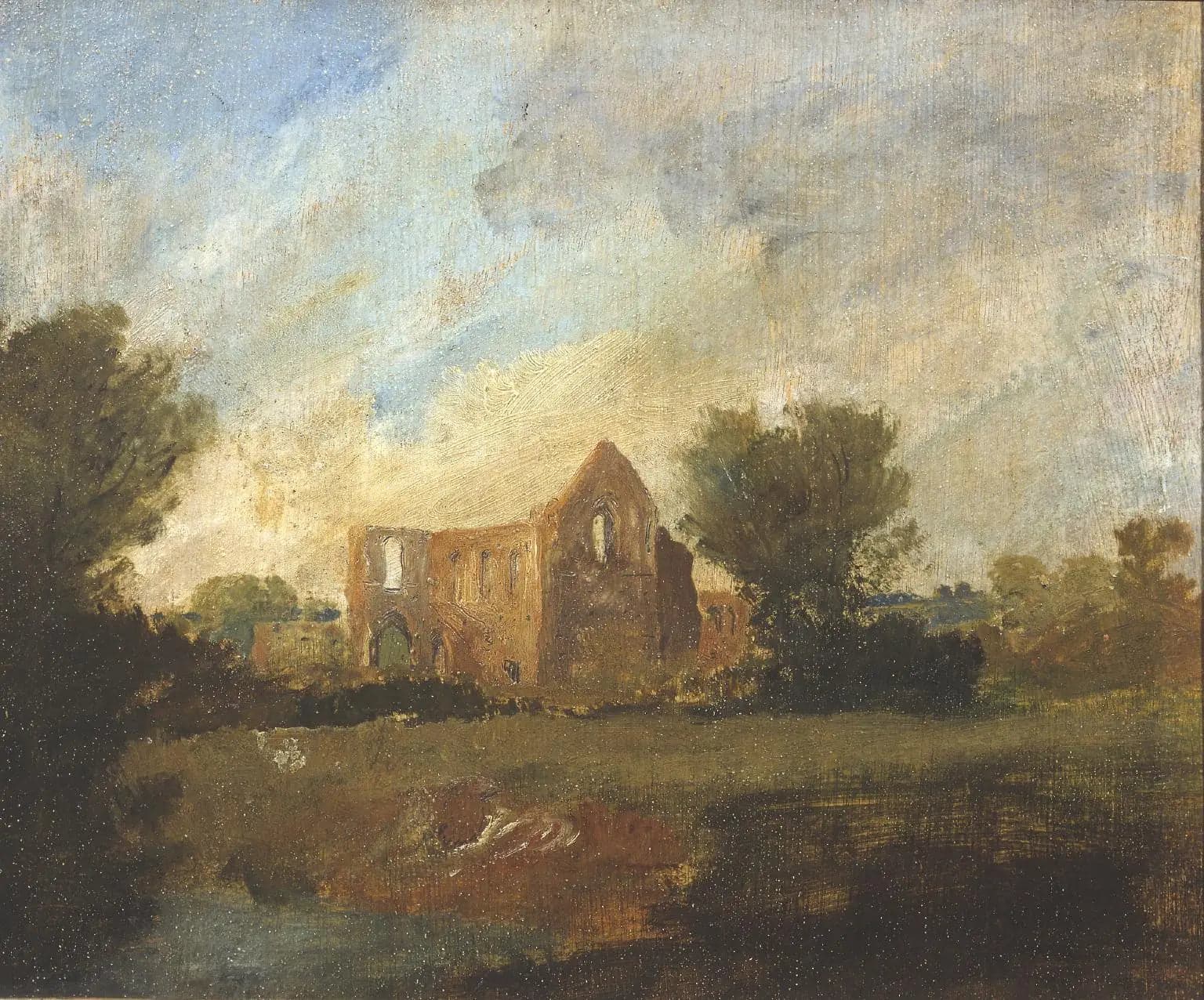
Newark Abbey
- Original dimensions
- 123.2 x 91.4 cm
- Museum
- Yale Center for British Art
- Year
- 1807
Scene depicted
The painting "Newark Abbey" captures a scene of soothing melancholy. The ruins, bathed in soft, golden light, rise majestically above the calm rivers, offering the viewer a poignant glimpse of the ephemeral beauty of nature and the passage of time. The ancient stones tell the story, while various elements of the composition invite reflection and escape.
Historical context
Created in 1807, this painting is an iconic dive into early 19th century England, a time marked by Romanticism and a quest for national expression. The canvas "Newark Abbey" showcases the majestic ruins of Newark Abbey, a sublime illustration of Turner's artistic ideals. Today, this painting resides in the prestigious Yale Center for British Art.
Place in the artist's career
"Newark Abbey" marks a turning point in Turner's career, illustrating his shift towards profound Romantic expression. At this time, the artist develops a bright and expressive palette, comparable to other masterpieces like "The Deluge" and "The Battle of Trafalgar," showcasing a refined technique and deep emotional engagement.
Anecdote
Joseph Mallord William Turner was seen one spring morning, stopped in front of the abbey ruins, murmuring: "Light, oh light, it is in the play of shadows that the beauty of memories resides." This moment of intense contemplation nourished the soul of "Newark Abbey," foreshadowing the evocative power of this pictorial work .