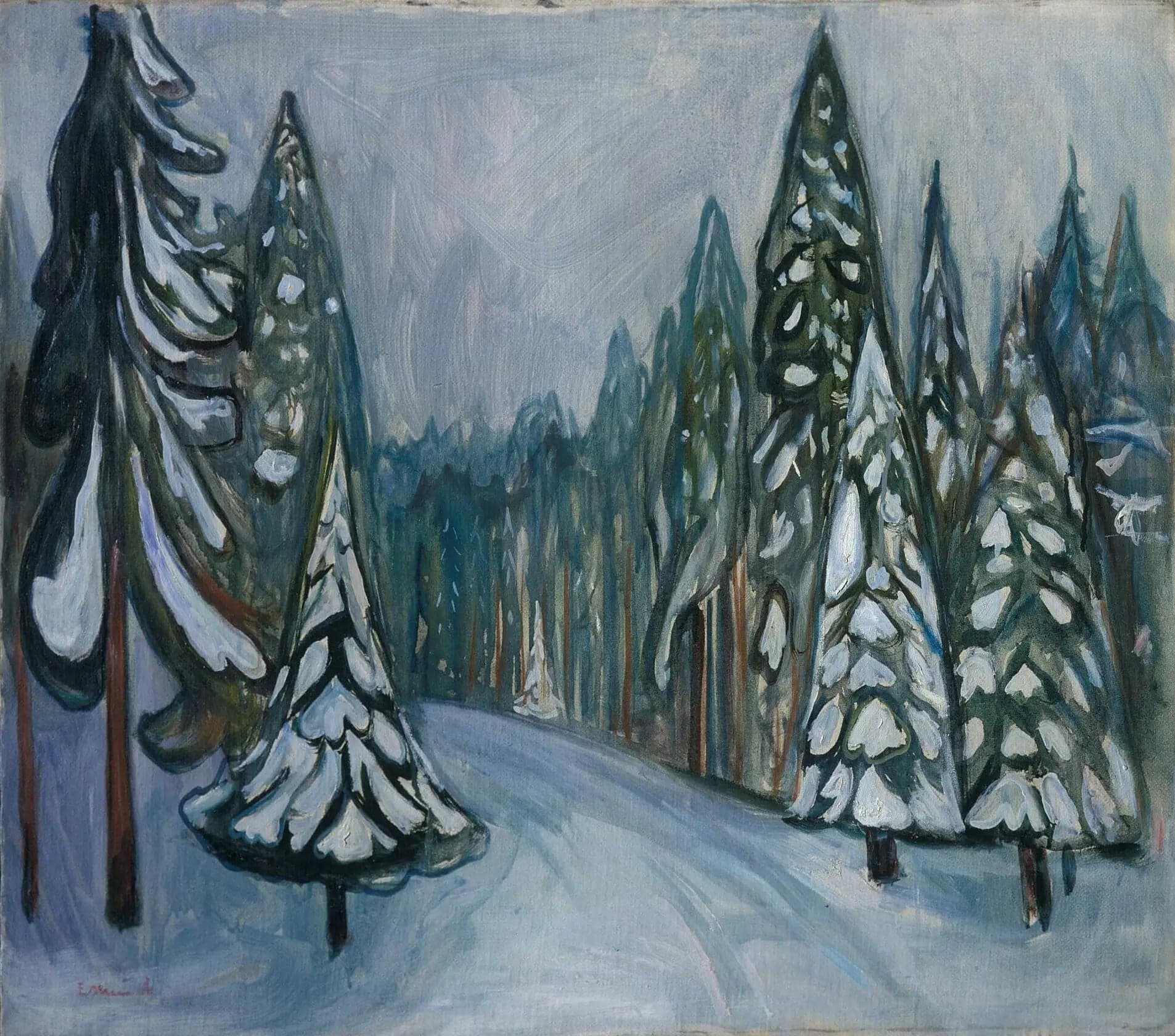
New Snow
- Original dimensions
- 83 x 73 cm
- Museum
- Munch Museum
- Year
- 1900
Scene depicted
The painting "New Snow" presents a snowy landscape enveloped under a clear and bright sky. Beyond the simple city, it is a visual celebration of the contrasts between the purity of the snow and the darkness of human silhouettes, evoking emotions related to contemplation. This pictorial work immerses us in a reflection on ephemeral beauty and isolation, creating a link between the subject and the viewer.
Historical context
Created in 1900 in the city of Oslo, Norway, the painting "New Snow" is part of the symbolist movement, of which Edvard Munch is one of the most emblematic representatives. This masterful painting, currently exhibited at the Munch Museum, resonates with the atmosphere of a time when art intertwined with the raw emotions of existence. With its dimensions of 83 x 73 cm, it offers a perfect setting for immersion in themes of solitude and nature.
Place in the artist's career
Situated at the beginning of the 20th century, the painting "New Snow" marks a decisive step in Munch's career. It emerges as he explores themes of nature with an increasing emotional force. In parallel with other paintings like "The Scream" and "The Dance of Life," there is an evolution towards a more introspective quest, where color plays a central role in narrating the human soul.
Anecdote
"Snow is a veil that covers past pains," Edvard Munch might have said to his friends, inspired by his surroundings. One cold morning, as he isolated himself in a silent landscape, he felt the call of the inner voice. It was in this precious moment that the idea for the canvas sprouted, capturing the serene yet poignant beauty of winter, like a memory oscillating between comfort and melancholy.