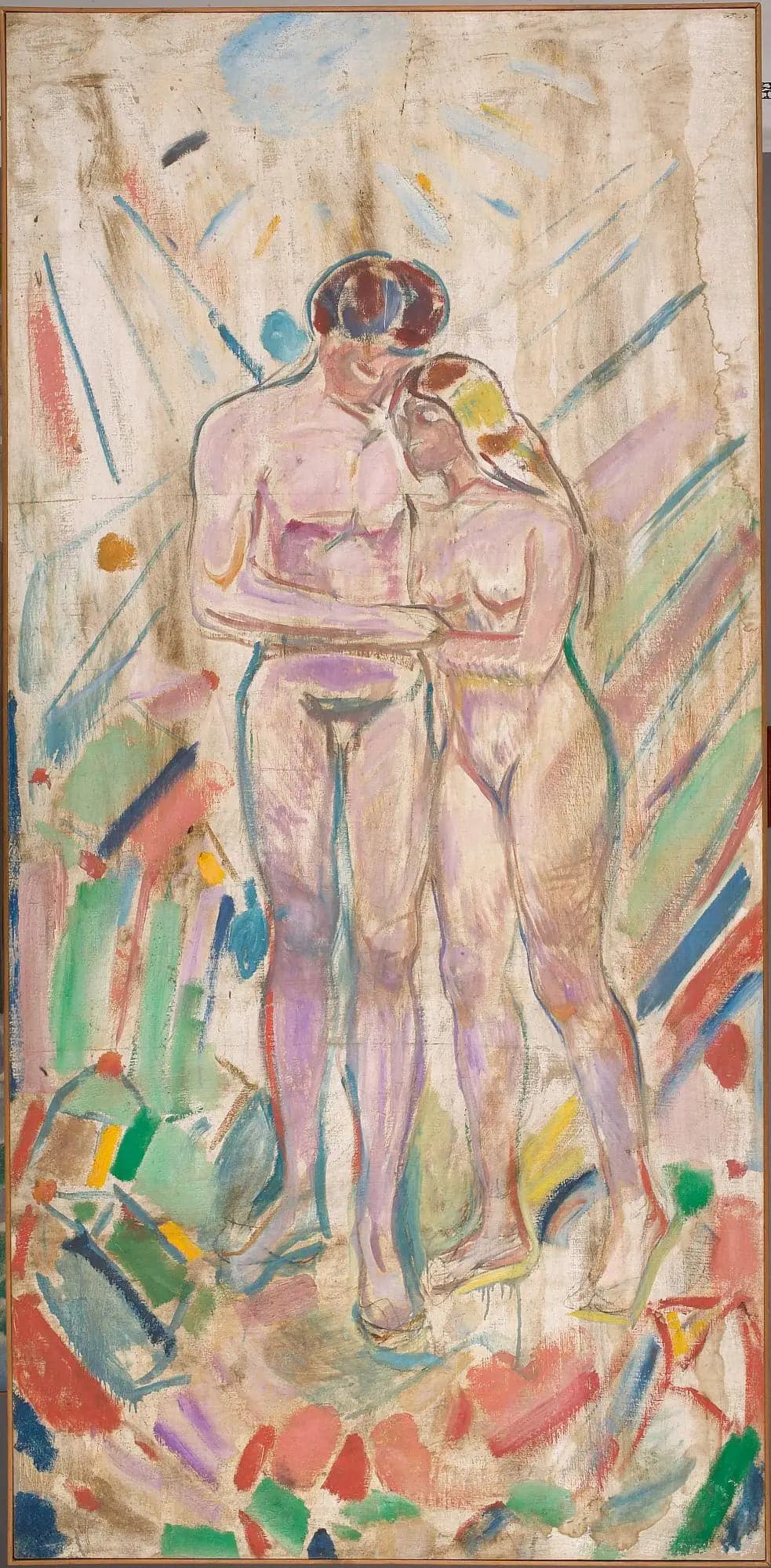
New Rays
- Original dimensions
- 226 x 449 cm
- Museum
- University of Oslo Aula
- Year
- 1914
Scene depicted
"New Rays" illustrates a vibrant scene of light, where human figures are immersed in a radiant natural environment. The composition shows how the rays of the sun seem to dance with nature, embracing every detail in an almost palpable way. Munch, with his innovative approach, invites the viewer to feel the tensions between the human and the cosmos, thus connecting universal emotions to a tangible reality.
Historical context
Created in 1914, the painting emblematic "New Rays" takes shape in Oslo, in the heart of Norway, at a time marked by the symbolist movement. This masterpiece was conceived in a vibrant cultural context, where the beginnings of modernity settle in, with a new sensitivity towards human emotions. The canvas is currently exhibited at the University of Oslo Aula, where it fascinates visitors with its imposing dimensions.
Place in the artist's career
This canvas is at the heart of Munch's artistic maturity. Although he started with lesser-known works, he reaches a stylistic peak here. Placing it alongside "The Scream" and "The Madonna," one perceives an emotional evolution: from existential anguish to a softer and brighter exploration of the human condition.
Anecdote
"Art must not only reproduce, it must convey emotions," would have declared Edvard Munch in the tumult of his inspiration. Imagine a gentle spring morning in Oslo, when the artist, captivated by the changing light of the day, captures its essence on the canvas . This luminous moment becomes the evocative force of "New Rays," a work where the brilliance of light plays a central role.