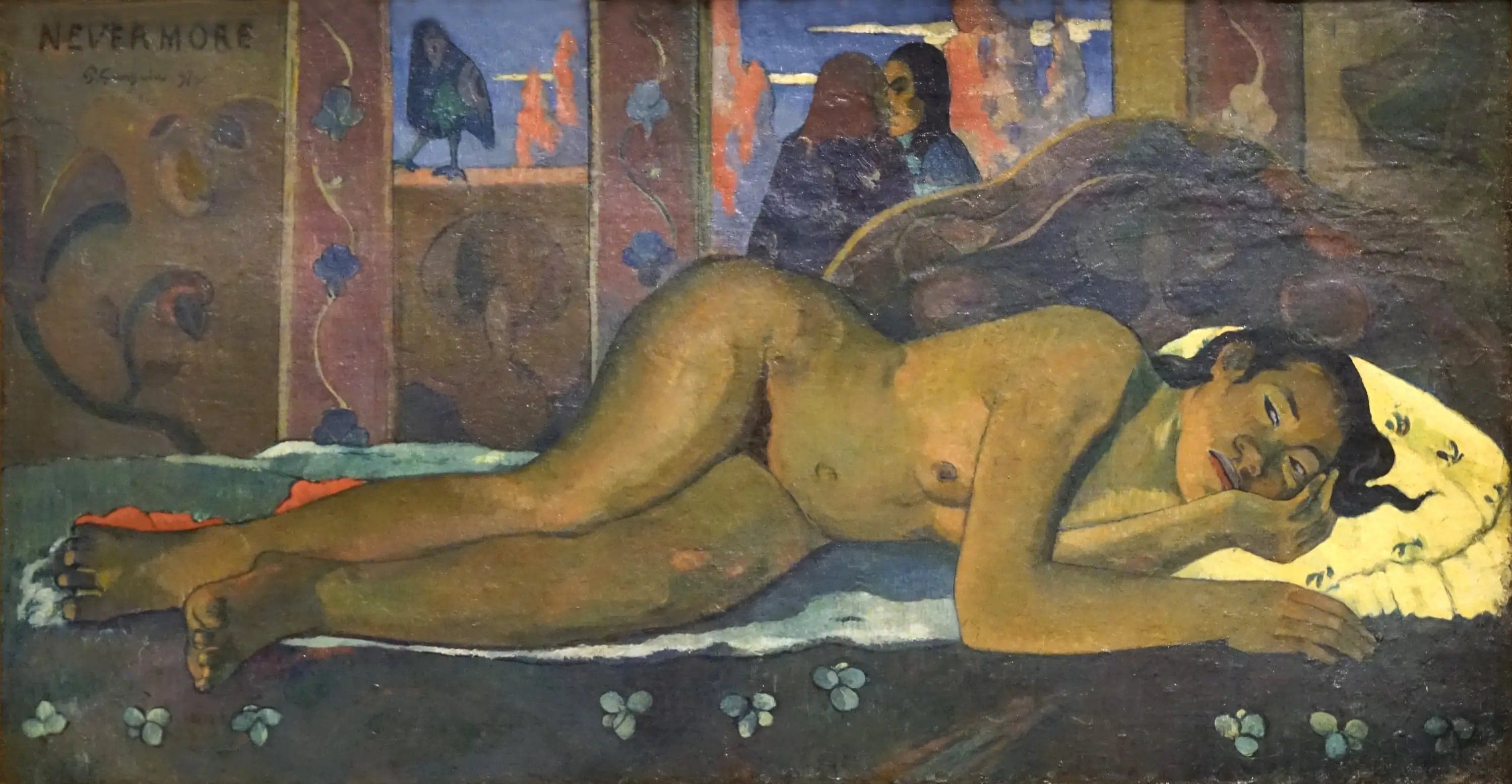
Never Again
- Original dimensions
- 161 x 60 cm
Scene depicted
In "Never Again", Gauguin depicts a scene laden with symbolism , where the lush nature and human figures seem to intertwine their destinies. The painting invites reflection on the passage of time and the ephemeral nature of life, with a harmonious composition that reveals the quest for spirituality and the search for connection with the natural world. The magic of the canvas lies in its ability to evoke a rich and complex emotional surge.
Historical context
Œuvre : Never Again |BRK| Artiste : Paul Gauguin |BRK| Année : 1897 |BRK| Musée : Courtauld Institute |BRK| Dimensions : 161 x 60 cm |BRK|
Place in the artist's career
The painting "Never Again" is situated at a decisive stage in Gauguin's career. This masterpiece represents not only a technical exploration but also artistic maturity. Alongside other works such as "The Vision After the Sermon" and "Where Do We Come From? What Are We? Where Are We Going?", "Never Again" testifies to the evolution of Gauguin's pictorial language, affirming his unique aesthetic and commitment to emotional subjectivity.
Anecdote
“I seek to capture the soul of nature, to make my colors sing.” could be the echo of Gauguin's thoughts while contemplating the wild beauty of Tahiti. That morning, as he awoke to the golden light of dawn, a vision of natural harmony inspired him to bring to life a canvas imbued with vibrant emotions, thus becoming the foundation of the painting "Never Again".