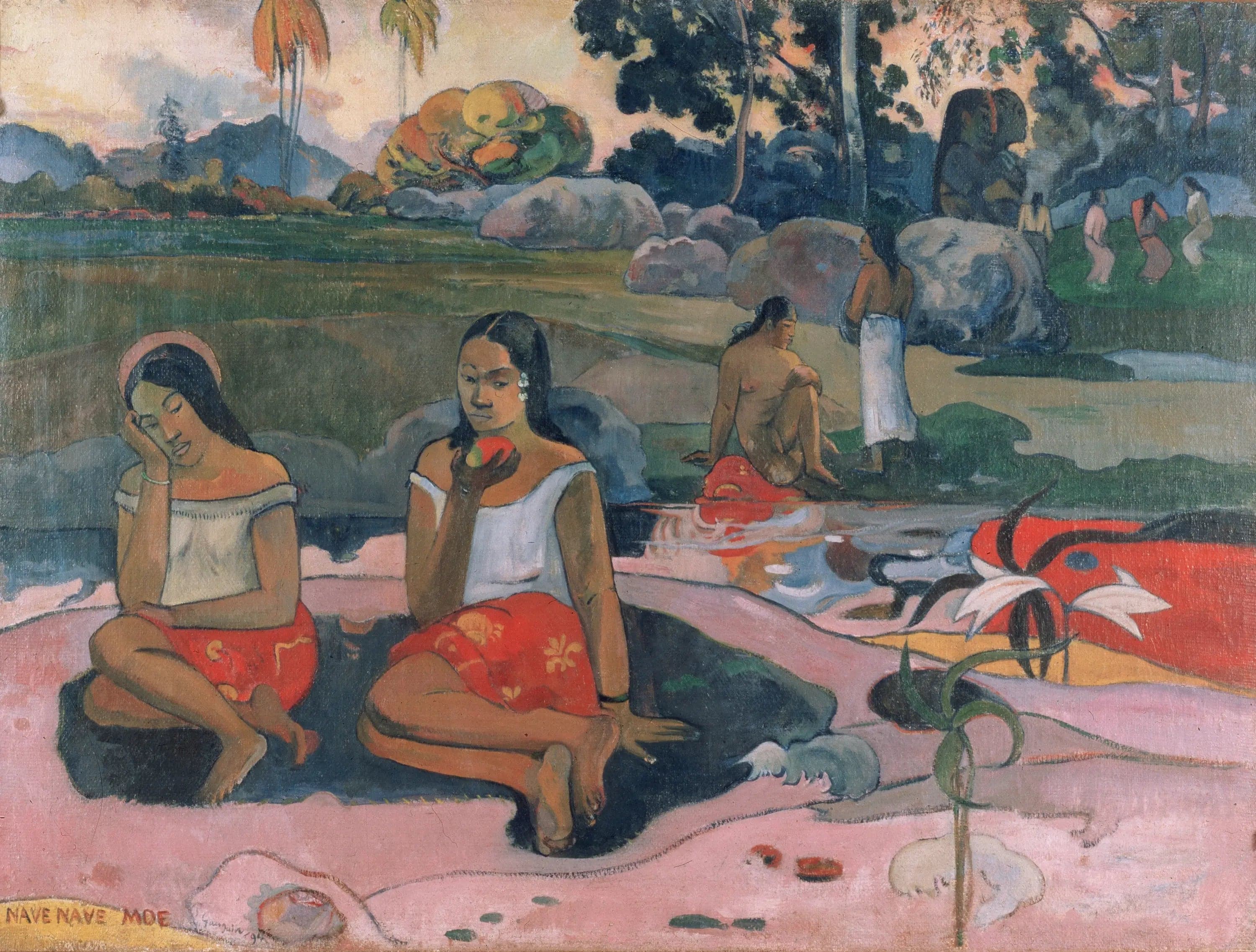
Nef nef moe
- Original dimensions
- 100 x 74 cm
- Museum
- Hermitage Museum
- Year
- 1894
Scene depicted
"Nef nef moe" immerses us in a scene imbued with mystery and serenity. The painting highlights a composition rich in symbolic elements, where nature intertwines with human figures, creating an endless dialogue between innocence and the sacred. Through this canvas , Gauguin invites the viewer to explore deep emotions, often linked to ancestral and spiritual narratives.
Historical context
Created in 1894 in the vibrant context of the Post-Impressionist school, the painting "Nef nef moe" by Paul Gauguin illustrates the sweet blend of colors and emotions of the late 19th century. This iconic canvas is now carefully preserved at the Hermitage Museum in Saint Petersburg, where it continues to fascinate with its tropical and mythical atmosphere.
Place in the artist's career
This masterpiece is a cornerstone in the career of Paul Gauguin , marking his period of stylistic maturity. At this time, he is already distinguished by works such as "The Vision of the Sermon" and "Woman of Tahiti," revealing a transition to brighter colors and a bold painting technique that elevates him to the ranks of the masters of the 20th century.
Anecdote
Paul Gauguin once stated, while wandering the streets of Pont-Aven: "The painting is the truth of the soul that must be made visible." It is in this quest that he sketched the idea of "Nef nef moe," inspired by a morning vibrant with colors and birdsong. The work emerges from pure emotion, connected to the lush and enigmatic landscapes of his native Brittany.