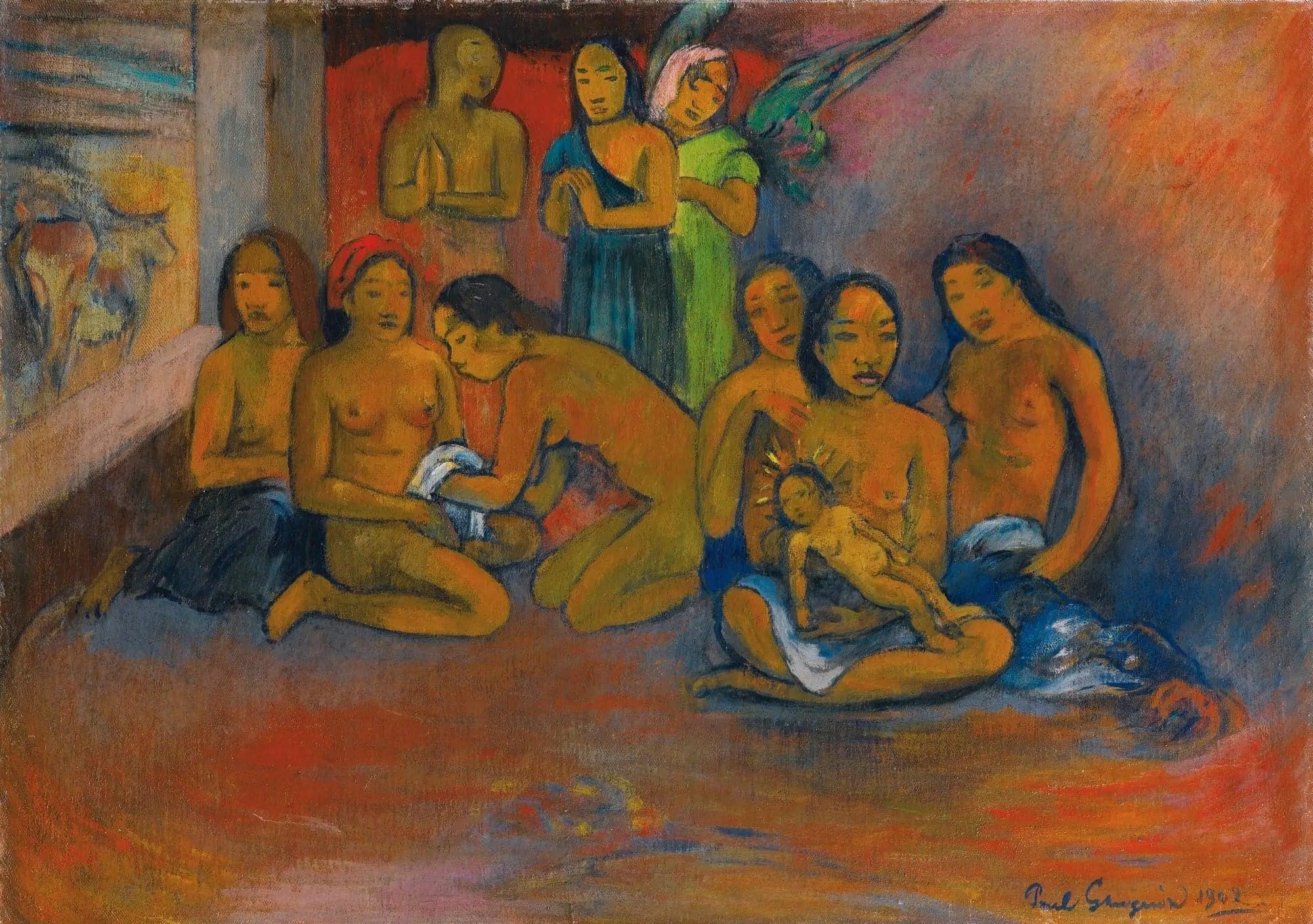
Nativity
- Original dimensions
- 62.5 x 44.1 cm
- Museum
- Not specified
- Year
- 1902
Scene depicted
This painting evokes a peaceful and intimate scene of the Nativity, where the soft light envelops the central figures, symbolizing the birth of the divine. The figures, in their simplicity, are imbued with a spiritual depth, highlighting the sacred dimension of this event. The vibrant colors contrast harmoniously, creating an atmosphere of serenity and familial warmth that warms the heart.
Historical context
Created in 1902, Nativity is part of a fascinating period in the life of Paul Gauguin , who was interested in spiritual and exotic subjects. This iconic painting is a striking example of the post-impressionist movement, an artistic current that sought personal expression rather than realistic representation. Although its current location is not specified, this painting remains invaluable and conveys the chromatic and spiritual richness of the time.
Place in the artist's career
The Nativity represents a crucial step in Gauguin's career, marking his transition to more introspective and spiritual themes. While works like Vision after the Sermon and The Criblés showcase his search for bold colors and dynamic compositions, Nativity asserts itself as a symbol of maturity, where each brushstroke transcends simple representation to offer a profound reflection.
Anecdote
“Each work is a window to the imaginary.” These words from Gauguin seem to resonate with the genesis of this masterpiece . Inspired by the depths of Polynesian culture, the artist is said to have awakened one starry night, where the whispers of the adjacent nature translate the magic of the canvas to come.