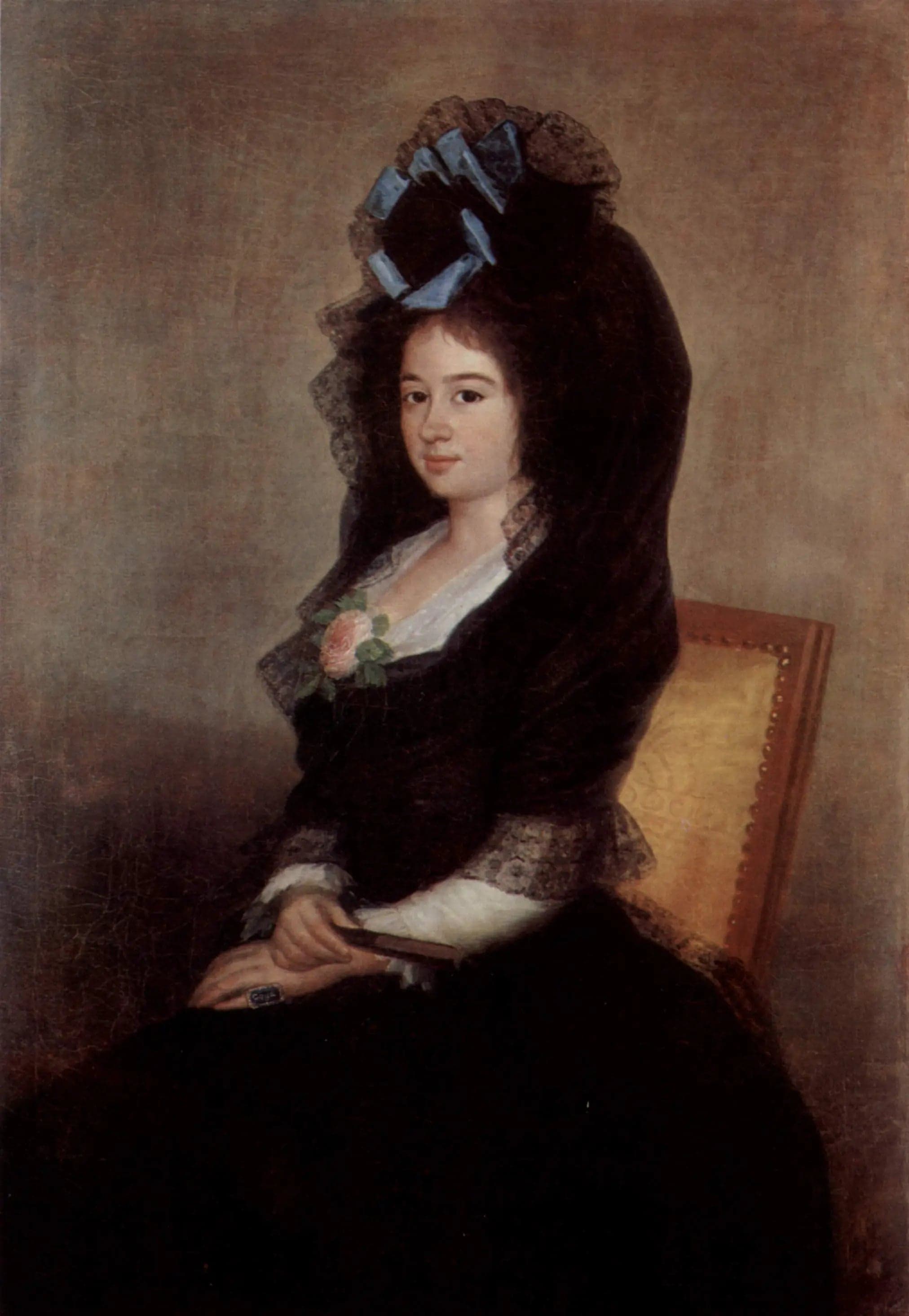
Narcisa Barañana de Goicoechea
- Original dimensions
- 78.1 x 112.4 cm
- Museum
- Metropolitan Museum of Art
- Year
- 1815
Scene depicted
In this pictorial work, Goya depicts a young woman with a penetrating gaze, immortalizing a timeless grace. The composition explores not only the beauty of its subject but also captures an atmosphere filled with unexpressed emotions and stories. Narcisa's gaze seems to speak, delivering the echo of an era and the essence of her personality.
Historical context
Created in 1815, this painting is set against the tumultuous historical context of early 19th century Spain. Francisco de Goya , a leading figure of romanticism , conveys through his canvas an unparalleled emotional depth. Currently displayed at the Metropolitan Museum of Art in New York, the painting measures 78.1 by 112.4 cm, an ideal format for capturing the delicate nuances of the work.
Place in the artist's career
“Narcisa Barañana de Goicoechea” represents a turning point in Goya's career. Between the lightness of his early works and the dark depth of his later pieces, this painting illustrates a stylistic peak where technique and emotion meet. Like “Las Meninas” by Velázquez and “The Family of Charles IV,” it testifies to a remarkable evolution in his psychological approach to portraits.
Anecdote
Goya once declared: “Good painting must vibrate the soul, like a luminous breath through the darkness.” This maxim resonates particularly through the painting “Narcisa Barañana de Goicoechea,” where each stroke comes to life, as if the face of the young woman reveals itself in the light of a summer morning.