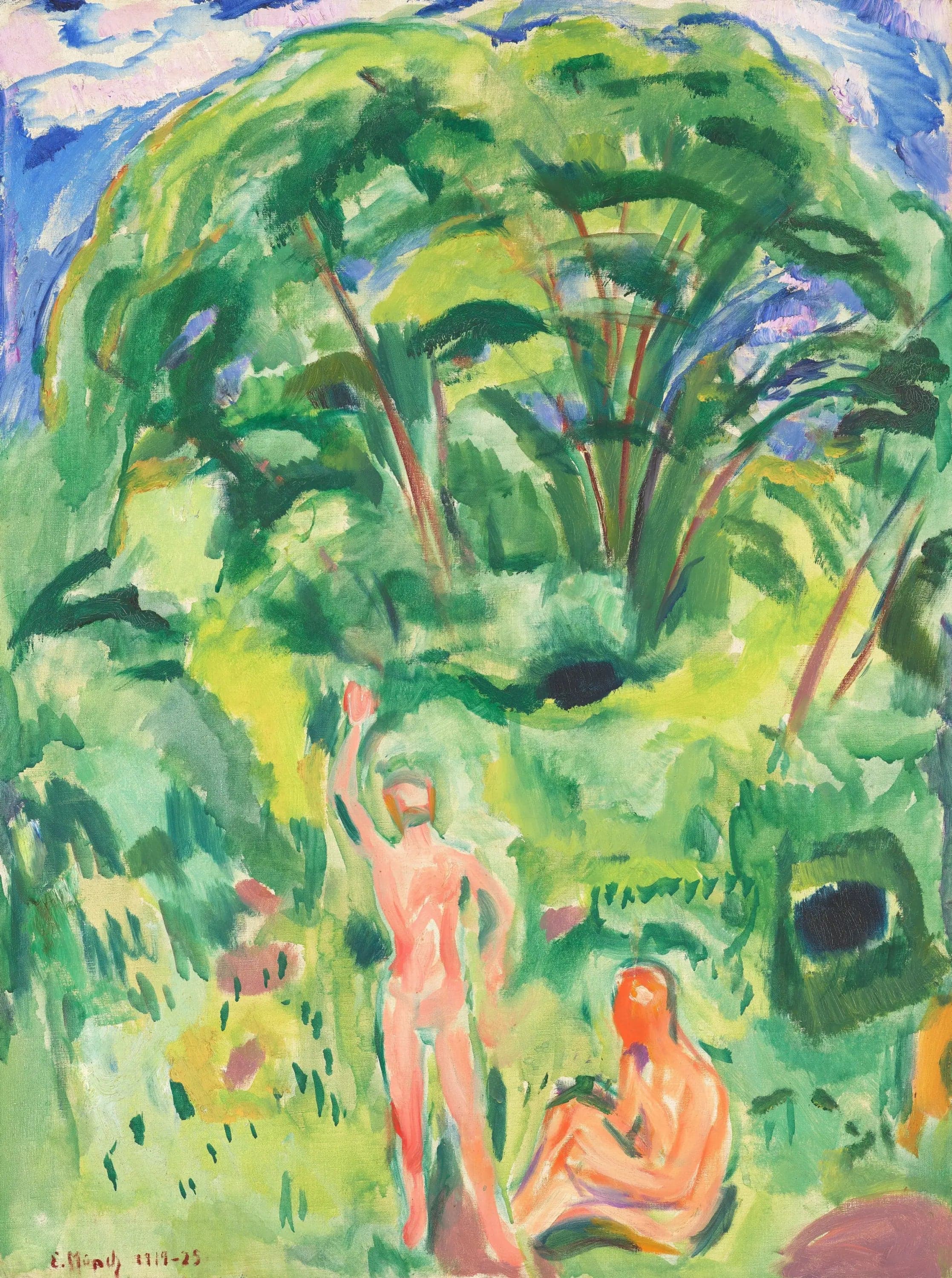
Naked Men in the Woods
- Original dimensions
- 66.5 x 100 cm
- Museum
- Munch Museum
- Year
- 1919
Scene depicted
The composition of the canvas depicts an enchanting scene where naked men move among dense, almost spiritual nature. The atmosphere that emerges from this painting is imbued with mystery and solitude, connecting the individual to the majesty of the landscape. The human forms blend with the shadows of the trees, celebrating the union of man and his environment in a timeless dance.
Historical context
Created in 1919 in Oslo, the capital of Norway, the painting Naked Men in the Woods is part of the symbolist movement, characteristic of modern art in the early 20th century. This period is marked by a quest for emotional and psychological expression, reflecting a time of profound change. Today, this masterful work is preserved in the Munch Museum, where it captivates visitors with its evocative power and visual poetry.
Place in the artist's career
This painting marks an important milestone in the career of Edvard Munch , showcasing a valuable stylistic maturity. Echoing works like The Scream and The Madonna , Naked Men in the Woods plunges the viewer into the heart of emotions, articulations of a rich and tumultuous inner world.
Anecdote
“Nature is the mirror of the emotions of the soul,” one might hear Edvard Munch say, inspired in front of a mysterious wood on a spring morning. This thought is perfectly embodied in his masterpiece where the men, naked and vulnerable, commune with nature in a silent and powerful embrace, revealing the depth of the pictorial work.