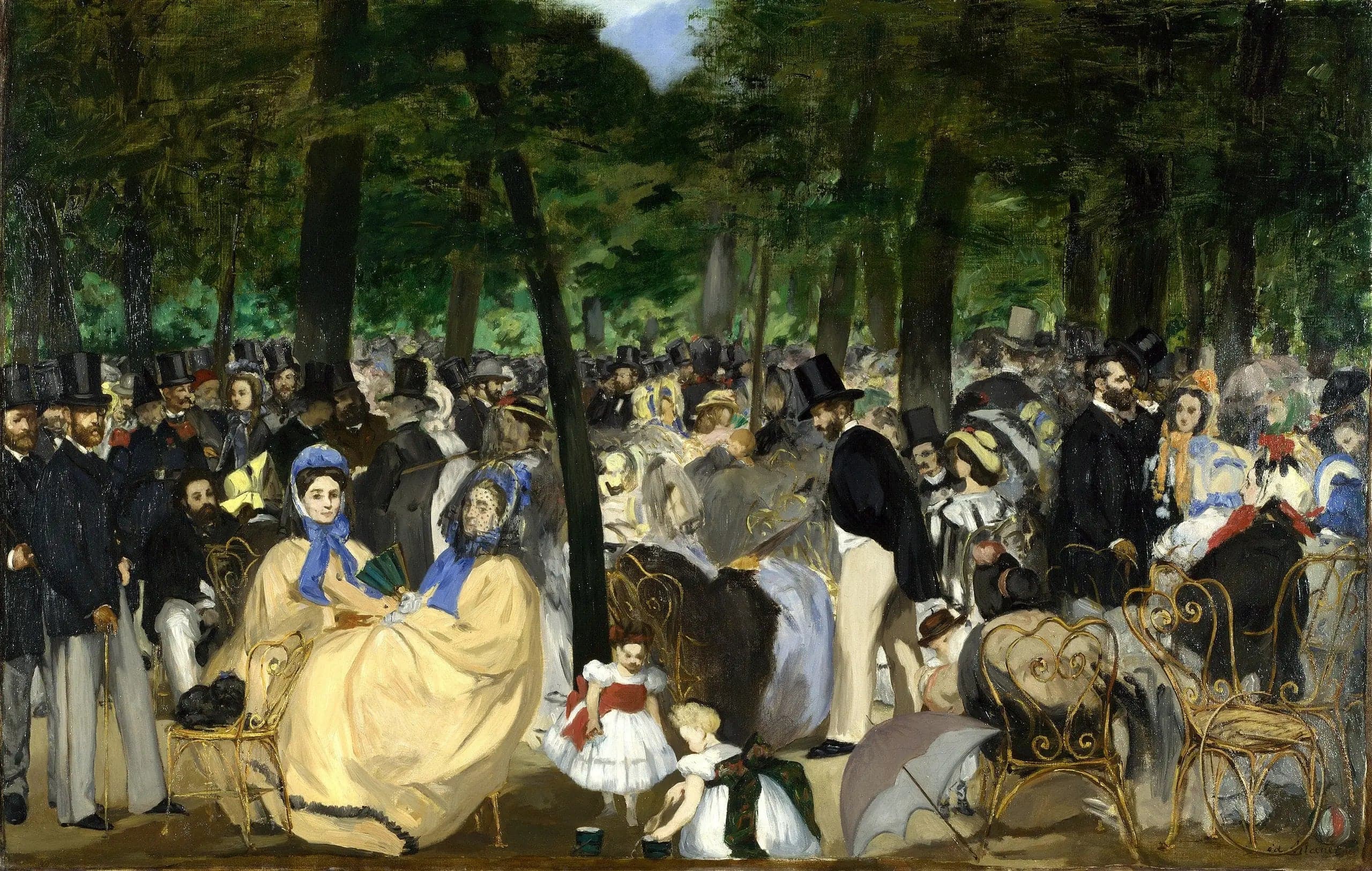
Music in the Tuileries
- Original dimensions
- 118.1 x 76.2 cm
- Museum
- National Gallery
- Year
- 1862
Scene depicted
The scene depicted in the painting “Music at the Tuileries” is of rare liveliness. It shows elegant Parisians, adorned in vibrant colors, mingling with the sounds of music while savoring the beauty of a sunny afternoon. The smiling faces, refined costumes, and festive atmosphere evoke a sense of joy while celebrating the bourgeois culture of that time. Each character, frozen in a moment of life, creates an almost palpable dynamic on the canvas .
Historical context
This painting was created in 1862, in the French capital, Paris, at the heart of the impressionist movement, which was shaking up established artistic conventions at the time. Evoking the Tuileries gardens, this painting bears witness to a time when art began to free itself from academic norms. Today, this precious canvas is preserved at the National Gallery, where it attracts art enthusiasts from around the world.
Place in the artist's career
“Music at the Tuileries” marks a significant milestone in Manet's career, representing a turning point towards modernity. It comes after his early works, such as “Luncheon on the Grass,” and precedes the innovations of his famous “Olympia.” Each of these paintings illustrates his artistic evolution, oscillating between tradition and rupture, and testifies to his desire to capture everyday life in a new light.
Anecdote
“The light dances, and the music elevates the soul,” Manet is said to have remarked during the creation of this masterpiece. Inspired by the melodies of musicians playing in the garden on a gentle morning, this vibrant moment translated into a composition rich in nuances and emotions, capturing the spirit of a bustling Paris.
Major exhibitions
Paul Durand-Ruel, the bet of impressionism