Murder
- Original dimensions
- 100.5 x 70.5 cm
- Museum
- Munch Museum
- Year
- 1906
Scene depicted
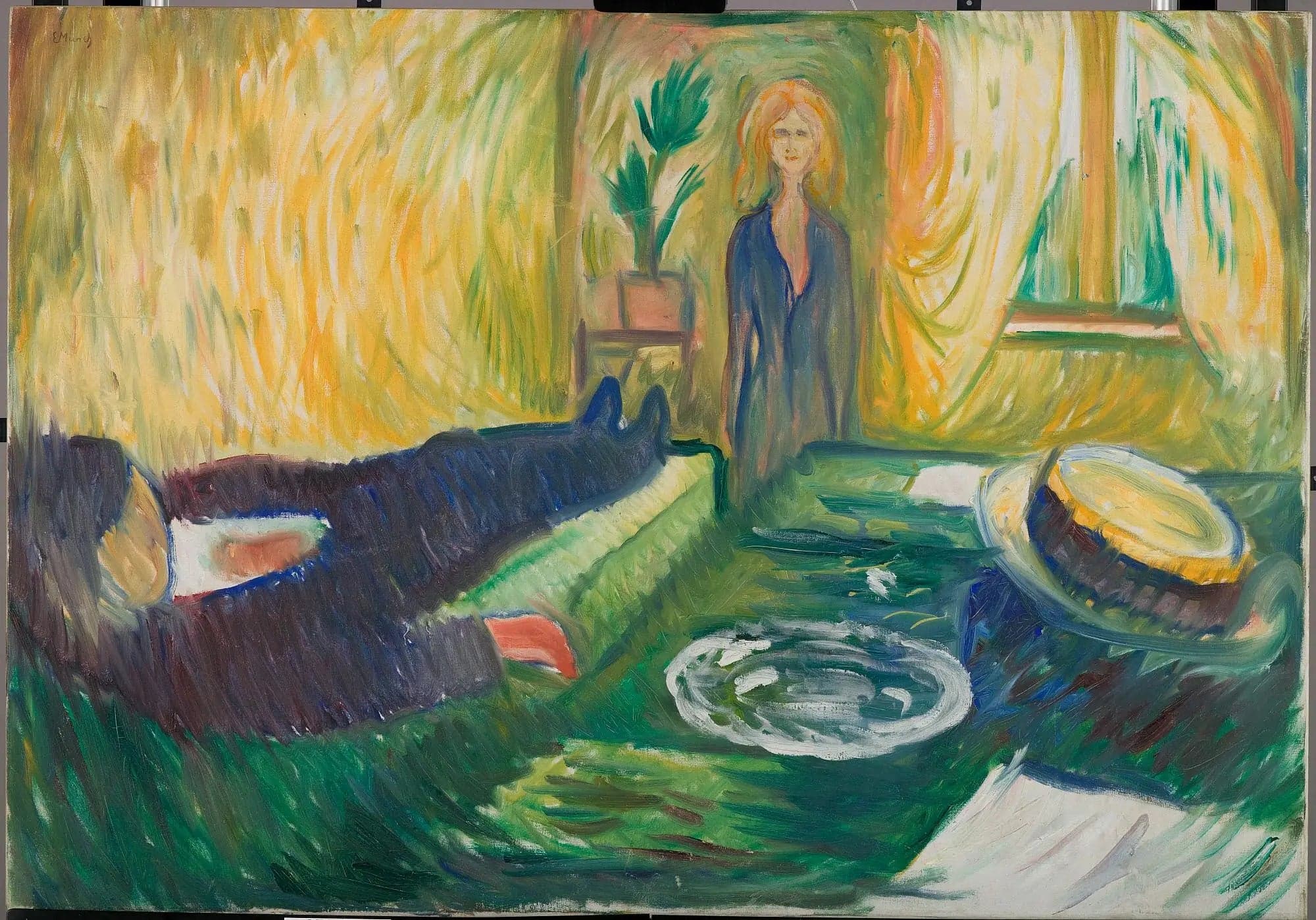
The painting “Murder - Edvard Munch ” evokes a disturbing scene where blood and tragedy intertwine in a silent scream of despair. Munch, through his vivid brushstrokes and bold composition, captures human drama and the intimacy of suffering. Every detail of this painting speaks to the viewer, creating a striking emotional connection with the subject matter.
Historical context
Created in 1906, Murder is an iconic work by the famous Norwegian artist Edvard Munch , who resides in Oslo, a city rich in history and culture, the cradle of the expressionist movement. At a time when art seeks to transcend reality, this painting powerfully captures attention with its raw emotion and palpable expression of human suffering. The canvas is currently displayed at the Munch Museum, a place dedicated to Munch's artistic legacy.
Place in the artist's career
“Murder” stands as a milestone in Munch's career, a period when he asserts his unique style while experimenting with dark themes. In parallel with works like “The Scream” and “The Madonna,” a marked evolution is observed, a deep engagement with human emotions that, over time, will define his art.
Anecdote
“I do not paint what I see, I paint what I feel.” Such would be Munch's whisper while contemplating a dark street one morning, faced with tragic events that would inspire him to bring this masterpiece to life. The canvas “Murder” was born from the urgency, passion, and tension of a moment, translating the depth of anguish onto the canvas.