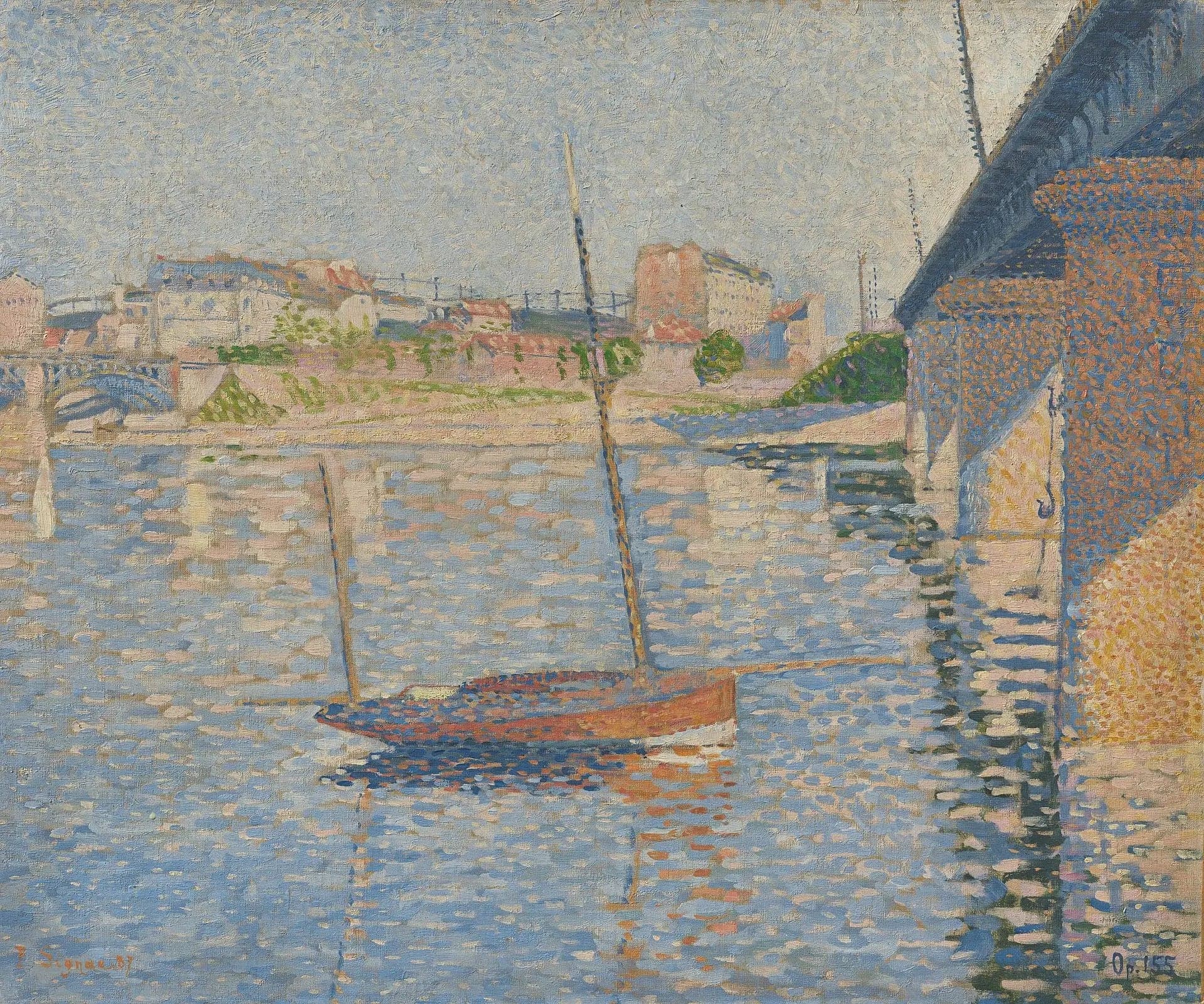
Mower
- Original dimensions
- 55 x 46 cm
- Museum
- Barberini Museum
- Year
- 1887
Scene depicted
At the heart of this canvas , a mower, emblematic of rural work, is frozen in a harmony of bright colors and luminous treatments. Signac, through this pictorial work, pays tribute to the beauty of agricultural labor, where human effort and nature coexist in perfect symbiosis. The vibrant color touches unfold to capture the movement and light of the moment, enveloping the viewer in a peaceful, almost meditative atmosphere.
Historical context
Created in 1887 in the sunny setting of the Paris region, the painting "Mower" by Paul Signac stands out in the Neo-Impressionist movement. At that time, the artistic corridor of Europe was marked by radical transformations, where color and light emerged as the protagonists of bold compositions. Currently housed at the Barberini Museum , this canvas of an elegant dimension of 55 x 46 cm belongs to a period where art intertwined with the science of emotion.
Place in the artist's career
"Mower" stands as an important milestone in the career of Paul Signac , symbolizing his evolution towards a freer and more expressive approach. In parallel, works like " Portrait of Félix Fénéon " and "The Hills of Estaque" illustrate his journey, marking a turning point towards learning the techniques of divisionism . This painting is not only a culmination but also a revelation of his creative genius, attesting to a growing mastery of colors and composition.
Anecdote
"Painting is like a secret garden, each brushstroke cultivates an emotion." Such is the very essence that guided Paul Signac during the genesis of this masterpiece . Imagine a bright spring morning, when the artist, in search of inspiration, found himself amidst a field vibrant with the sounds of the mower's scissors and the scents of freshly cut earth. This scene, its lively atmosphere, masterfully fueled the evocative power of the painting "Mower".