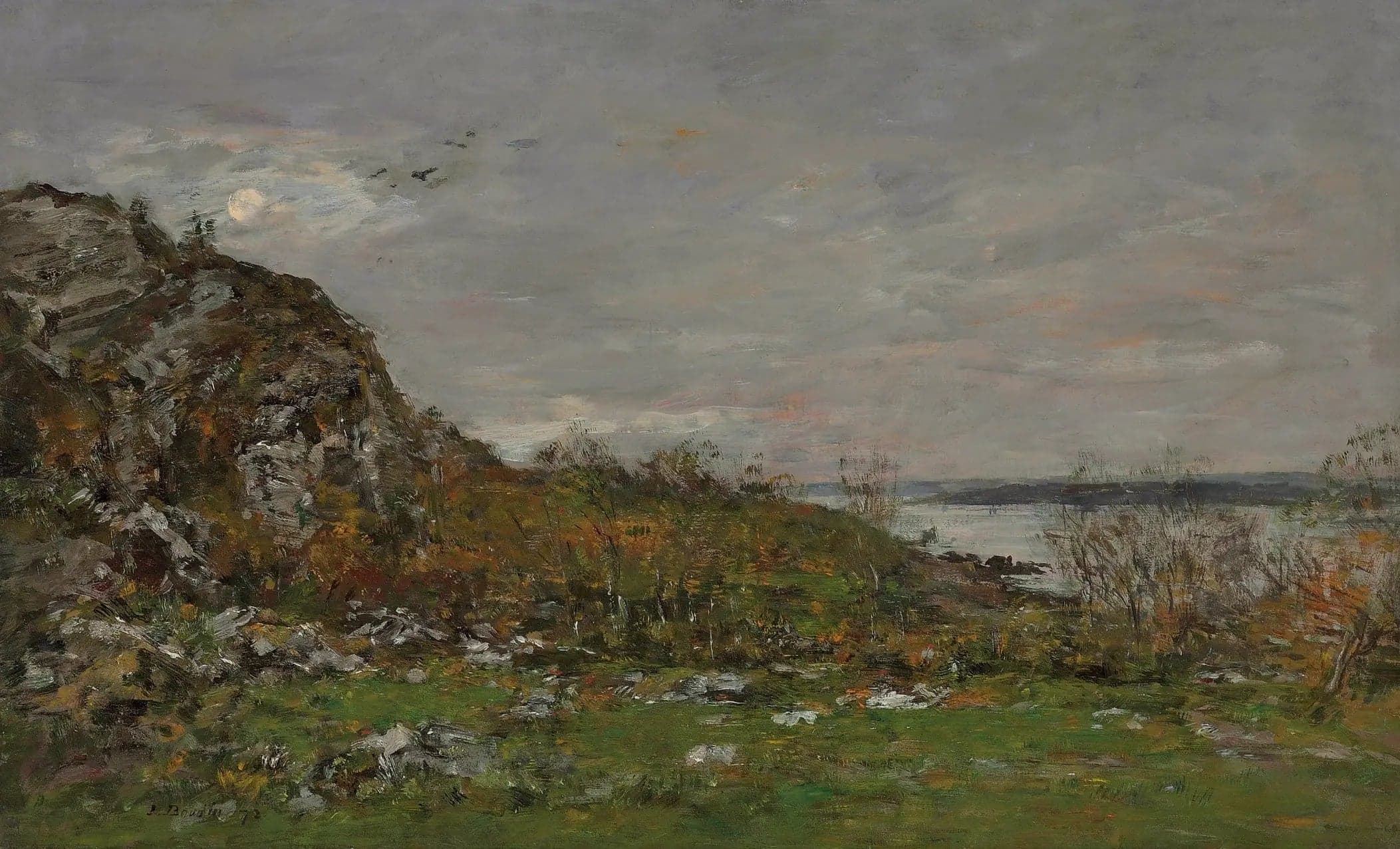
Mouth of the Elorn near Brest
- Original dimensions
- 89.5 x 54.6 cm
- Museum
- Not specified
- Year
- 1872
Scene depicted
The painting “Mouth of the Elorn near Brest” carefully depicts the tranquil course of the Elorn River merging with the vast sea, a place where sky and water join in an endless dance of light. Sailboats gently sway, the depths of the sea reflecting the hues of the sky, while figures by the water live their daily lives, anchored in the natural beauty that surrounds them.
Historical context
Created in 1872, this painting is emblematic of its origin in the tranquil banks of the Elorn, near Brest. Eugène Boudin , an essential figure of the Impressionist movement, finely captures the soul of this historic marine place. In the midst of the Impressionist period, this painting evokes a vibrant maritime scene full of life and light. Although the current location of this canvas is not specified, its impact on art remains undeniable.
Place in the artist's career
This canvas , “Mouth of the Elorn,” represents a turning point in Boudin's career, symbolizing the beginning of his Impressionist exploration. Alongside other masterpieces such as “The Beach at Trouville” and “The Port of Rouen,” this painting illustrates his technical evolution. By capturing light and playing with shadows, Boudin achieves here an impressive pictorial maturity.
Anecdote
“Nature is my muse, and every canvas I create is a tribute to its ephemeral beauty,” said Boudin while contemplating the Breton horizon. That morning, as the golden rays of the sun caressed the waves, he managed to capture the sweetness of a moment. These moments of serenity are beautifully reflected in the work Mouth of the Elorn .