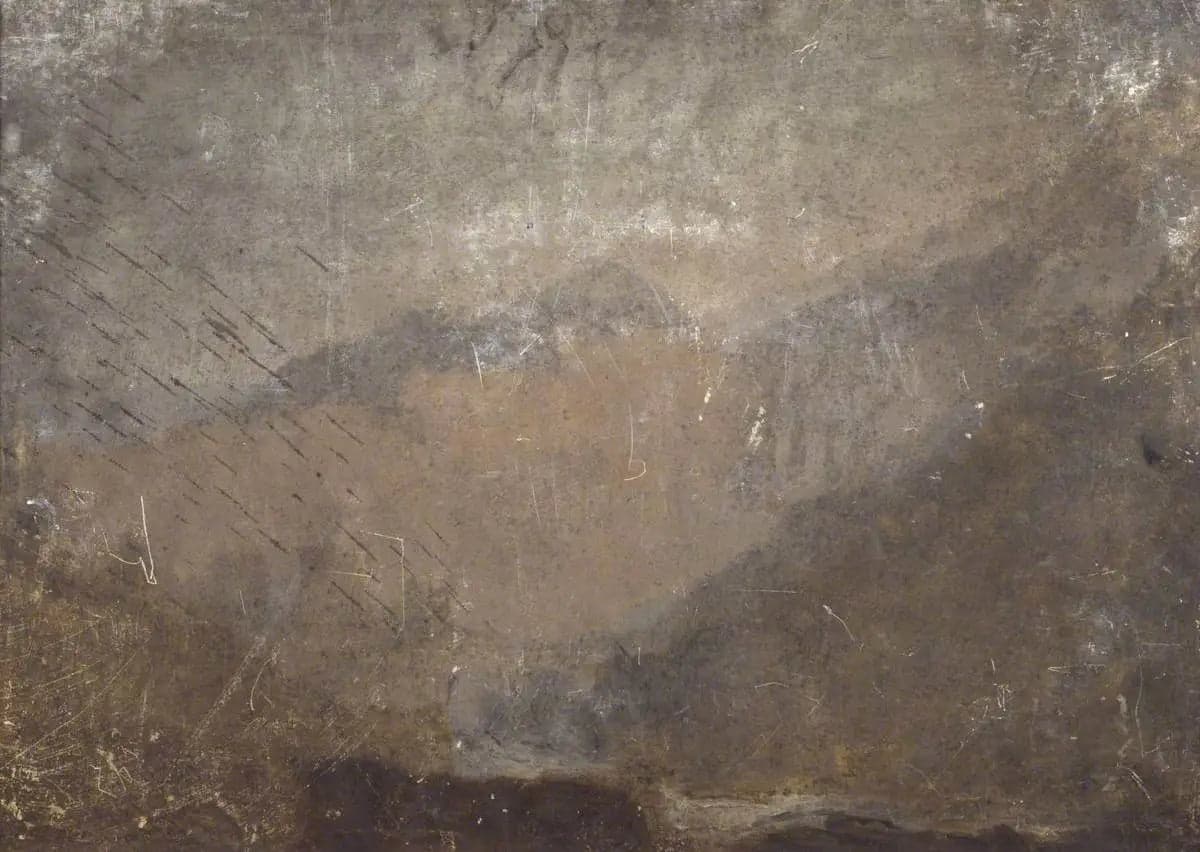
Mountainous Landscape
- Original dimensions
- 41.3 x 59.7 cm
- Museum
- Tate
- Year
- 1828
Scene depicted
The painting “Mountainous Landscape” depicts a majestic picturesque view of the British mountains, enveloped in a soft mist that seems to dance on the surface of the peaks. The composition captures the essence of the wild nature, playing with the light filtering through the clouds. Turner invites us to travel beyond the canvas, to feel the silent power of these lands while losing ourselves in the serenity of the represented landscape, as an invitation to contemplation.
Historical context
Created in 1828, the painting titled Mountainous Landscape is set within the romantic and innovative framework of a time when the artistic movement sought to celebrate the grandeur of nature. This canvas emblematic of Joseph Mallord William Turner embodies the subtleties of English landscapes, as the artist dives into the depths of the mountains of Wales. Established in the prestigious collection of the Tate in London, this masterpiece of 41.3 x 59.7 cm is a true window into the sublime, capturing transient moments through light and color.
Place in the artist's career
This painting , an essential work in Turner’s career, marks a period of technical sophistication and emotional experimentation. Flourishing between his famous achievements like “The Fighting Temeraire” and the mystical “Rain, Steam and Speed,” Mountainous Landscape testifies to an artistic maturation, where light and atmosphere transcend the simple representation of the landscape.
Anecdote
“Nature sang using colors.” This quote could encapsulate the essence of the inspiration that led Turner to create his painting . One misty morning on the mountain ridges, he observes the ethereal clouds intertwining with the wind, masterfully juxtaposed against the lights of day. Mountainous Landscape was born from this intimate communion between the artist and the landscape, translating a raw and poignant emotion through his pictorial art.