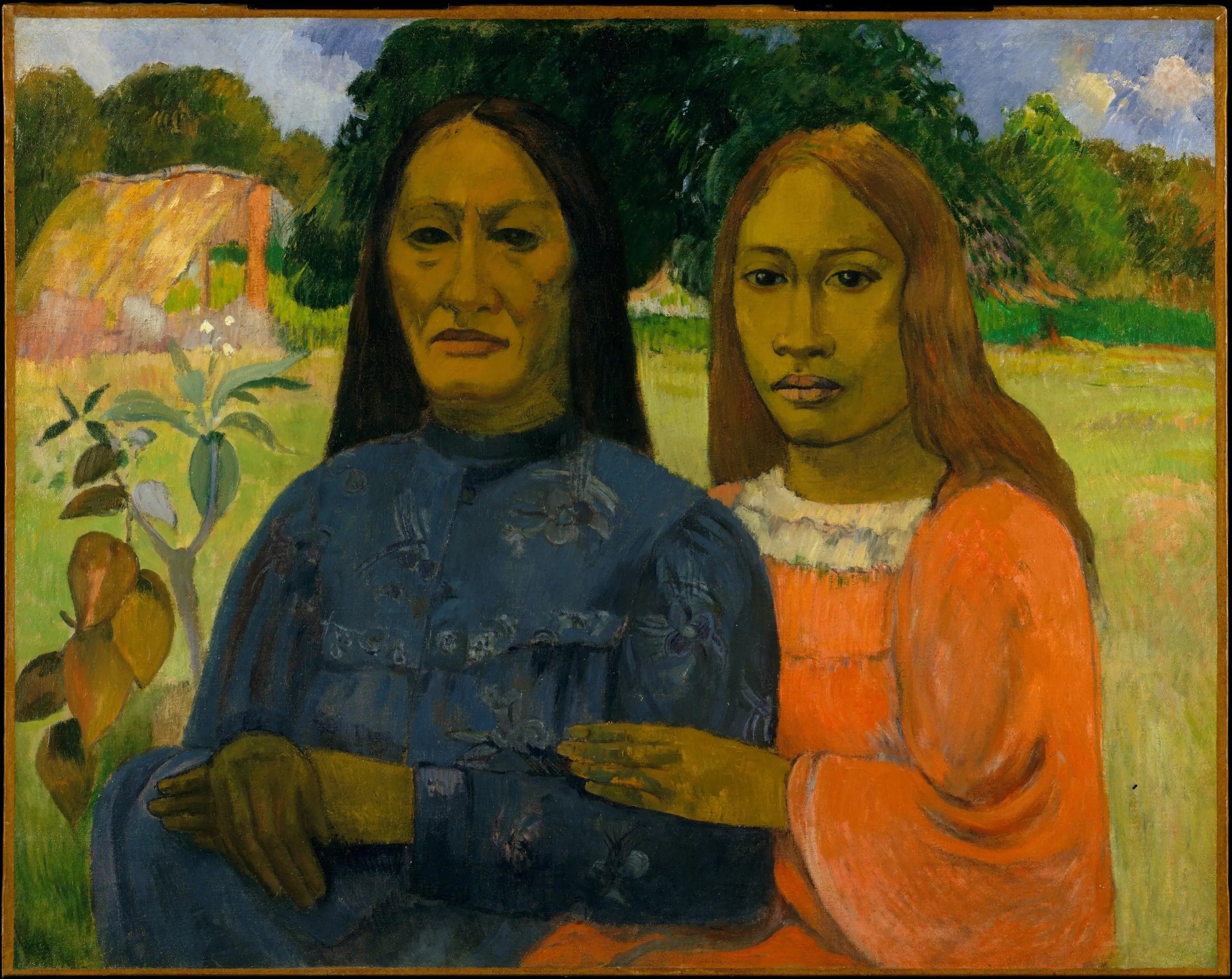
Mother and Daughter
- Original dimensions
- 92.1 x 73.7 cm
- Museum
- Metropolitan Museum of Art
- Year
- 1901
Scene depicted
In this canvas , Gauguin depicts an intimate scene, where a mother and her daughter, dressed in vibrant dresses, share a moment of tenderness and complicity. With her gaze fixed on her mother, the child embodies innocence, while the mother exudes a protective aura. Bright colors illuminate the composition, celebrating family love in all its splendor.
Historical context
Created at the end of the 19th century, this painting is emblematic of the post-impressionist movement, which was in full swing in Paris. Paul Gauguin , a controversial and avant-garde figure, captured the essence of family life during this pivotal time. The canvas is now housed in the prestigious galleries of the Metropolitan Museum of Art in New York, where it draws all eyes, celebrating the depth of human relationships.
Place in the artist's career
Mother and Child represents a significant period in Gauguin's career, a turning point towards greater expressiveness. Just before this painting , he had created works like “In the Sun” and “The Vision of the Sermon,” all three sharing a bold exploration of colors and human emotions, but in Mother and Child, the artist reveals a psychological depth, adding new dimensions to his pictorial evolution.
Anecdote
“Life is a rare canvas on which I paint moments of sweetness and tenderness,” Gauguin said. It was in a Parisian alley, on a sweet spring morning, that he encountered this delicate bond between a mother and her daughter, inspiring this timeless masterpiece , imbued with warmth and nostalgia.