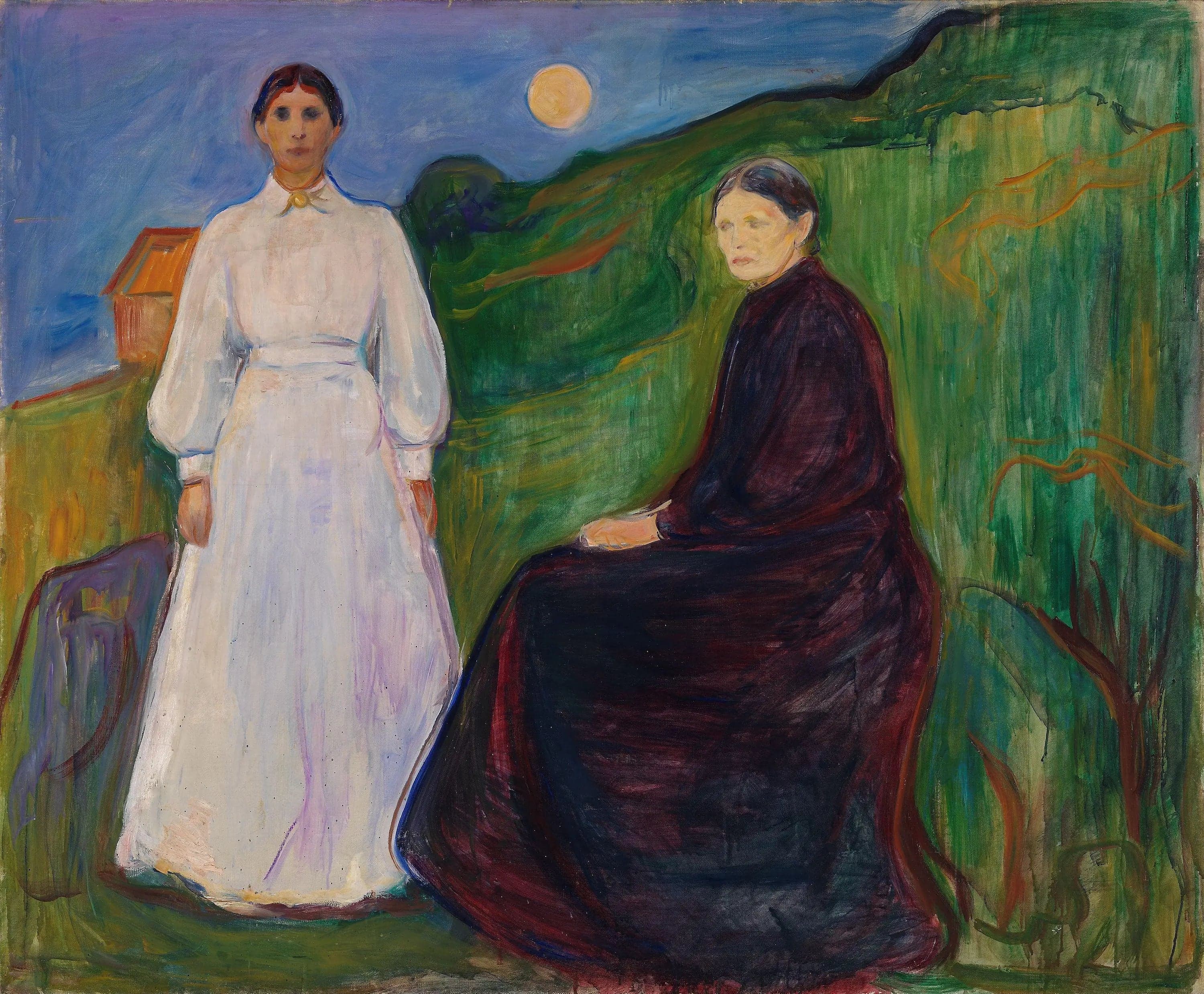
Mother and Daughter
- Original dimensions
- 163 x 135 cm
- Museum
- National Museum
- Year
- 1897
Scene depicted
The scene depicted in Mother and Child invites contemplation of a gentle interaction between two generations. The painting highlights a mother cradled by the love she has for her daughter. This bond is magnified by delicate expressions, capable of releasing a raw emotion that resonates in the heart of every observer. The posture of the characters, carried by enveloping light, creates an atmosphere of warmth and serenity.
Historical context
Created in 1897 in Oslo, this painting is emblematic of the symbolism movement, reflecting a time when human emotions were at the heart of artistic concerns. The canvas is currently exhibited at the National Museum, a place rich in history that preserves works of invaluable wealth, offering visitors a glimpse into the Nordic soul.
Place in the artist's career
Mother and Child marks a pivotal moment in Munch's career, positioning the artist at the peak of his expressionism . Compared to his other canvases , such as “The Scream” and “The Madonna,” this painting reveals an intimate dialogue where anxiety is replaced by a luminous softness, highlighting his technical and emotional evolution.
Anecdote
Edvard Munch once stated: “True artists are those who can capture the human soul on a canvas.” Imagine him, one spring morning in 1897, observing a mother and her daughter in a park, sharing a moment of tenderness and complicity. This gaze, this gesture, inspired him the emotional strength of Mother and Child , a pictorial work where love and vulnerability meet.
Major exhibitions
Olaf Schous gifts to the National Gallery: National Gallery November 14, 1987 - February 7, 1988