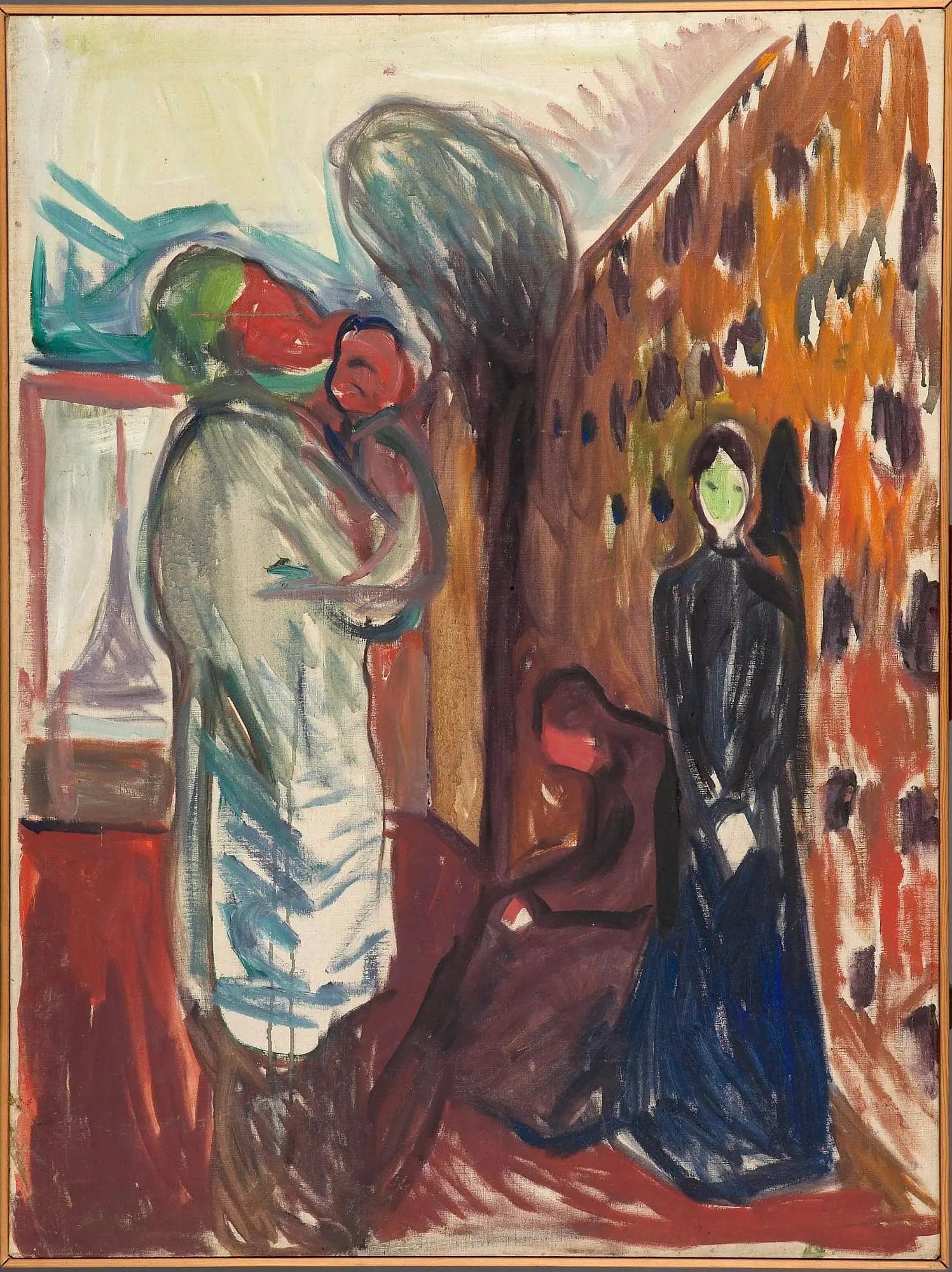
mortuary chamber
- Original dimensions
- 71 x 95.5 cm
- Museum
- Munch Museum
- Year
- 1915
Scene depicted
This iconic work revolves around the representation of a lifeless body, surrounded by its loved ones, immersed in deep sorrow. The figures are scattered, reflecting the isolation and sadness that emanate from this disturbing scene. The composition of the painting and the interaction of the characters reveal a poignant silence between life and death, confronting the viewer with the fragility of existence.
Historical context
Created in 1915, in the tumultuous context of Norway, this painting echoes expressionism , a significant artistic movement of the early 20th century. Known for its ability to explore the meanders of the human soul, Death Chamber is currently housed in the Munch Museum in Oslo, offering a poignant introspection on mortality. Its dimensions of 71 x 95.5 cm enhance the intimacy of this tragic scene.
Place in the artist's career
In Munch's career, Death Chamber represents a period of maturity, following works such as The Scream and The Madonna . This painting illustrates a stylistic and emotional development, showing Munch's evolution towards darker and more introspective themes. It is a symbol of a turning point, where the artist perfectly masters the expression of complex emotions.
Anecdote
“Death is an inextricable part of life,” Munch might have said while referring to his masterpiece. Inspired by profound melancholy, the artist captured the essence of loss during a silent night, as the scent of dead flowers floated in the air. These emotional impressions are thus transcribed in the evocative power of Death Chamber .