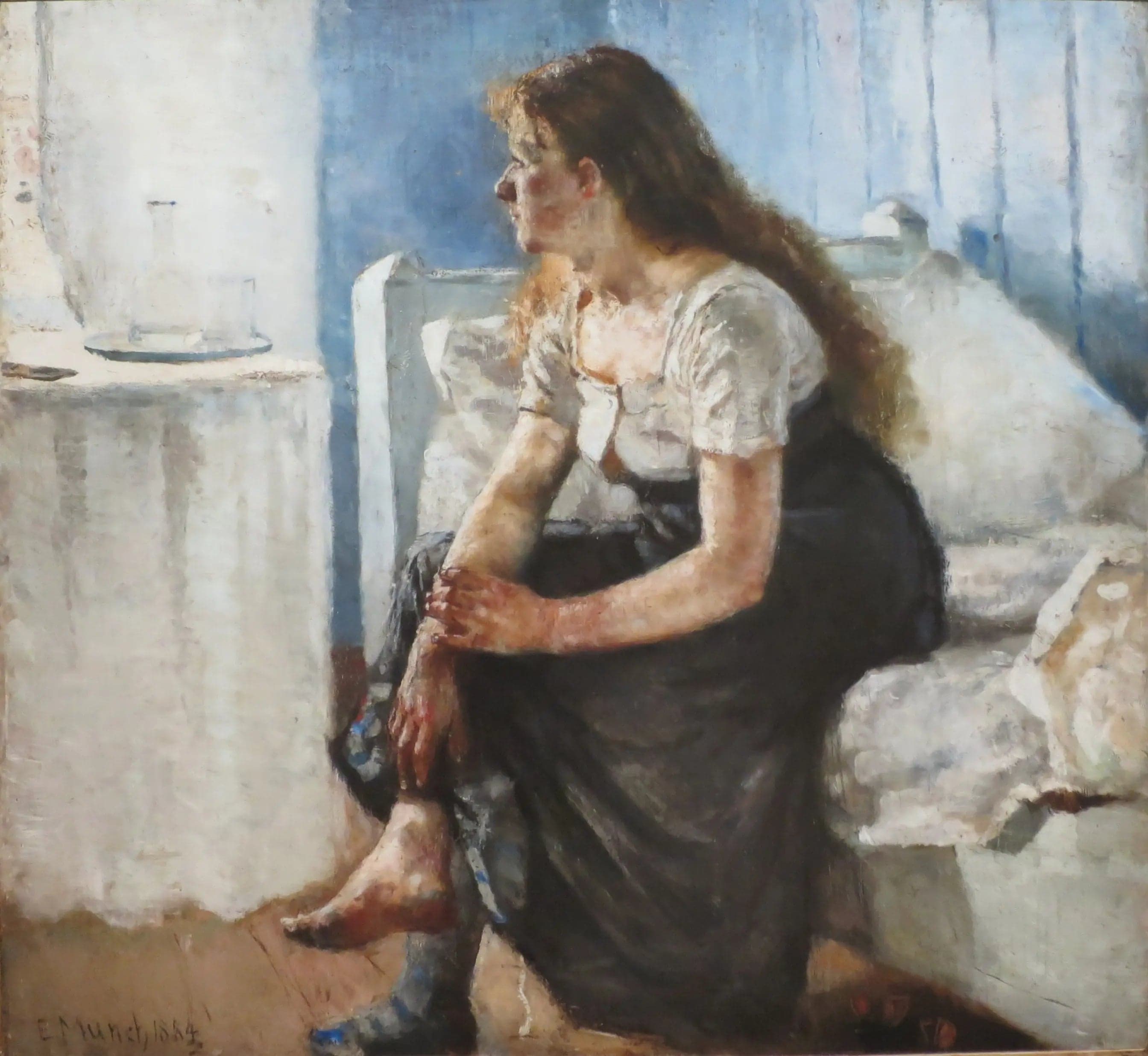
Morning
- Original dimensions
- 104 x 96.5 cm
- Museum
- Bergen Art Museum
- Year
- 1884
Scene depicted
The painting "Morning" captures the beauty of the dawning day, painting fiery skies and delicate forms awakening to the soft light of day. The work evokes a dreamy tranquility, where shadows dance gently on the waking ground, and where every detail becomes an invitation to contemplation. It is a visual reflection of renewal, an ode to a new beginning, filled with promises.
Historical context
Created in 1884, the painting "Morning" by Edvard Munch is set in a context where the expressionist movement begins to lead to innovative artistic experiences. Located in Bergen, this work is one of the emblems of an artist who spent his life exploring human emotions through his canvas . The painting is currently exhibited at the Bergen Art Museum. With its imposing dimensions of 104 x 96.5 cm, it certainly captures the eye and emotion of visitors.
Place in the artist's career
"Morning" stands as a landmark in Munch's career. This painting, between his earlier works such as "The Scream" and his future explorations of the human psyche, represents a period of stylistic discovery. While "The Scream" is intense and tumultuous, "Morning" is a return to serenity, demonstrating the emotional and technical evolution of the artist.
Anecdote
Edvard Munch once said: "Painting is a way to reach what words cannot express." This masterpiece was born on a spring morning, when the first light of day caressed the Nordic landscape. It is in this fleeting moment that the painting comes to life, revealing poignant atmospheres of silence and introspection.
Major exhibitions
Edvard Munch and his models: 1912-1943