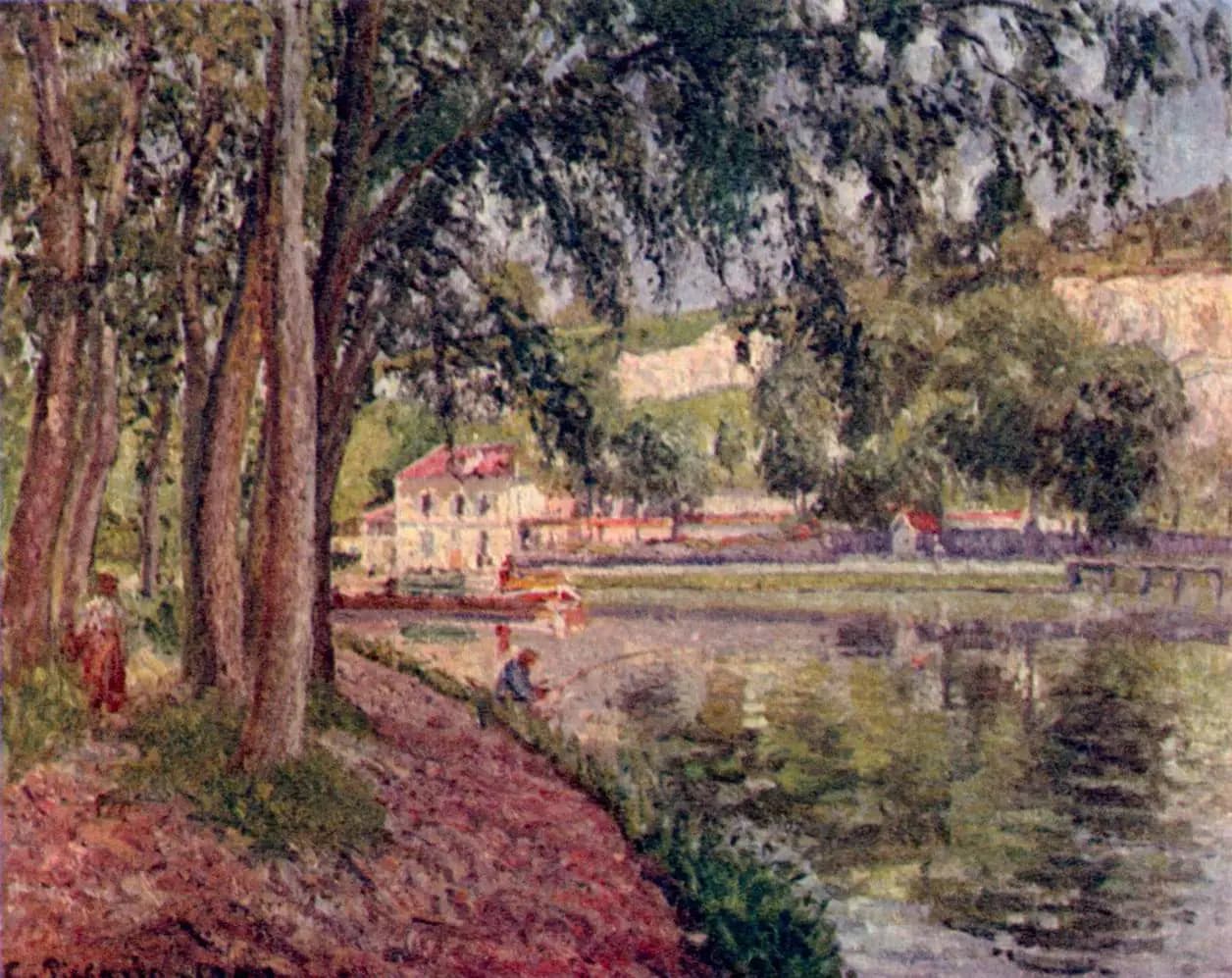
Moret, the Canal du Loing
- Original dimensions
- 81.5 x 65 cm
- Museum
- musée d'Orsay
- Year
- 1902
Scene depicted
In this canvas , Pissarro depicts a bucolic scene where the canal winds peacefully, flanked by weeping willows. Light boats glide on the water, leaving behind waves brushing the shores. The golden sunlight caresses the canvas , revealing the sparkling reflections on the water, while the echo of nature resonates in the distance, creating a serene and soothing atmosphere.
Historical context
Created in 1902, this painting emblematic transports us to the banks of the canal du Loing, in Moret-sur-Loing, a charming town in the Seine-et-Marne region. Camille Pissarro , a leading figure of the Impressionist movement, immortalizes here the very essence of rural life of his time, in a setting that blends nature and humanity. Today, this canvas vibrant resides at the musée d'Orsay , a sanctuary of art in Paris, where visitors can appreciate its majestic dimensions of 81.5 x 65 cm.
Place in the artist's career
Moret, le canal du Loing is part of a period of maturity for Pissarro, as his style refines and strengthens. Emerging from his earlier more realistic works, he turns to a more Impressionist approach, as evidenced by his canvas Le Jardin de l'Hôtel de Ville, Pontoise . Later, in La récolte des pommes de terre , an evolution in the palette and treatment of light is observed, attaching each painting to a unique emotional depth.
Anecdote
Camille Pissarro once stated: "Nature is an inexhaustible source of inspiration, every light, every shade speaks to me." In Moret, le canal du Loing , he captures this vibrant dialogue between nature and art, set on this peaceful morning where the sun's rays dance gently on the water, revealing the fragile beauty of this fleeting moment.