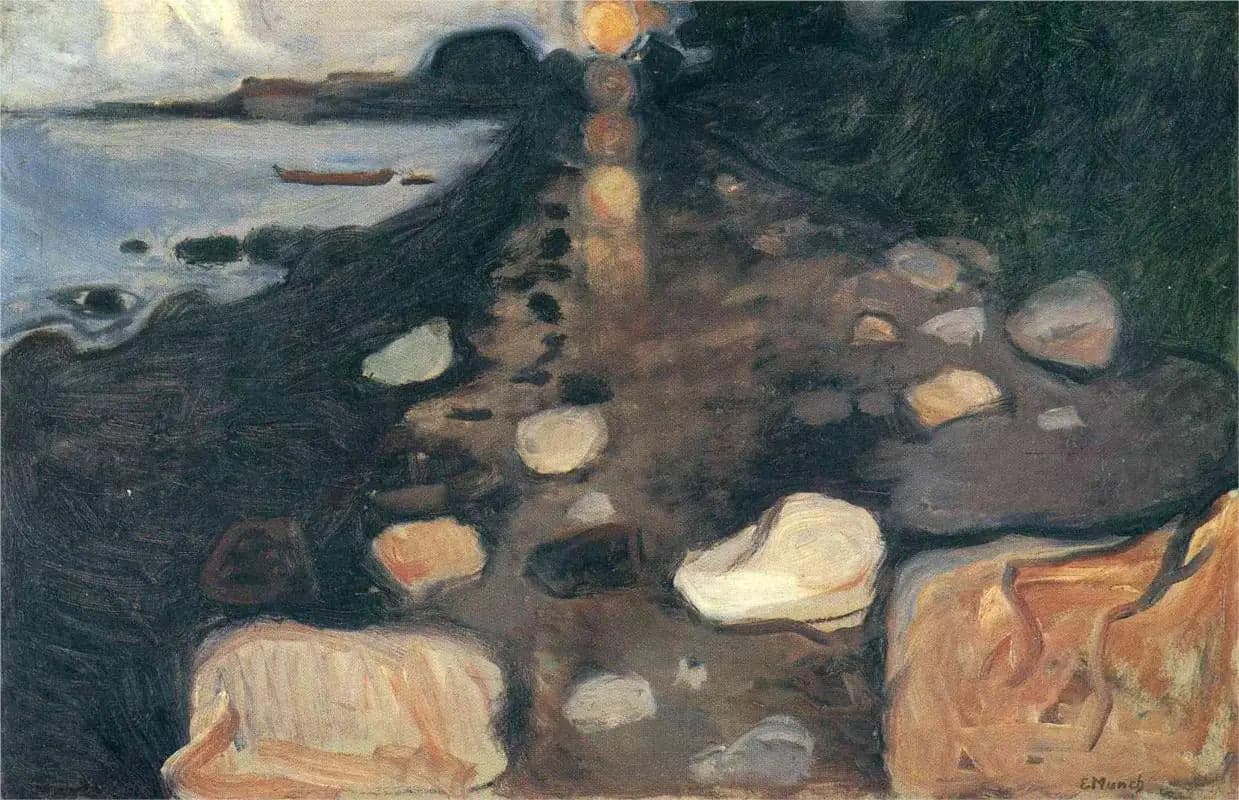
Moonlight on the Beach
- Original dimensions
- 96 x 62.5 cm
- Museum
- Bergen Art Museum
- Year
- 1892
Scene depicted
In Moonlight on the Beach , the painting reveals a melancholic and serene scene where the sparkling water meets the sand, evoking a moment of solitude and contemplation. This painting invites the viewer to a nighttime stroll through soft shadows and silver reflections, revealing the complex emotions that inhabit the artist.
Historical context
Created in 1892 in the captivating city of Bergen, this canvas is emblematic of the dawn of the expressionist movement, an artistic current that redefined the codes of art of its time. Rooted in Norwegian culture, Moonlight on the Beach illustrates the transition from a romantic sensibility to an emotional and spiritual exploration. Today, this painting is proudly displayed at the Bergen Art Museum, where visitors can admire its majestic dimensions.
Place in the artist's career
This masterpiece is part of a pivotal period in Munch's career, where his style refines. While being a stylistic variation, it shares an emotional depth with other paintings such as The Scream and The Dance of Life . Through his works, Munch explores suffering, love, and solitude, building a unique pictorial universe.
Anecdote
Edvard Munch once confided: "I paint the scenes where I have lost myself, those that speak to my heart." Inspired by a tranquil night where the moonlight embraced the sea, he captured this composition with such passion that the painting becomes a reflection of his tormented soul.