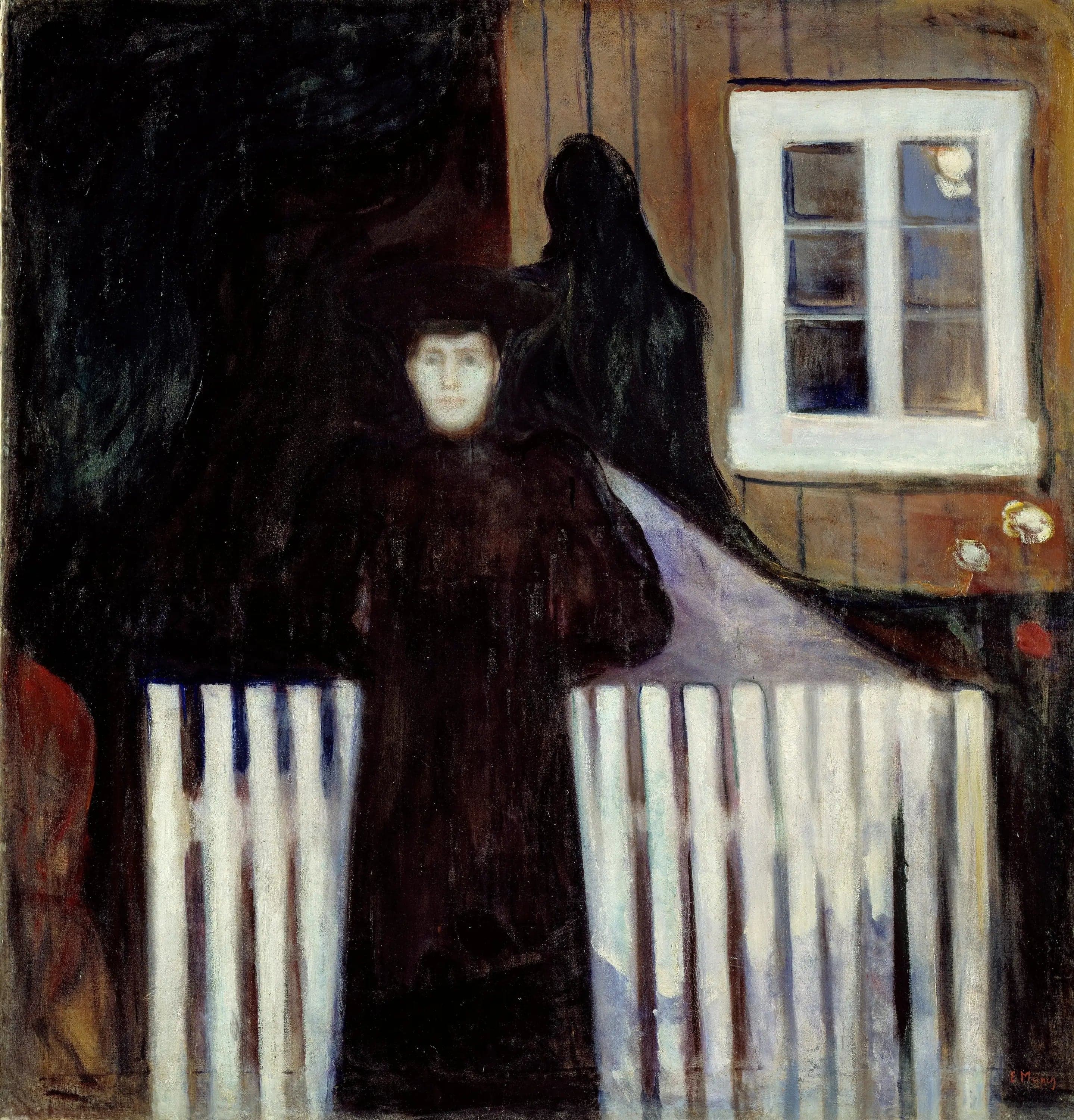
Moonlight
- Original dimensions
- 110 x 93 cm
- Movement
- expressionism
- Museum
- National Gallery of Oslo
- Year
- 1895
Scene depicted
The canvas “Clair de Lune” evokes a nocturnal landscape enveloped in a mysterious and poetic atmosphere. The soft glows of the moon illuminate a calm universe, while shadows dance on the water, revealing the deep connection between man and nature. This pictorial work , vibrant with sensitivity, invites contemplation.
Historical context
Created in 1895 in Oslo, this painting is emblematic of expressionism , a movement that resonates with the torments of the human soul. The canvas is currently housed in the National Gallery of Oslo, thus preserving an artistic heritage, a window into the deep feelings of its time.
Place in the artist's career
“Clair de Lune” is situated at a pivotal moment in Munch's career, within a period of maturity where he refines his technique. Alongside works such as “The Scream” and “The Madonna,” this canvas illustrates the evolution of his style and the intensity of his expression.
Anecdote
Edvard Munch , struck by the lunar beauty of a calm night, reportedly said: “The moon is the confidant of lonely souls.” It is in this serene and melancholic atmosphere that he conceived his masterpiece , capturing the essence of a moment where nature and introspection meet.
Major exhibitions
The Mirror of Nature. Nordic Landscape Painting 1840-1910