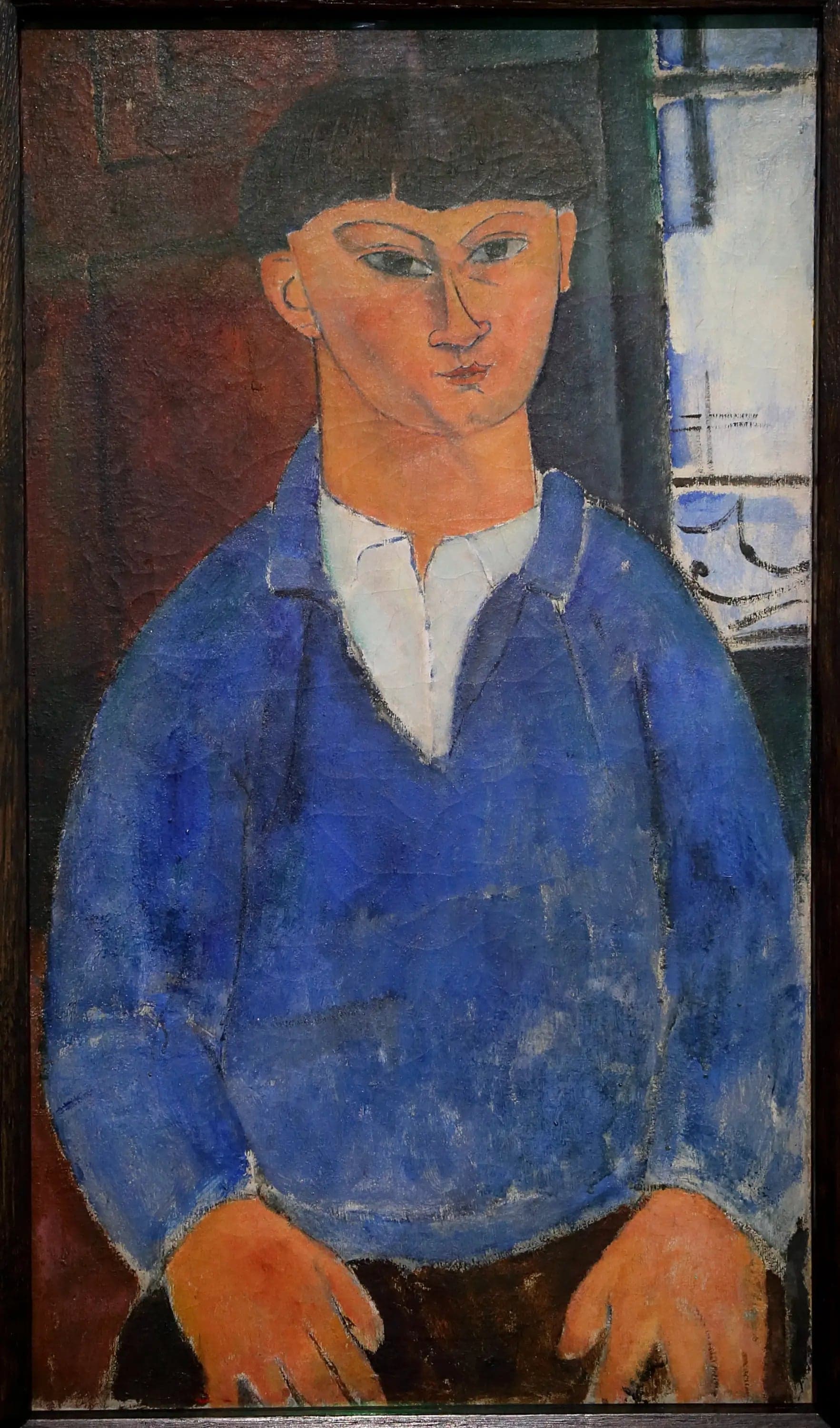
Moïse Kisling
- Original dimensions
- 47 x 82 cm
- Museum
- Lille Métropole Museum of Modern Art, Contemporary Art and Outsider Art
- Year
- 1916
Scene depicted
In this painting, Modigliani offers a striking representation that transcends the simple portrait. The protagonist, with elongated and stylized forms, evokes not only a human figure but also an essence – that of art, life, and emotions that are sometimes joyful, sometimes troubled. This melodious brushstroke invites the viewer to an introspective exploration.
Historical context
Created in 1916, this painting is emblematic of the artistic rise of a troubled era, at the dawn of the artistic revolutions of the 20th century. Located in Lille, within the inspiring setting of the Lille Métropole Museum, this work reflects the Fauvist movement and the unique style of Amedeo Modigliani . Each brushstroke conveys a sense of avant-garde that intertwines cultures and emotions, marking the history of modern art with spectacular depth.
Place in the artist's career
“Moïse Kisling” stands in Modigliani's career as a pivotal moment, reflecting his artistic maturity. In parallel, his works “Reclining Nude” and “Portrait of Jeanne Hébuterne” echo this same stylistic evolution, oscillating between sensuality and abstraction, shaping a unique universe that is his own.
Anecdote
“Every face tells a story, an alchemy of emotions that only art can capture.” This imagined quote could summarize a bright morning when Modigliani, through the gaze of a dear friend, found inspiration for this masterpiece . The painting resonates like a subtle melody, vibrating with the memories of a bygone era.