Miranda
Scene depicted
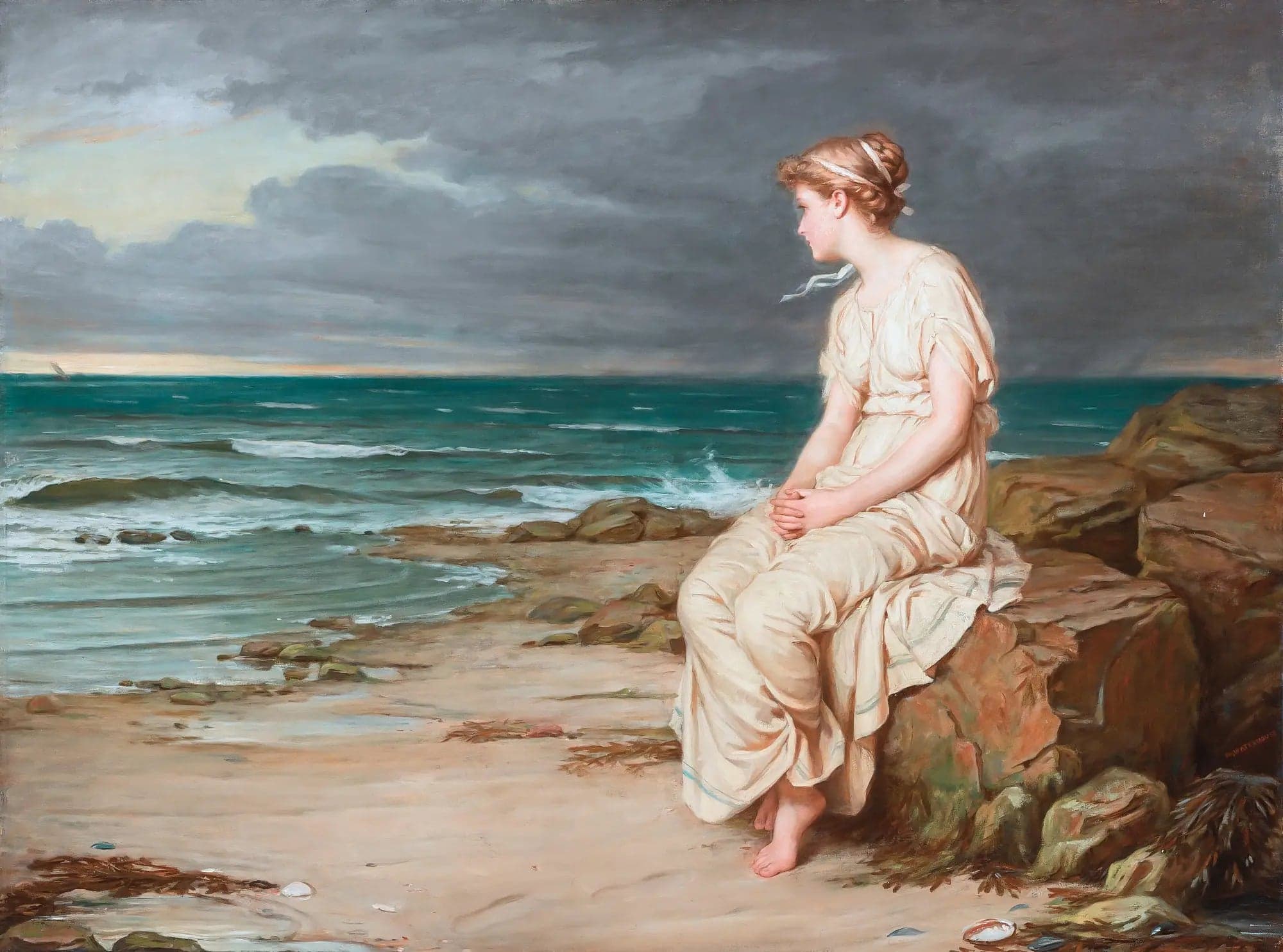
The painting captures a fleeting moment where Miranda, a mythological figure from Shakespeare's play 'The Tempest', emerges from nature, surrounded by light and serenity. She is lost in her thoughts, reflecting the deep connection between dreams and reality. Every detail of this canvas finely depicts the delicacy of the moment, creating an atmosphere that is both magical and melancholic.
Historical context
Created in 1910, the painting "Miranda" is rooted in the Pre-Raphaelite movement, a British artistic current of the 19th century, imbued with romanticism and attention to detail. This emblematic work by John William Waterhouse is currently exhibited at the Manchester Art Gallery, in the city of Manchester, England. With dimensions of 122 x 91 cm, this canvas perfectly illustrates the artistic sensitivity of its time.
Place in the artist's career
"Miranda" represents a stylistic peak in Waterhouse's career, showing a maturation in his approach and interpretation of literary themes. In parallel with his works "Ophelia" and "The Lady of Shalott", it is interesting to observe how the soft light and romantic landscapes evolve, traversing a common thread of passion and tragedy.
Anecdote
"I always paint with my heart," said Waterhouse, recalling the moment when the idea of "Miranda" came to him while he strolled along the misty banks of a river from his childhood. This spring inspiration, filled with the whispers of water and floral scents, brought to life a masterpiece where emotion intertwines with beauty.