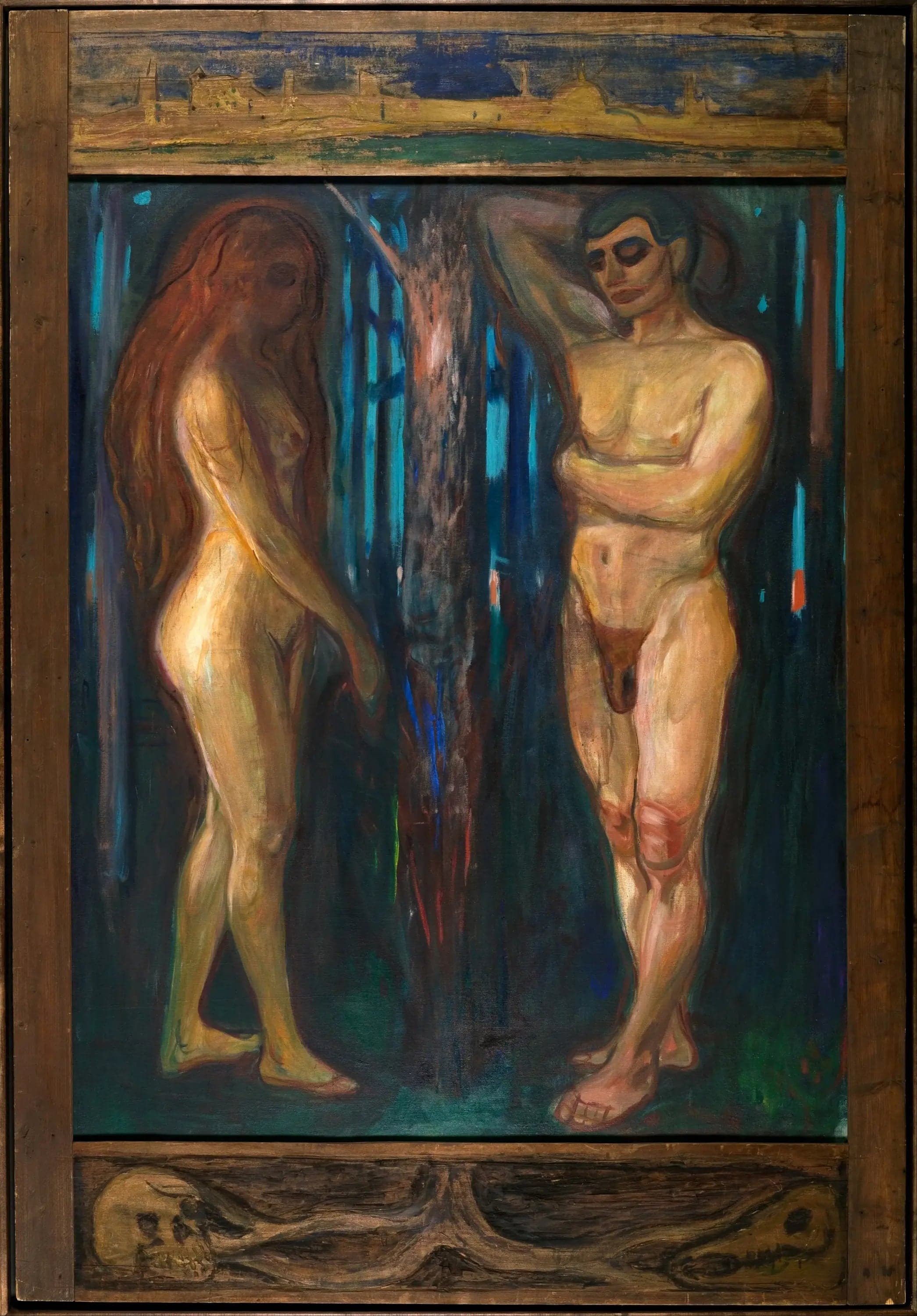
Metabolism
- Original dimensions
- 143 x 175 cm
- Museum
- Munch Museum
- Year
- 1898
Scene depicted
In Metabolism , Munch boldly addresses the themes of life, death, and rebirth. The scene depicts an interior landscape where human figures intertwine amidst organic forms, a vibrant whirl of color and shape. This painting is a visceral exploration of emotion, where the artist captures the rhythm and pulse of life itself.
Historical context
Created in 1898, the painting Metabolism finds its roots in Oslo, Norway, at the heart of the expressionist movement that marks the beginning of the 20th century. This iconic painting is today preserved at the Munch Museum, which celebrates the legacy of this pioneering artist. In this historical context, Munch explores the themes of individuality and modernity, translating complex emotions through his art.
Place in the artist's career
This masterpiece represents a crucial milestone in Munch's career, marking the transition to a mature period of his artistic expression. Alongside “The Scream” and “The Madonna,” Metabolism stands out for its deep introspection, illustrating the technical evolution of the artist while revealing his commitment to posing existential questions through painting .
Anecdote
“The painting must vibrate with the truth of the human soul,” said Edvard Munch , evoking the intensity with which he felt life. This canvas , conceived during a misty spring, was inspired by a walk through the silent streets of Oslo. The face of a passerby, lost in thought, left an indelible mark on his mind, capturing the very essence of the canvas .