Melon
- Original dimensions
- 56.52 x 46.67 cm
- Museum
- National Gallery of Art
- Year
- 1880
Scene depicted
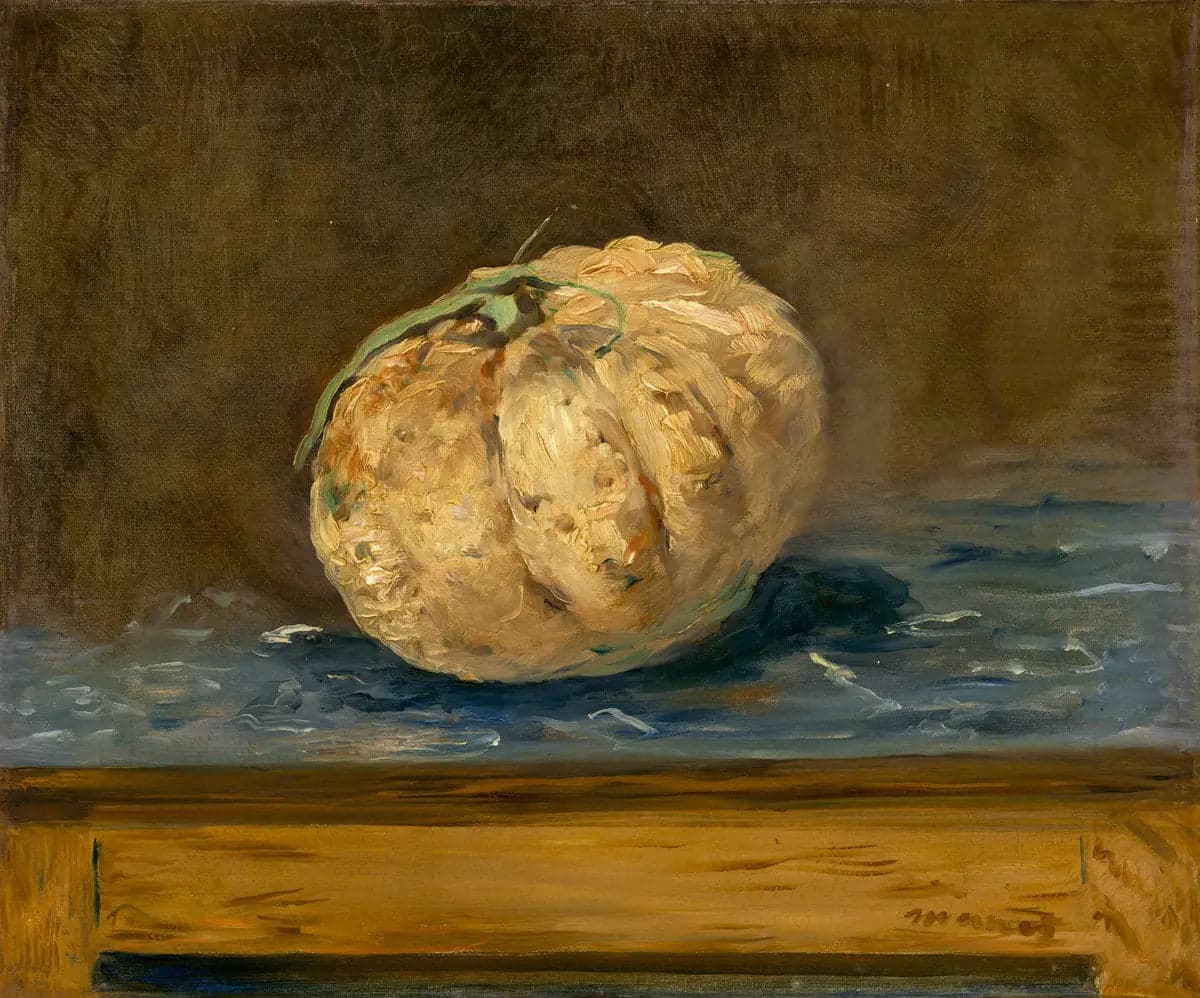
The painting Melon depicts a freshly sliced melon, its juicy interior of vibrant color spread across a polished wooden surface. The play of light creates delicate reflections emanating from the fruity flesh, while the soft shadow envelops the scene. Manet, with his incredible sense of realism , manages to almost evoke the sweet scent of this fruit, conjuring nostalgic memories of summer days. The composition serves to celebrate the simplicity of nature, elevating the ordinary to the extraordinary.
Historical context
Created in 1880, the painting titled Melon is set against the backdrop of a vibrant Paris, undergoing artistic transformation with the emergence of impressionism . This canvas , currently displayed at the National Gallery of Art , resonates with its elegant dimensions of 56.52 x 46.67 cm, showcasing Manet's mastery in representing everyday objects through a prism of light and color.
Place in the artist's career
Melon represents a turning point in Manet's career, a stage where he manages to combine his realistic approach with bolder compositions. Compared to Déjeuner sur l’herbe and Olympia , this pictorial work shows a stylistic maturation, where the simple subject is treated with a finesse that heralds his growing influence on impressionism .
Anecdote
“The moment suspended in the act of cutting, that is where the very essence of life is revealed,” could have said Édouard Manet when referring to his masterpiece. It was in the heart of a sunny summer, amidst the rich displays of the French capital, that the artist found inspiration for this canvas . A simple melon thus became a symbol of escape, transporting the viewer into a soft and summery atmosphere.