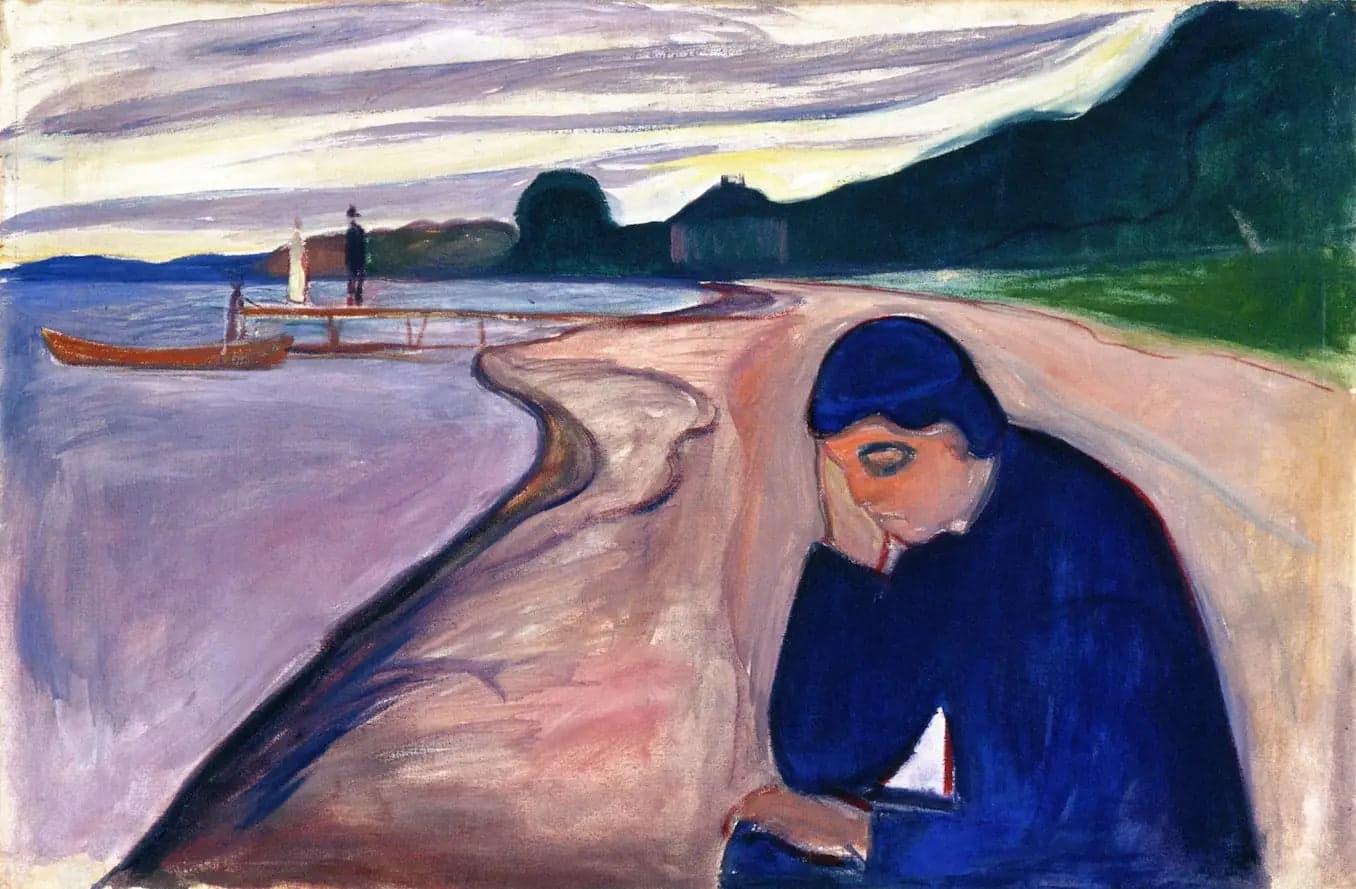
Melancholy
- Original dimensions
- 100.5 x 81 cm
- Museum
- Bergen Art Museum
- Year
- 1894
Scene depicted
The painting Melancholy depicts a dark figure contemplating a cloudy and shadowy landscape, evoking a deep sense of introspection and sadness. This pictorial work captures the human soul confronted with its own torments, transforming the everyday into a poetic exploration of anxiety and unfulfilled dreams.
Historical context
Created in the context of the late 19th century, the painting titled Melancholy finds its roots in Bergen, Norway. This iconic painting belongs to the Symbolist movement, which emphasizes the expression of inner emotions. Currently, this painting is exhibited at the Bergen Art Museum, radiating its artistic influence on the visitors who flock there.
Place in the artist's career
The painting Melancholy represents a crucial milestone in Munch's career, illustrating a transition towards artistic maturity. One can see the evolution of his style by comparing it to works like The Scream and The Madonna , which also explore themes of anxiety and tragic beauty.
Anecdote
“Melancholy is a form of dream,” said Munch. This quote echoes a misty morning that inspired the artist when he encountered a solitary face in an alley in Bergen. This fleeting scene left an indelible mark on the painting and brings to life the emotional intensity of Melancholy .