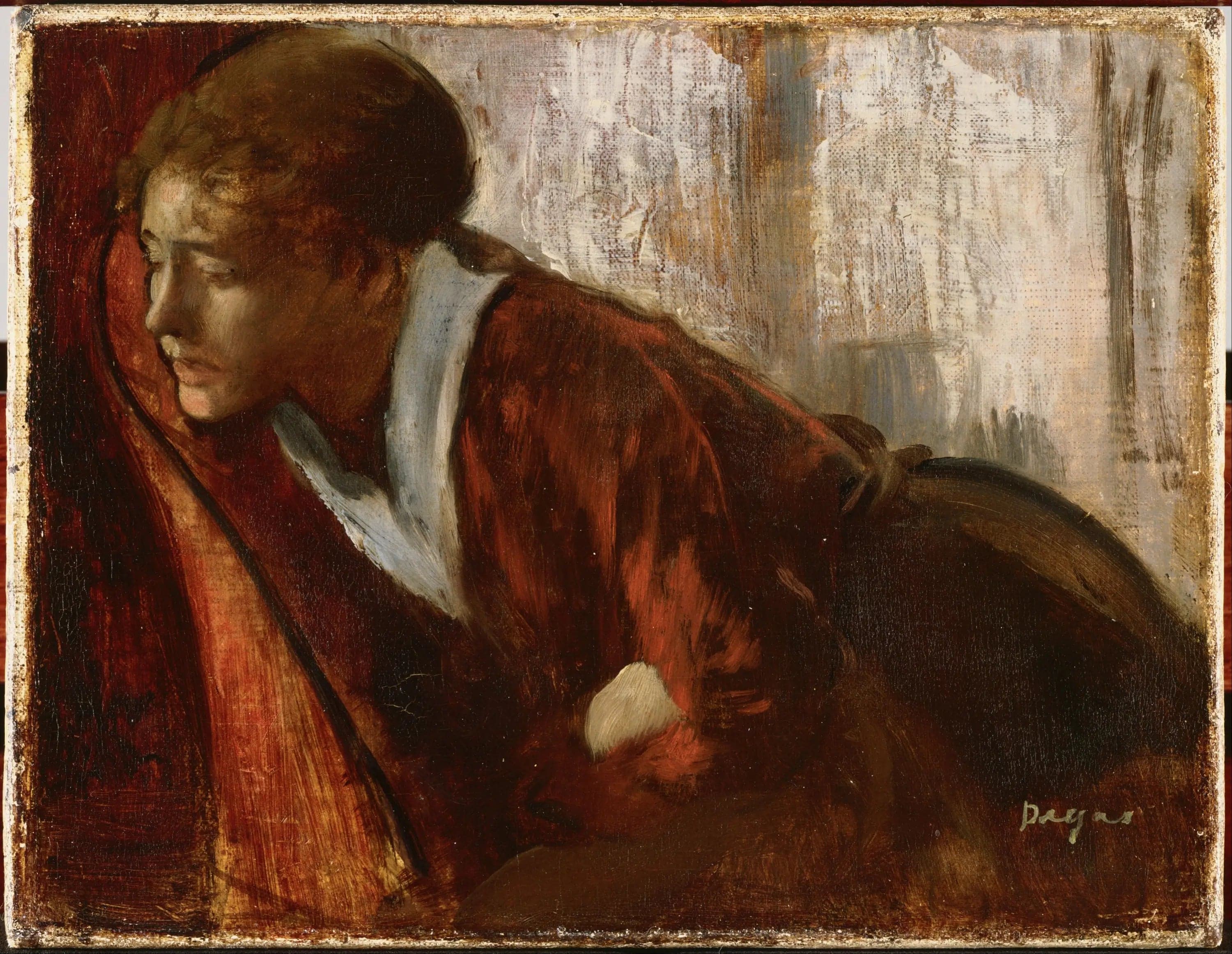
Melancholy
- Original dimensions
- 24.765 x 19.05 cm
- Museum
- Phillips Collection
- Year
- 1860
Scene depicted
In Melancholy , Degas captures a solitary figure, their gaze lost in the void. Evoking a silent melody, the composition highlights a virtually palpable sadness, where the subject seems trapped in their thoughts. The painting invites contemplation of the depth of the human soul, revealing the tragic beauty of introspection.
Historical context
Created in 1860, in the dynamic city of Paris, Melancholy is part of the Impressionist movement, an artistic revolution where light and emotion took center stage. This painting, currently on display at the Phillips Collection in Washington, is a pictorial work that embodies introspection and Degas's fascination with the human condition. With modest dimensions, it invites the viewer to intimate contemplation.
Place in the artist's career
This painting , created at a key moment in Degas's career, testifies to his growing mastery. Melancholy comes after works such as L'Absinthe and before Les Danseuses , marking a crucial stage where Degas merges meticulous observation and resonant emotions.
Anecdote
“Melancholy is a mysterious charm that awakens the soul.” One foggy morning in Montmartre, unaware of his future fame, Degas soaked in a bittersweet atmosphere while observing a pensive face. This fleeting moment crystallized in his masterpiece , where each brushstroke conveys a deep emotion.