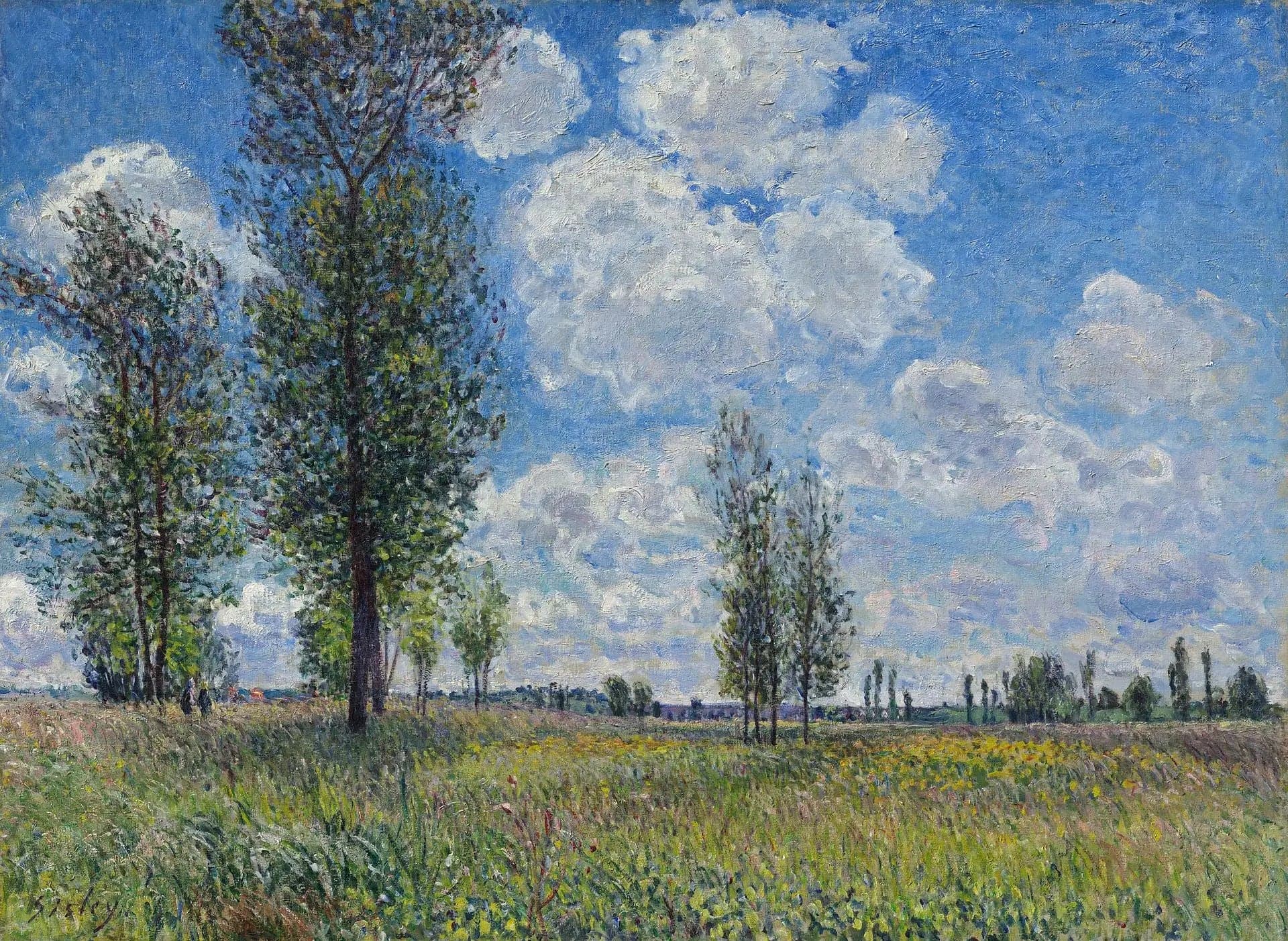
Meadow of Veneux-Nadon
- Original dimensions
- 81 x 60 cm
- Museum
- Barberini museum
- Year
- 1881
Scene depicted
This pictorial work depicts an immaculate meadow, bathed in soft natural light. The scene breathes serenity and the simple happiness of a late summer day, where the gentle breeze caresses the wild grasses, and where the sky, dotted with scattered clouds, conveys an atmosphere of calm. The accents of green are enhanced by bursts of light, bringing to life a vibrant nature, perfectly reflecting the spirit of impressionism .
Historical context
Created in 1881, the painting "Prairie de Veneux-Nadon" is set in the lush greenery of the Veneux-Nadon region, a picturesque locality in France. This iconic painting is immersed in the impressionist era, a movement that revolutionized the way light and nature are perceived and represented. Currently housed in the Barberini museum , this canvas measuring 81 x 60 cm reflects the harmony between man and his environment.
Place in the artist's career
"Prairie de Veneux-Nadon" represents a significant milestone in the career of Alfred Sisley , illustrating his artistic maturation in impressionism . At the time, Sisley had already tackled similar themes in other paintings such as "Impression, Sunrise" and "The Canal du Loing," where the mastery of light and the movements of nature become signatures of his style. This canvas bears witness to a technical evolution, subtly merging emotion and pictorial technique.
Anecdote
Alfred Sisley once said: "Nature is a painting where the artist builds his identity." Inspired by a spring morning, Sisley strolls through the meadows, light filtering through the foliage, when the idea of capturing this fleeting moment crosses his mind. Thus, the evocative power of the painting "Prairie de Veneux-Nadon" is born, a composition that enchants and transports anyone who gazes upon it.
Major exhibitions
seventh impressionist exhibition