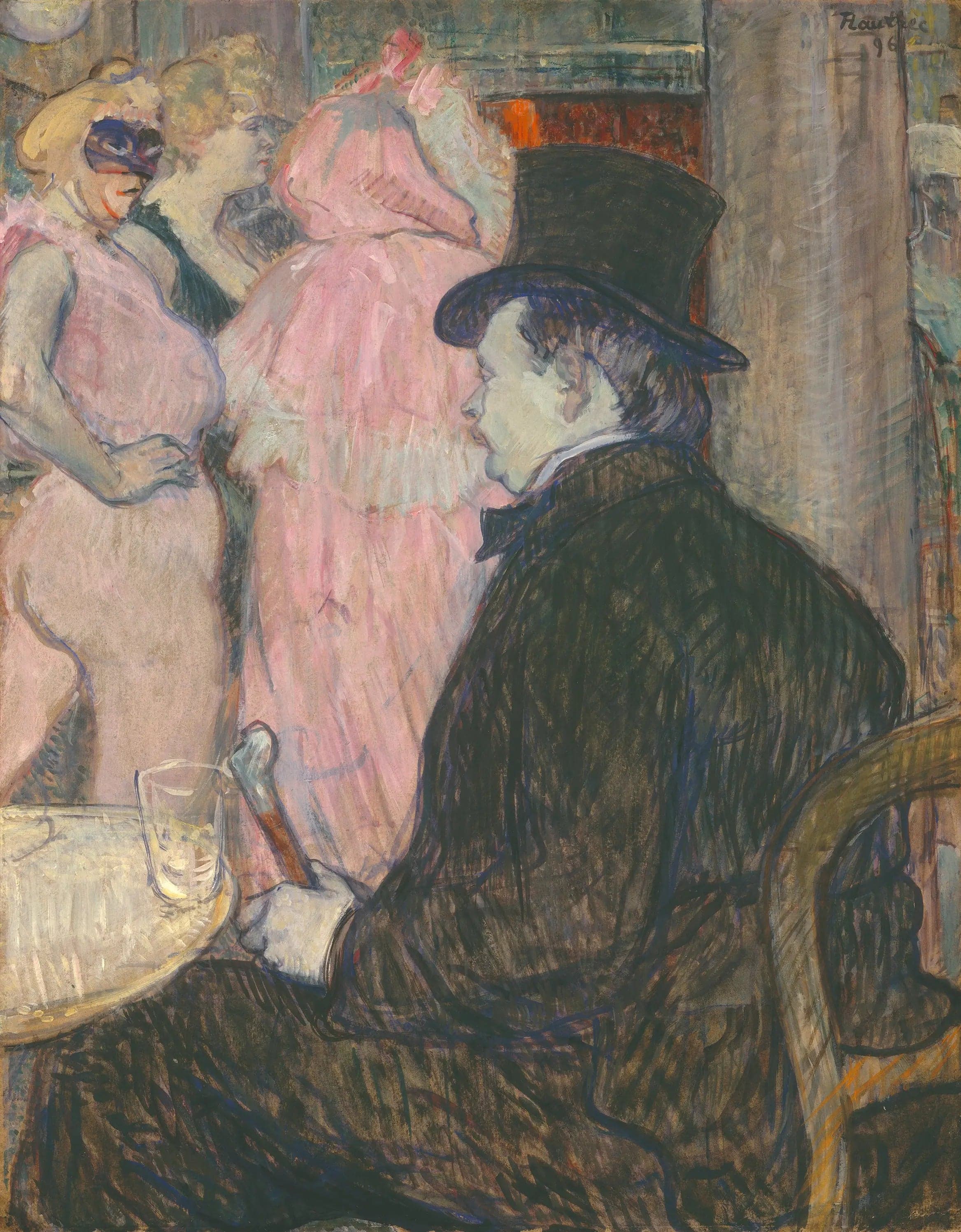
Maxime Dethomas: At the Opera Ball - Henri de Toulouse
- Original dimensions
- 50.9 x 67.5 cm
- Museum
- National Gallery of Art
- Year
- 1896
Scene depicted
In this composition, Toulouse-Lautrec captures a moment of collective euphoria, immersing the viewer in a festive atmosphere. The scene depicts various characters, all captivated by the magic of the ball, where the flowing dresses and the reflections of lights intertwine to create an atmosphere of euphoria. The symphony of sounds blends with the pulse of hearts, perfectly reflecting the spirit of the Belle Époque.
Historical context
Created in 1896, the splendid canvas "At the Opera Ball" is set against the vibrant backdrop of the Parisian Belle Époque. This work, emblematic of the post-impressionist movement, reflects both the cultural dynamism and the eccentricities of Parisian nightlife. Currently, the painting proudly resides at the National Gallery of Art , where it continues to inspire visitors with its captivating dimensions.
Place in the artist's career
"At the Opera Ball" stands out in Toulouse-Lautrec's career as a testament to his artistic evolution. This canvas, a stylistic peak, echoes his earlier works such as "Moulin Rouge: La Goulue" and "Dance at the Moulin Rouge," illustrating on each canvas the emotions of festive Paris. It is here that the artist's technical mastery asserts itself, propelling his career to new heights.
Anecdote
Henri de Toulouse-Lautrec once stated: "Life is a ball, and I want to capture every dance with my brushes." At the opera, this visionary painter found inspiration in the hustle and bustle of the crowds, the brilliance of the costumes, and the enchanting melodies. It is in this atmosphere rich in sensations that the raw emotion of "At the Opera Ball" takes shape, enveloping the viewer in vibrant nostalgia.