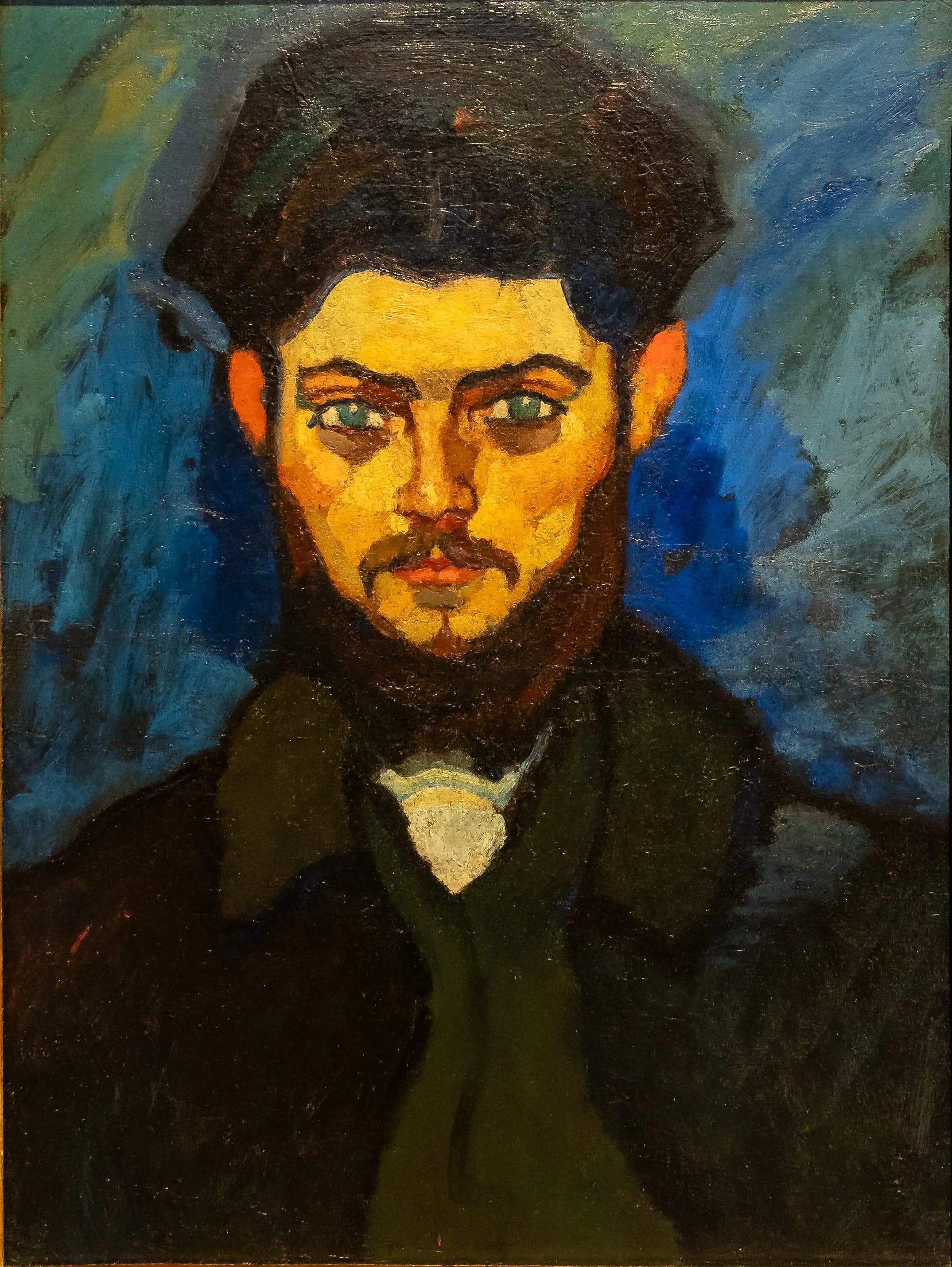
Maurice Drouard
- Original dimensions
- 44 x 59 cm
- Museum
- Not specified
- Year
- 1909
Scene depicted
The painting “Maurice Drouard” invites us to contemplate a frozen moment. This canvas evokes a time of reinvention, inhabited by characters with elongated faces and melancholic expressions, lacking appearance and artifice. The lightness of the forms and the absence of superfluous details make each painting unique and accessible to the soul. Modigliani captures the very essence of the subject, an emotional vibration through each brushstroke.
Historical context
Created in 1909, this painting reflects an era where modernity met tradition, in Paris, the cradle of artistic avant-gardes. Immersed in the post-impressionism movement, this canvas wonderfully illustrates the evolution of the pictorial language of Amedeo Modigliani , an artist who has become essential. Today, the painting remains a precious work, anchored in various museums or private collections, testifying to the living legacy of its creator.
Place in the artist's career
“Maurice Drouard” is at the heart of Modigliani's peak period, marked by a distinctive style and a profound quest for identity. Two other paintings emblematic of this era, “Reclining Nude” and “Portrait of Jean Cocteau,” harmoniously discuss his technical and emotional evolution, revealing how each pictorial work is a piece of the Modigliani puzzle.
Anecdote
“Beauty lies in simplicity.” In these words, Modigliani shares his inspiration that emerges from an autumn morning, where he strolled through the bustling streets of Montparnasse. His gaze catches a fleeting portrait, a human essence that encourages him to convey pure emotion through his masterpiece , the painting of Maurice Drouard.
Major exhibitions
Modigliani. Modern Gazes