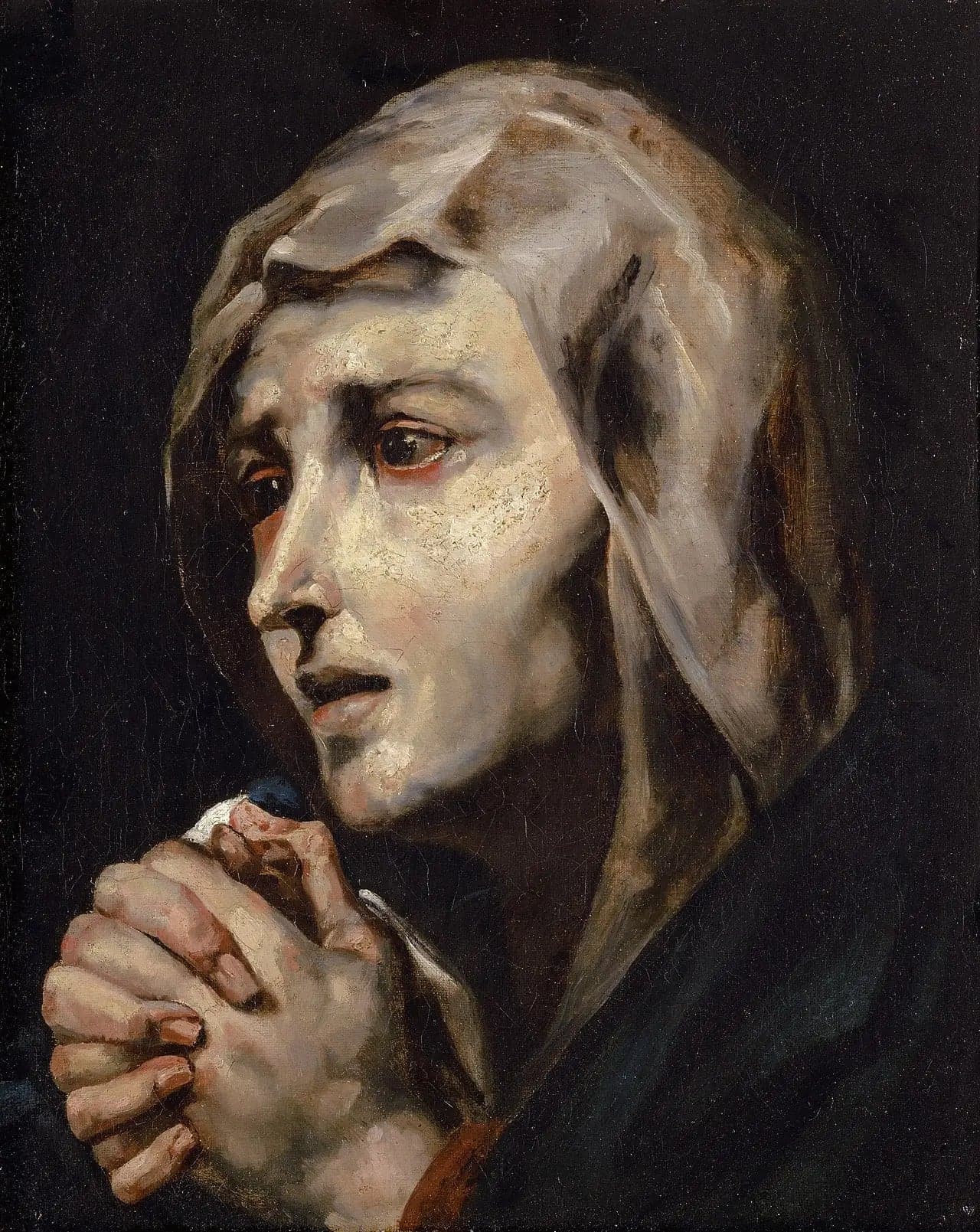
Mater dolorosa, copy after Ribera
- Original dimensions
- 37 x 46 cm
- Museum
- Kunstmuseum Basel
- Year
- 1811
Scene depicted
This pictorial work illustrates the Virgin Mary, a symbol of pain, whose poignant expression transcends time and space. Seated, her delicately sculpted silhouette evokes trial and melancholy, while inviting introspective contemplation. Through this canvas , Géricault seeks to capture the fragility of beauty in relation to loss, a universal theme that continues to touch hearts.
Historical context
Created in 1811 in the city of Basel, Switzerland, this painting is part of the romantic movement, reflecting a time when intense emotions and the quest for authenticity prevailed. The canvas is currently housed at the Kunstmuseum Basel, a prestigious space for art lovers. Its elongated size, 37 x 46 cm, makes this canvas easily integrable into various interior decors while giving it a strong visual impact.
Place in the artist's career
The painting “Mater dolorosa” represents a pivotal period in Géricault's career, where he begins to explore the depth of human feelings. Alongside his canvases such as “ The Raft of the Medusa ” which testify to his technical genius, this work asserts itself as a prelude to an emotional richness that will culminate in his later creations.
Anecdote
Géricault once said: “Beauty is the truth that reveals itself through pain.” This quote resonates in the painting that represents the Mater dolorosa , a figure imbued with melancholy, inspired by reflections on human suffering. Imagine this artist, in his studio, on a misty morning, capturing the soft light filtering through the window, ineffable, and nourishing his masterpiece with the strength of his emotions.