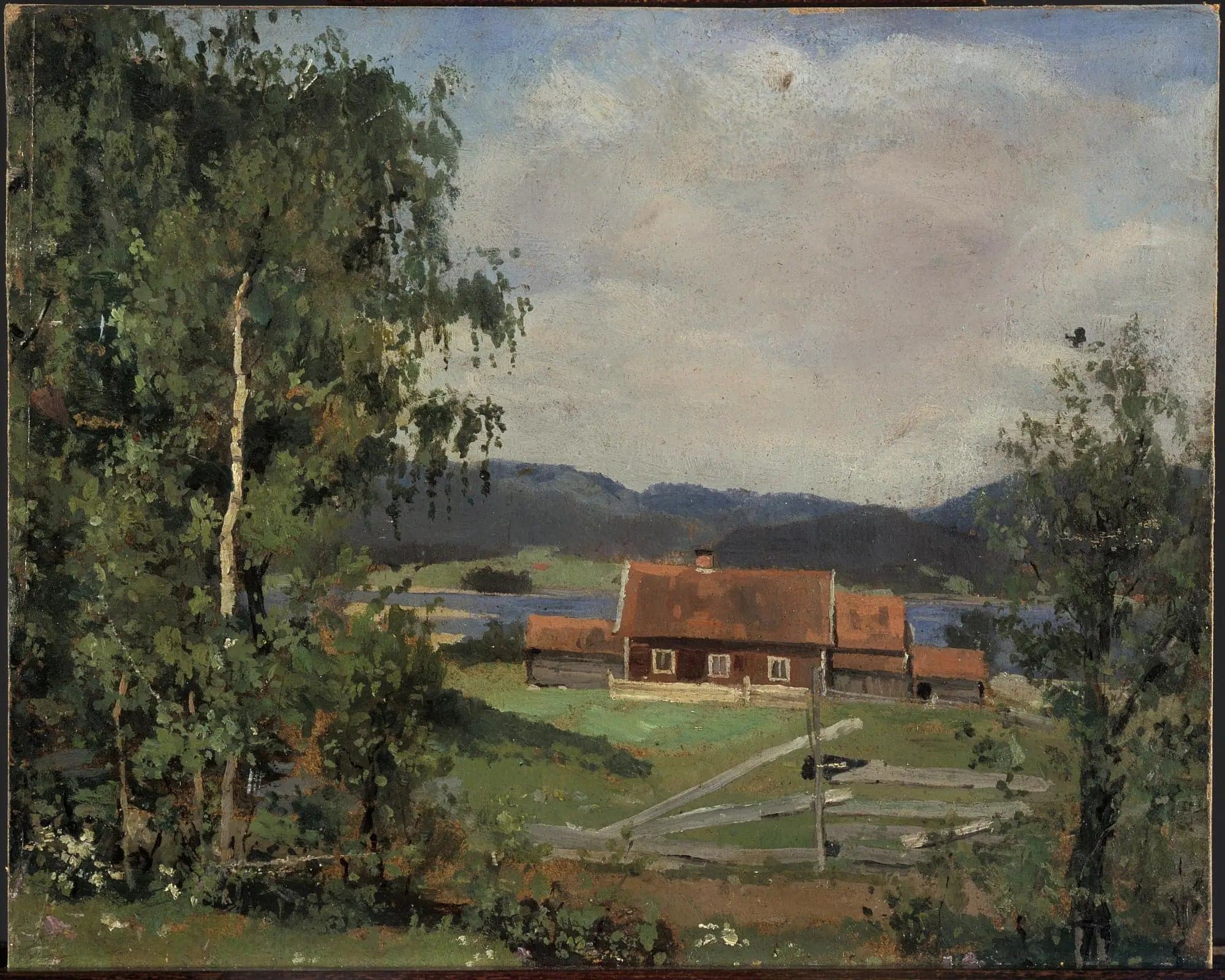
Maridalen
- Original dimensions
- 27.5 x 22 cm
- Museum
- Munch Museum
- Year
- 1881
Scene depicted
The scene of "Maridalen" is imbued with serenity. It showcases a bucolic landscape that stretches under a changing sky, bathing everything in subtle hues and delicate shades. These natural elements, enhanced by Munch's sense of perspective, testify to a perfect harmony between man and nature, while allowing for an inner reflection on solitude and calm.
Historical context
Created in 1881, the painting "Maridalen" by the Norwegian artist Edvard Munch represents a fascinating period in the history of art. It was in Oslo, Norway, at the heart of the expressionist movement, that this canvas came to life. The work is now displayed at the Munch Museum, a sanctuary dedicated to the memory and legacy of this visionary artist. Its intimate format of 27.5 x 22 cm invites close and personal contemplation.
Place in the artist's career
"Maridalen" holds a special place in Munch's artistic evolution. This painting marks the beginning of his exploration of themes of nature and emotions. In parallel, works such as "The Scream" and "The Dance of Life" show a progression towards the expression of more troubled feelings. This first masterpiece thus resonates with his artistic maturation, where light and shadow confront each other.
Anecdote
"Nature is an art that can never be reproduced," Munch might have said, referring to the inspiration that seized him one morning in the Maridalen valley. This sublime painting is the result of that fleeting moment, captured with such emotional intensity that the composition remains etched in the viewer's mind.