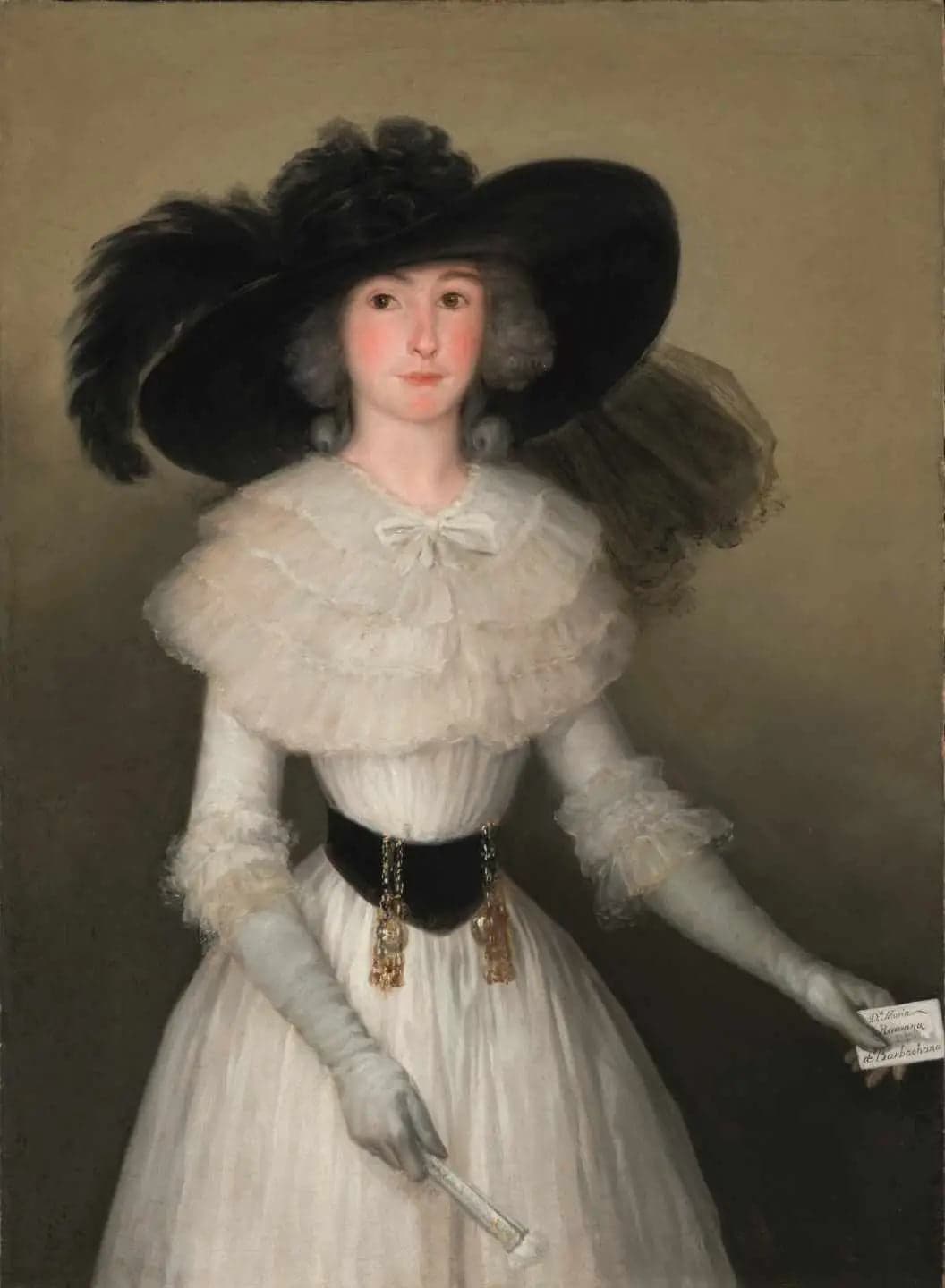
María Ramona de Barbachano
- Original dimensions
- 83.6 x 114.4 cm
- Museum
- Not specified
- Year
- 1787
Scene depicted
The painting “María Ramona de Barbachano” immortalizes a young woman with majestic elegance, her delicate features and deep gaze capturing the essence of the time. Goya succeeds in expressing the vibratory character of social relations of his time, creating a palpable tension between tradition and modernity. Every detail of this painting reflects a meticulous observation of Spanish society, while embodying a refined and timeless aesthetic.
Historical context
Created in 1787, this painting is set in the heart of Spain, where Francisco de Goya , one of the masters of romanticism , captures the essence of his time through this iconic painting. The work, immersed in the pre- romantic period, stands out for its sensitivity and complexity. Although its current museum location is unknown, the strength of this canvas remains intact, inviting a captivating exploration of human emotions through its imposing dimensions.
Place in the artist's career
Situated at the heart of Goya's career, this painting represents a pivotal moment, where the artist begins to explore more personal and introspective themes. By relating it to works such as “La Maja desnuda” and “The 3rd of May 1808,” a clear evolution towards a deeper artistic expression can be perceived, capable of marking minds and emotions powerfully.
Anecdote
“Light must always find its way through the shadows,” Goya might have declared one spring morning, in an alley in Madrid, when the idea for this pictorial work took root. The image of María Ramona, frozen in a moment of life, evokes the ephemeral and delicate beauty of existence, like a sweet melody whispered at the very heart of nature.