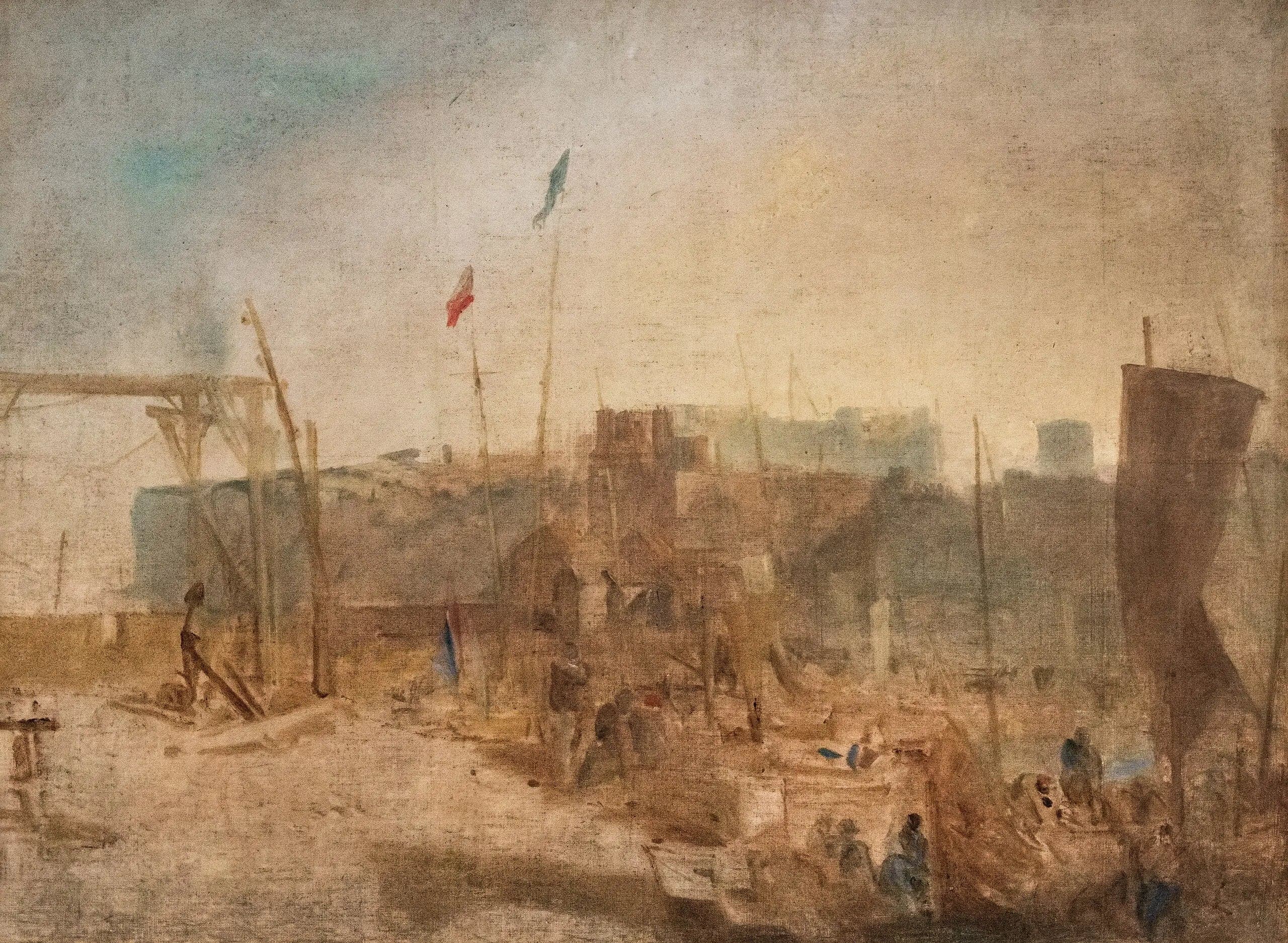
Margate
- Original dimensions
- 90 x 120.5 cm
- Museum
- Tate
- Year
- 1808
Scene depicted
The painting “Margate” presents an enchanting vision of a peaceful sea, illuminated by golden light. Through this composition , Turner immortalizes the fleeting beauty of marine landscapes, elevating the calm of the waters to a level of sublime emotion. The boats in the harbor add a touch of life, while the sky, saturated with colorful blends, heralds a day filled with promises.
Historical context
Created in 1808, this painting is an iconic testament to the flourishing Romantic era, where emotions and nature take center stage in the artistic scene. Margate, this charming seaside resort in the southeast of England, unfolds as a gem of natural beauty. The canvas , currently housed at the Tate , offers a window into the joys and sweetness of life by the sea.
Place in the artist's career
In Turner's career, “Margate” represents a significant milestone where the artist explores the relationships between light and water. At this time, he is also the creator of “The Fighting Temeraire” and “Rain, Steam and Speed,” works that testify to his evolution towards subtle abstraction. This masterpiece illustrates his ability to capture deep emotions while continuing his exploration of the British landscape.
Anecdote
“Light is the life of painting,” said Turner. Inspired by an exceptional morning, he stood on the beach of Margate, observing the golden hues of the rising sun mingling with the waves. This fleeting moment of wonder infused his canvas , imparting a palpable and vibrant poetry to the work.