Margate
- Original dimensions
- 85.7 x 116.2 cm
- Museum
- Tate
- Year
- 1806
Scene depicted
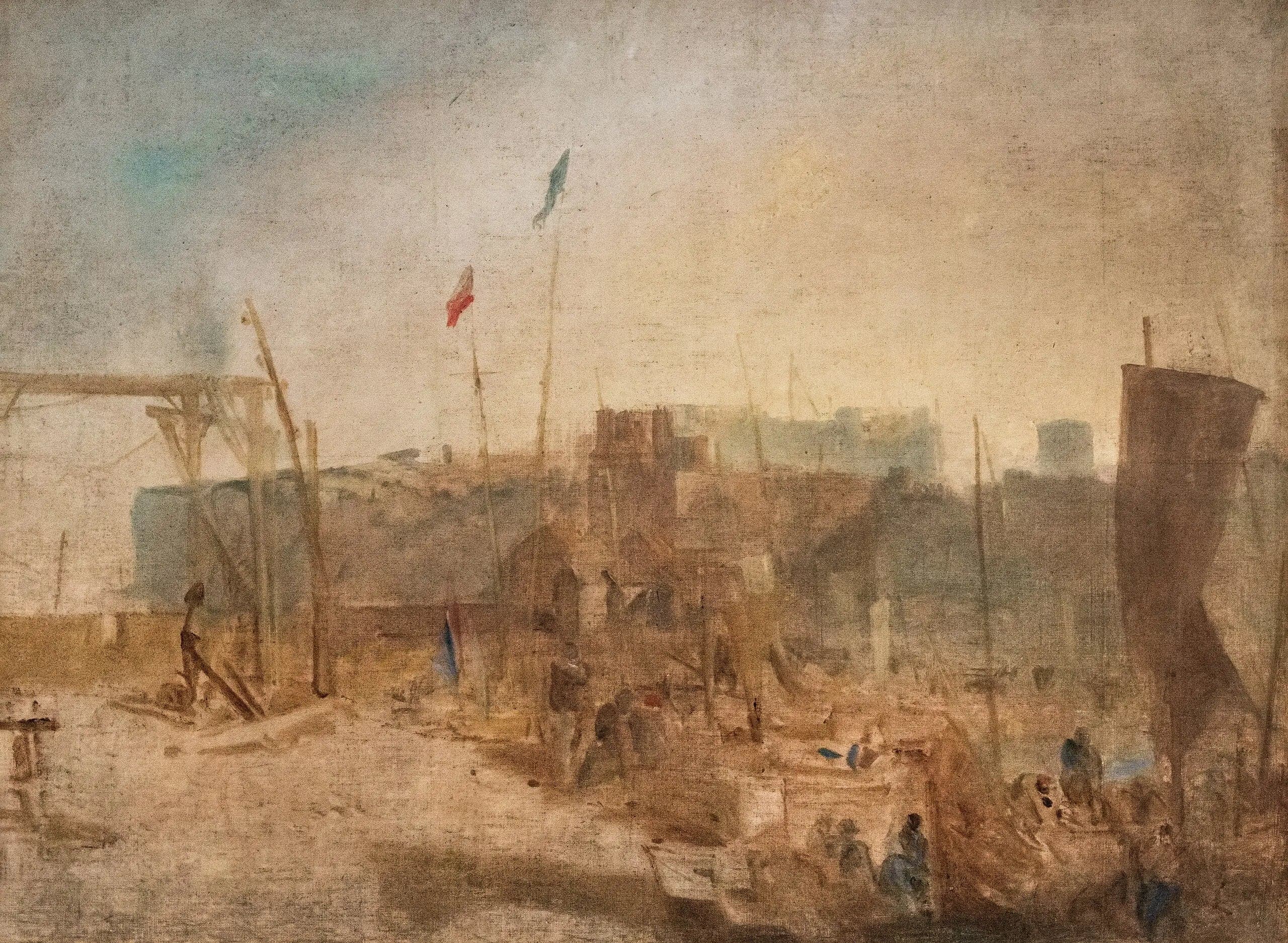
The painting “Margate” depicts the port of this town, where the horizon and the sea merge in a hypnotic dance of light and shadow. The composition evokes tumultuous seascapes, each strand of wave seeming to capture the reflection of the sky. Fishing boats float peacefully, silent witnesses to a maritime daily life rhythmically governed by the tides, and the vibrant colors mimic the movements of the sea.
Historical context
Created in 1806, this painting is emblematic of Margate, a port town on the east coast of England. Turner, a major figure of the Romantic movement, captures the vibrant essence of the sea, while being influenced by the sublime and light. Today, the canvas flourishes in the galleries of the Tate , a sanctuary for British art, where it attracts thousands of visitors each year.
Place in the artist's career
This canvas , from a key period in Turner's career, illustrates a phase where the artist reaches striking stylistic maturity. Alongside other works like “The Deluge” and “The Fire of the House of Lords,” “Margate” reveals his technical and aesthetic evolution, marked by a bold use of light and an increasing sensitivity to atmosphere.
Anecdote
“Light is color,” Turner is said to have remarked while observing the horizon blend with the hues of Margate's waters. Imagine him, one spring morning, the waves whispering secrets to the shore, his blank canvas existing only to welcome a burst of emotion, a vibrant scene coming to life. This overflowing inspiration cracks into the painting , rendering the masterpiece eternal.