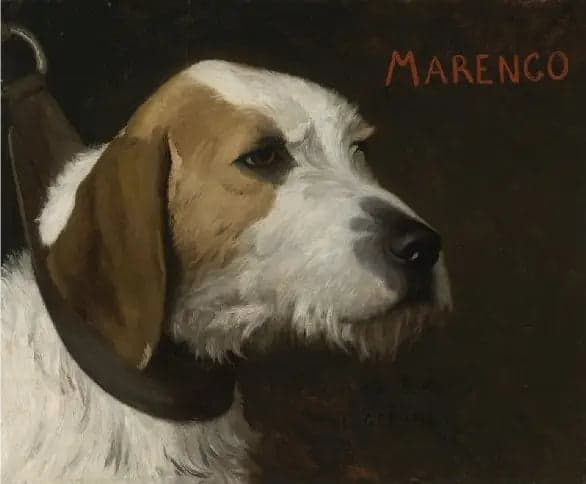
Marengo - Jean
- Original dimensions
- 46.6 x 38.7 cm
- Museum
- Not specified
- Year
- 1870
Scene depicted
In Marengo , Gérôme immerses us in the exoticism of a scene where the famous horse Marengo is the object of palpable admiration. This painting reveals the power and grace of this steed, iconic of Napoleon Bonaparte's conquests. Through meticulous details and a harmonious composition, the painting evokes the splendor of a bygone world, where the painter's skill pays homage to the majesty of nature.
Historical context
Created in 1870, Marengo is set against a backdrop of fascination for Orientalism, a popular artistic movement in Paris during the second half of the 19th century. Situated at the heart of an era where architecture and exotic costumes are at their peak, this painting expresses the beauty of the Eastern world as perceived by Gérôme. Although the canvas is not displayed in a specific museum, its legacy endures as a centerpiece in the history of art, measuring 46.6 x 38.7 cm.
Place in the artist's career
The canvas Marengo represents a turning point in Gérôme's career, symbolizing his deep roots in the Orientalist movement. Compared to works like The Cockfight and Pollice verso , this painting reflects a technical and emotional evolution, where detail and light become the key elements of his art. At this time, Gérôme asserts himself as one of the most influential artists, redefining the gaze on the East.
Anecdote
Gérôme often stated: "Art must capture the very soul of the subject." Perhaps it was on a spring morning in a bazaar, enveloped by spicy scents and the murmur of conversations, that he drew inspiration for this masterpiece . This canvas evokes the magic of a suspended moment, filled with intense emotions and striking beauty.