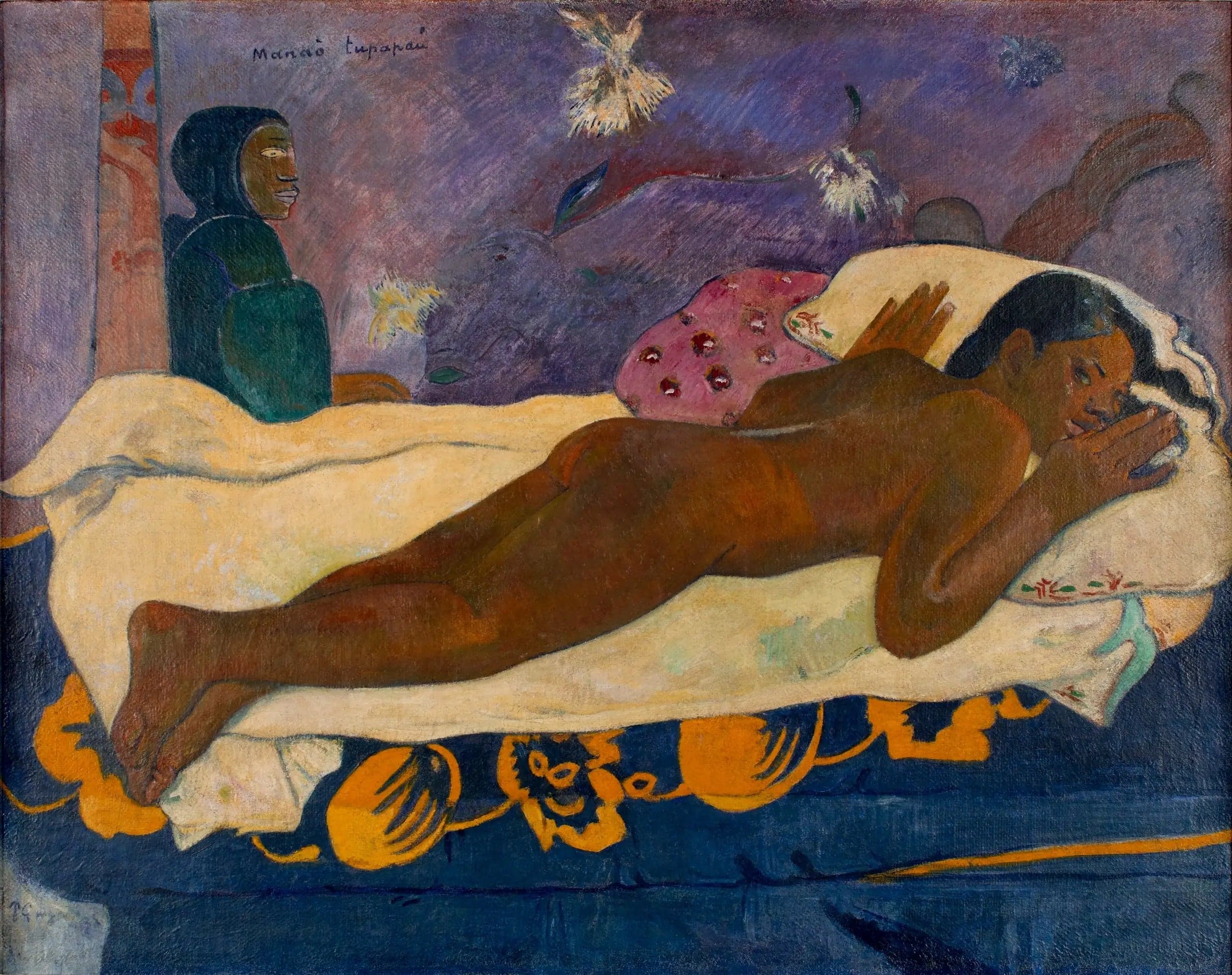
Manaò tupapaú
- Original dimensions
- 36.375 x 28.75 cm
- Movement
- impressionism
- Museum
- Albright-Knox Art Gallery
- Year
- 1892
Scene depicted
Manaò tupapaú reveals an intimate scene, where the daily life of the locals is imbued with a palpable spirituality. The human figures, at the heart of the composition, seem to converse with the invisible, paying homage to the ancestors and the nature that surrounds them. This painting , rich in symbolism , evokes the hidden dimensions of Tahitian culture.
Historical context
Created in 1892, the painting emblematic, Manaò tupapaú, comes to life on the enchanting island of Tahiti. This pictorial work belongs to the impressionist movement, rich in colors and emotions. Currently exhibited at the Albright-Knox Art Gallery , this canvas of 36.375 x 28.75 cm captures the essence of an era marked by exploration and artistic search.
Place in the artist's career
Manaò tupapaú fits into a pivotal period of Gauguin's career, where he asserts himself as a master of color and form. In parallel with works such as Te nave nave fenua and The vision after the sermon, this canvas shows an evolution from an impressionist style to a more personal and introspective approach.
Anecdote
At the dawn of a sunny morning in Tahiti, Gauguin reportedly declared: "The painting is a journey, and each canvas is a destination." This spark of inspiration may have sprung from a fleeting encounter with the island's wild beauty, a force that radiates through the canvas vibrant that is Manaò tupapaú.